Print this page
 Click to view article in PDF format
(~5.7 mb).
Click to view article in PDF format
(~5.7 mb).
Click to view presentation (80 slides),
preceded by abstract, in PDF format (~13.5 mb).
Received Shelton Award for best paper presented in Search and Discovery 2009.
The Evolving  Exploration
 of the Subsalt Play in
the Offshore Gulf of Mexico*
of the Subsalt Play in
the Offshore Gulf of Mexico*
Dwight "Clint" Moore1 and Robert O. Brooks2
Search and Discovery Article #60021 (2009)
Posted March 28, 2009
*Adapted from presentation at GCAGS Convention, 1995, and accompanying article in GCAGS Transactions, v. 45, p. 7-12.
Authors’ note: Metric measurements were not utilized because all of the depth data is referenced from well log surveys that utilize English measurements.
1Anadarko Petroleum Corporation, Houston, Texas; current address: ION Geophysical Corporation ([email protected])
2TGS-Calibre Geophysical Company, Houston, Texas
Abstract
The co-existence of horizontal components of salt
movement with subsalt traps in the south additions of the Louisiana and Texas
shelf and slope has been recognized within the last decade (Brooks and Moore,
1993). Throughout the 1970's and 1980's hundreds of wells were drilled into salt
on the outer shelf and slope of the northwestern Gulf of Mexico. These wells
barely penetrated salt features that are now known to be laterally emplaced
horizontal salt sheets. Drilling was typically stopped thousands of feet short
of testing the potential sizable petroleum reservoirs of the subsalt exploration
play, which is now being pursued and developed. It is apparent that the
evolutionary vertical remobilization of portions of these sheets has structured
many of the supra-salt giant fields discovered in younger, overlying sediments
(Brooks and Denman, 1995; Brooks and Hall, 1995).
Horizontal emplacement of Gulf of Mexico salt sheets,
and their effect on subsalt drilling results, can be demonstrated using 2-D time
seismic sections, well logs, and biostratigraphy from over 30 wells drilled
through varying thicknesses of the salt sheets. The presence of thick subsalt
sands, such as those observed in SMI 200, are now also proven. Subsalt petroleum
discoveries, announced in SS 349, ST 260, and MC 211, have confirmed the play
and encourage future exploratory drilling. As advanced acquisition and
processing techniques provide improvements in seismic image resolution, and
subsalt well control refines geologic models and concepts, geoscientific
integration will lead to additional significant discoveries in multiple-style
traps beneath the horizontal-salt sheets of the offshore Gulf of Mexico.
The 1990's
should be the "Decade of Discovery" for this significant subsalt petroleum
potential, hidden by these salt sheets that have obscured subsalt seismic images
for decades.
|
uAbstract
u
|
This paper discusses the history of the
subsalt petroleum Background to the PlayAfter 45 years of petroleum As is the case with many new plays, the
geotechnical leads to the subsalt play were hidden in the wells of
this earlier Plio-Pleistocene trend. For many years, explorers had
drilled one to two miles deep looking for oil and gas sands, but in
several hundred wells, they found salt instead. Conventional
geologic models indicated that salt was mostly reshaped as vertical
diapirs rooted to autochthonous salt deposits. Throughout the
1970-80's, explorers had drilled around the flanks of these salt
diapirs and frequently encountered these salt flanks by drilling
through their edges as well. However,
Subsalt Beginning in 1983, and extending through
the 1980's, an average of one well each year was drilled that
penetrated many different salt sheets, both intentionally and
unexpectedly. Although many salt diapir overhang wells had been
drilled over the decades preceding 1980 onshore and offshore Gulf
Coast, perhaps the earliest definitive salt sheet penetration
occurred as an unanticipated result of drilling for structure to
depths beyond good Between 1980 and the present (1995), over 30 wells drilled through/or into varying thicknesses of salt. Several of these wells have drilled through large, thick horizontal sheets, several miles away from their edges (Figure 4). Specifically, subsalt tests that demonstrate the drillable exploratory potential of the regional horizontal salt sheets, as well as, in several cases, the presence of significant clastic subsalt stratigraphic sections are listed below.
However, most of the wells drilled since 1993 cannot be detailed in this paper, due to confidentiality of data as a result of their recent operational activity. Additional wells have penetrated the flanks/edges of regional salt sheets or have encountered small, remnant salt sheets, either adjacent to, above, or isolated from the larger sheets. Wells encountering salt sheets in these structural environments were Ship Shoal 366 #2 (1983), Green Canyon 98 #1 (1984), Green Canyon 39 #1ST1 (1984), Mississippi Canyon 400 #1 and 2 (1985), East Breaks 170 #1 (1985), East High Island A-374 #1 (1985), Green Canyon 152 #1 STH1 (1985), Vermilion 412 #1 (1987), Eugene Island 385 #A-12 and #B-4 (1988), Green Canyon 184 #A-12 (1990), and Garden Banks 260 #1STH2 (1992). Significantly, several wells have penetrated salt withdrawal surfaces, or so called "welds", where salt is interpreted to have been emplaced as lateral sheets over clastic sedimentary sections, and then subsequently withdrawn or evacuated, primarily due to downloading. Several wells are interpreted to have penetrated these types of surfaces. Example wells are listed below.
There are probably many more that exist
but are not mentioned herein, primarily because the interpretation
of a salt weld on a
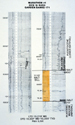
The Decade of the 1980's Beginning in September of 1980, the Peltex #1 Mermentau Mineral Land Co. in Cameron Parish, onshore Louisiana (Figures 5 and 6), was plugged as a 21,500 ft test well that drilled through 85 feet of salt between -20,330 ft and -20,415 ft. A total of 1085 ft of Oligocene-aged subsalt clastic section was drilled, encountering thin sands, before the well was abandoned. This marked the first penetration of what has become commonly known as a Gulf Coast allochthonous salt sheet, and the presence of thin subsalt sands was encouraging. The existence of the salt sheet in the #1
Mermentau well (Figures 5 and
6) was not widely known, and especially
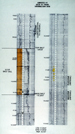
unknown to the offshore The first Gulf Oil prospect to be drilled was a subsalt weld test adjacent to a large regional salt sheet in Eugene Island 324. This well was drilled through a salt weld surface initially interpreted to have been encountered around 10,000 ft in depth. The well was drilled ahead to 15,492 ft before being plugged and abandoned in March 1984. Several thin, subsalt sands were encountered in both a thick Pliocene and a thin Miocene section penetrated below salt. Spudding within days of the first Gulf Oil test in fall of 1983, Ship Shoal 366 Placid #2 was permitted as a 13,000 ft apparent hydrocarbon indicator (HCI) or bright spot test well, that unexpectedly encountered two thin salt sheets before bottoming in a thick salt layer at a depth of only 8203 ft. Seismically, 2-D time data cannot easily resolve the individual salt sheets penetrated from -7040 ft to -7281 ft (241 ft), -7329 ft to -7355 ft (26 ft?), nor the 513 ft+ of salt at total depth. Of special note, the authors believe that wells encountering clastic zones between salt sheets, as in this well, could be penetrating sedimentary inclusions seen in some subsalt wells and in several coastal salt domes. Simultaneously in the spring of 1984, Garden Banks 171 Marathon #1 (Figures 7 and 8) unintentionally encountered a 1110 ft thick salt sheet (with sedimentary inclusion) between -8400 ft and -9510 ft, before reaching total depth of 10,597 ft STH. Nearly 1000 ft of subsalt clastic section was drilled through mostly shales of Neogene age. Although encountering a salt sheet, this well marked the second of many wells drilled throughout the 1980's that unexpectedly encountered salt while drilling for another HCI or "bright spot". Another mid-year 1984 test occurred, presumably by accident, in 853 ft of water in the Green Canyon 98 Conoco #1. This well drilled to a depth of 13,159 ft, where drillpipe was stuck, causing the well to be subsequently junked and abandoned. Drilled on the flank of a large diapired salt sheet, this test encountered 1380 ft of salt between -10,320 ft and -11,700 ft and penetrated a small oil sand beneath the sheet. Rather than a traditional overhang, this salt feature is interpreted as being a withdrawing salt feeder, as is the case with most of the flank salt penetrations described in this report. Significantly, a thin oil sand was encountered just below the salt base, so this may be one of the first hydrocarbon shows observed in the Subsalt Play. A few months later in the fall of 1984,
Gulf Oil finished drilling an 18,500 ft intentional subsalt test in
West Cameron 505 #2 that penetrated a deep 1690 ft thick salt sheet
between -13,900 ft and -15,590 ft and found neither oil or gas, nor
any significant reservoir sand in the 2820 ft of mid-Miocene clastic
section below. This well marked the end of Gulf's two well effort,
for corporate takeover problems preempted further subsalt
Another late 1984 salt test was the Green
Canyon 39 Placid #1, and like the Ship Shoal 366 Placid #2, it
encountered a thin, 140 ft thick salt sheet between -11,675 ft and
-11,815 ft, before penetrating 185 ft of additional salt from
-12,005 ft to a total depth of 12,294 ft. Again, like the other
Placid test, it is not clear whether the intermediate shale zone
between the two salt zones is a 190 ft thick sedimentary inclusion
within one sheet or simply a depositional shale zone between two
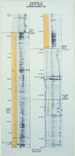
sheets. The 2-D The next four wells drilled were similar style tests to the Green Canyon 98 #1. These (1985) subsalt flank tests penetrated salt withdrawal feeders. Mississippi Canyon 400 Amoco #1 was drilled to a depth of 16,000 ft, encountering 3450 ft of salt sheet flank from -10,170 ft to -14,160 ft and then penetrating 1840 ft of subsalt clastic section, containing only one thin sand. Moving a short distance back from the salt sheet with an additional test, Mississippi Canyon Amoco #2 was drilled to a total depth of 17,010 ft, encountering the same salt sheet with a thinner thickness of only 1290 ft from -14,230 ft to -15,220 ft, and then penetrating 1700 ft of subsalt clastic section without encountering a similar sand. Presumably, these wells were intended as HCI tests on the flank of a salt structure, but proved to be subsalt flank tests instead. A similar test well was also being drilled over 100 miles to the west, as the East Breaks 170 Amoco #1. Drilled to a depth of 17,500 ft, this well penetrated a 250 ft thick salt withdrawal feeder from -16,075 ft to -16,325 ft before penetrating 1100 ft of subsalt clastic Miocene section, without any significant reservoir quality sandstone. Later in 1985, the Green Canyon 152 Marathon #1 STH1 well was sidetracked from its original non-salt wellbore and penetrated 1130 ft of salt from -11,350 ft to -12,470 ft before drilling to an eventual total depth of 16,281 ft MD (14,133 ft TVD). The well penetrated 1623 ft of subsalt clastic section dated as Pliocene with several reservoir quality sandstones. Also, in the fall of 1985, a 15,000 ft test was drilled as the East High Island A-374 Mobil #1 well encountered a unique thin salt with limited areal extent. A 250 ft salt sheet was penetrated from -7575 ft to -7825 ft with over 5000 ft of Pliocene shales below the sheet, followed by nearly 2000 ft of Miocene shales to total depth. This salt sheet remnant had been detached from a larger more extensive sheet and, as a result, probably was interpreted as an HCI because of its limited extent and thickness. An even greater HCI disappointment was a well upon which the senior author was the project geologist for the operator. In early 1986, Diamond Shamrock drilled a 13,500 ft test near the edge of the outer continental shelf in 475 ft of water, on South Marsh Island 200. This well unintentionally drilled into a 990 ft thick salt sheet at -8730 ft, but the partnership agreed to drill through the salt and found base of salt at -9720 ft. We then encountered a thick, water-filled 1000 ft thick reservoir sand between -11,540 ft and -12,540 ft, of early Pleistocene age. Sidewall core and porosity log analysis confirmed superb reservoir rock properties with permeabilities approaching 2000 millidarcies and porosities in excess of 30% within most of this fine-grained sandstone. This proved conclusively that thick reservoir rock potential could be found underneath salt sheets and in deepwater paleoenvironments, as well. As was the case with several previous wells, an HCI had been misinterpreted, and salt had proven to be the actual cause. This had become an increasingly common occurrence throughout the 1980's and into the 1990's, as well. Like the SMI 200 #1, many of the upcoming wells were to be drilled as interpreted HCI's, only to penetrate salt at the objective target level. Most significantly from this well, however, a thick, massive sandstone section, deposited in a deepwater marine paleoenvironment, was encountered subsalt, and new evidence for significant reservoirs was demonstrated conclusively. Late in 1986, less than 20 miles west of the SMI 200 well (Figures 9, 10, and 11), the Vermilion 412 Mobil #1 was drilling, again presumably for a deep salt flank HCI, when it penetrated a 1315 ft thick salt layer from -7705 ft to -9020 ft before drilling ahead to 10,496 ft MD (10,160+ TVD) where drillpipe was stuck in Pleistocene aged shale. Like Green Canyon 152 Marathon #1 STH, the salt sheet in this well is not likely to be the primary salt withdrawal source of the large sheet to its west, but may represent a secondary horizontal salt layer from the primary sheet, emplaced later than the primary sheet. Purchasing leases on its "Pooh" prospect
in early 1985, Amoco began a dedicated program of subsalt
Several minor, seemingly unintentional subsalt tests were drilled during 1988. In an existing field in Eugene Island 385 and 371, Union Texas drilled the #A-12 and #B-4 wells. The #A-12 penetrated 60 ft of salt between -12,450 and -12,510 ft and stopped at 14,104 ft MD (12,687 ft TVD), less than 100 ft below the base of the sheet. The #B-4 test penetrated 1875 ft of salt in #B-4 between -7842 ft and -9717 ft stopping at 13,038 ft MD (9881 ft TVD), less than 50 feet below the base of the sheet. Neither well drilled far enough into the subsalt clastic section to provide significant stratigraphic data. Near the end of 1988, the Green Canyon 184 Conoco #A-12 also encountered a remnant salt sheet, penetrating 300 ft of salt from -8300 ft to -8600 ft before drilling ahead to a depth of 12,564 ft MD (12,448 ft TVD). Over 3700 ft of subsalt shales and sands were encountered by this well, including two thin oil pay sands near 10,300 ft and 10,600 ft in the thick subsalt Pliocene section.
The Decade of the 1990’s Figures 44-45 (Mississippi Canyon 211)
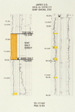
Late 1989 saw the spudding of the first of many intentional subsalt wells to come. The State Lease #12878 Amoco #1 well was drilled in the Lake Washington Field - Plaquemine Parish, in the southeastern onshore Louisiana to a depth of 21,241 ft. After penetrating 4075 ft of salt sheet between -9350 ft and -13,425 ft, it encountered nearly 8000 ft of subsalt clastic section that contained thin, but a consistent series of sandstone beds that occurred in the lower half of this deep wellbore. Again, high quality reservoir rock was encountered but was water bearing; however, the first significant subsalt oil discovery was preparing to spud as this Lake Washington well was approaching total depth in early 1990. One tremendous difference between this well and the soon-to-be-announced discovery well was the water depth. Had the pay section in this next well been discovered in a land-drilled wellbore, it might have been the first commercial discovery in the play. A depth of 4352 ft of water is nearly a mile below the surface of the Gulf of Mexico. As the 1990's began, Exxon spud a wildcat in this water depth to test a subsalt prospect below a "shallow" salt sheet. Although in deep water, the Mississippi Canyon 211 Exxon #1 (Mickey Prospect) penetrated a 3030 ft thick salt sheet from -5750 ft to -8774 ft, barely 1400 ft below the ocean bottom (Figures 44 and 45). Only 2000 ft below the base of salt, a thin gas-filled sand was encountered near 10,700 ft, and then four additional thin, oil-filled sands were penetrated below 12,500 ft before a total depth of 14,670 ft was reached. Exxon issued a press release in May of 1991 announcing a discovery of between 100-200 million barrels from five pay sands between 10,000 ft and 13,000 ft. Clearly, a significant discovery had been made. Core analysis and wireline log data demonstrated quality reservoir rock with good permeabilities and porosities containing good oil and gas shows. Although not offset or delineated at this date, the Mississippi Canyon 211 Exxon #1 well represents the first significant occurrence of hydrocarbons beneath a salt sheet. Had the prospect been located on the continental shelf, rather than the continental slope, commerciality would have probably been immediate, and rapid development would have ensued. Nonetheless, the significance of this discovery should not be understated. By the spring of 1991, Louisiana was experiencing the next wildcat for subsalt objectives. In only 36 ft of water, the Bay Marchand 4 Amoco #1 well was drilled rapidly to a total depth of 18,277 ft after encountering a 4340 ft thick salt sheet between -9820 ft and -14,160 ft, and drilling a very shaly section to total depth (Figures 14 and 15). In the fall of 1991, Chevron drilled an important well just off the edge of the continental shelf in 724 ft of water, as the Garden Banks 165 Chevron #2 (Figures 16 and 17). This well was a great technical drilling achievement from the standpoint that it penetrated nearly 7000 ft of salt and encountered a thick, quality sandstone reservoir rock below 15,000 ft, before reaching total depth at 18,000 ft. Penetrating 6950 ft of the salt sheet from -5765 ft to -12,715 ft, this well established the important fact that subsalt wells could penetrate over a mile of thick salt and still drill at least a mile below its base. Nearly 250 ft of high porosity, high permeability sandstone reservoir rock was encountered between 15,200 ft and 15,900 ft, as well as several thin sands below it. Another old preconceived idea had been disproven by this well: now, very thick salt sheets could be penetrated by the drill bit, and thick clastic sections could be drilled to deep depths below them. When this critical well was finally plugged and abandoned in April of 1992, drillers throughout the play now had an excellent type well for planning and implementing the subsalt drilling programs that were only now starting to be designed, and geoscientists had another excellent example of superb reservoir rock beneath salt. Meanwhile, Garden Banks 260 field (Baldpate Prospect) had been announced as a significant conventional discovery for Amerada Hess. However, the Garden Banks 260 Amerada Hess #1 STH 2 proved to be a subsalt sheet flank test well, encountering an apparent 1607 ft thick salt sheet edge between -13,856 ft and -15,463 ft before penetrating two thick, water-bearing sands from -18,358 ft to -18,688 ft and then reaching total depth of 20,086 ft MD (18,845 ft TVD) in late spring of 1993.
Moving the Play Forward In mid-1993, several significant subsalt tests were to be drilled. Roughly half a dozen companies had purchased leases on prospective subsalt acreage during the late 1980's and early 1990's. Investing significant effort in attempts to prepare these prospects using advanced depth migration processing techniques, these acquisitions represent the dawn of an accelerated period of subsalt drilling activity. Over those past two years, industry drilled no fewer than 15 subsalt sheet or weld tests with one commercial discovery announced to date, and others speculated (Figure 4). Since the Minerals Management Service government regulatory agency does not release wellbore survey data publicly for two years from suspension of well operations, less detailed data is available from these wells with which to demonstrate subsalt concepts. However, a few leases have expired since operations ceased, and under federal guidelines it is required that this data be released. Consequently, where possible this report will detail the results.
The most significant result of subsalt
drilling to date (1995) is the discovery announced in October 1993
at the Ship Shoal 349 Phillips #1 "Mahogany" well (Figures
18, 19,
20, and 21,
in only 372 ft of water depth (Harrison et al., 1995). Although
minimal amounts of data have been released, this well was drilled to
a total depth of 16,500 ft and tested at flow rates of up to 7256
BOPD and 9.9 MMCFGPD at a FTP of 7063 psi through a ½ in. choke from
a subsalt sandstone reservoir. Based on interpretation of 2-D
Activity Accelerates Rapidly Figure 46 (Garden Banks 128)
Over 60 miles due west of the Mahogany
well, another subsalt test reached total depth of 18,020 ft, at the
end of 1993. Based on 2-D time About the same time as the Mahogany
activity in late 1993, the South Timbalier 260 Phillips #1 (Teak
Prospect) well (Figures 24,
25, 26,
and 27) began in 295 ft of water and
drilled to a total depth of 16,610 ft. As was the case with the
Mahogany block, an old well drilled by a previous operator
encountered a top of salt near 10,500 ft. Thus, 2-D time As the testing was being conducted on the Teak prospect in early spring of 1994, no fewer than five wells were near spudding with the intent of testing subsalt objectives. At the same time, in early March of 1994, industry paid hundreds of millions of dollars at a federal lease sale for dozens of prospective leases in the subsalt play. It was a very competitive sale with many participants and sizable amounts bid. Vermilion 349 Anadarko #1 (Mesquite Prospect) (Figures 29 and 30) began in early March of 1994, and drilled to a total depth of 16,146 ft without encountering any hydrocarbons. It penetrated a 2460 ft thick salt sheet between -9550 ft and -12,010 ft, as well as over 4000 ft of subsalt clastic section. A thick sandy interval between 13,300 ft and 13,700 ft was encountered; the well was plugged and abandoned, and the lease allowed to expire. The occurrence of quality reservoir rock in a thick clastic section is a significant result of this unsuccessful test. Barely three miles to the west of the Mahogany discovery, the Ship Shoal 360 Unocal #2 (Rhino Prospect) (Figures 20, 31, and 32) began in early May and drilled to a total depth of 19,000 ft. A suspension of production (SOP) was obtained by the operator despite having reported no open hole plugs below the last casing depth of 16,985 ft; so it is probable that the qualifying pay zones are behind casing, although the operator did plug and abandon the well without indicating mechanical difficulty. Additional operational activity may be anticipated by the SOP lease extension granted by the MMS past the summer 1994 lease expiration date; thus far (1995) wellbore data has not been released on this well either. Nearly twenty five miles north-northwest of Mahogany, the Ship Shoal 250 Japex #1 well (Figures 33 and 34) was drilled to a depth of 17,750 ft after penetrating a 956 ft thick salt sheet from -12,246 ft to -13,202 ft before encountering 4447 ft of clastic section with intermittent sandstone reservoir rock to total depth. Like the SS 360 Unocal well, this well began just before the five year lease expiration date, and since no open hole plugs were set, the lease expired 90 days after it was plugged in September, and the wireline log data was released in early 1995. Ten miles to the south-southwest of the ST 260 Phillips "Teak" discovery, the South Timbalier 289 CNG #1 (Cypress Prospect) (Figures 28, 35) began in the last days of its five year lease. Drilled to a total depth of 18,034 ft, the well penetrated 920 ft of a thick salt sheet from -12,083 ft to -13,003 ft before encountering 4934 ft of subsalt clastic section containing thin, consistent reservoir quality sandstones. The operator plugged and abandoned this wellbore after setting two open hole plugs below the last casing depth of 13,980 ft, presumably across two hydrocarbon shows from 14,030 ft to 14,170 ft and 15,150 ft to 15,160 ft, and the lease has since expired. The fifth subsalt (weld?) test well spud in the first half of 1994 occurred barely five miles south of the Mahogany discovery. Ship Shoal 368 Amerada Hess #1 and its two sidetracks (Citation Prospect) (Figures 21, 43) drilled to a total depth of 16,400 ft MD (15,774 ft TVD), where the well was junked and abandoned in early 1995. No additional data has been released on this well, and the lease was still held by 90-day operations, as of press time in early summer of 1995, extending the June 1994 expiration date. According to a partner's quarterly report to shareholders, another possible subsalt discovery may have been made on Garden Banks 128 Shell #1 (Enchilada Prospect) (Figure 36, 46), but no other details have been released. This well drilled to a depth of 18,454 ft MD (17,477 ft TVD) in water depth of 718 ft. Open hole plugs were set below the last casing depth of 12,549 ft, and the well suspended. As of press time, this lease was past its five year primary term, but had been classified as part of a unit. As of this writing, five additional
subsalt tests had spudded in the last quarter of 1994 and the first
half of 1995, and were drilling toward their objective depths.
Vermilion 308 Amoco #1 (South Anna) (Figures
38 and 39)
is projected to a total depth of 20,000 ft in 205 ft of water,
Garden Banks 127 Shell #1 (Chimichanga) (Figures
36 and 37)
is projected to a total depth of 16,000 ft in 622 ft of water,
Garden Banks 216 Amerada Hess #1 STH1 (Penn State Deep) is projected
to a total depth of 20,714 ft MD (18300 ft TVD) in 1611 ft of water,
South Timbalier 308 Marathon #2 (North Lobster) is projected to a
total depth of 18,899 ft MD (16,200 ft TVD) in 564 ft of water, and
Mississippi Canyon 292 Texaco #1 (Gemini) (Figure
40) is projected to a total depth of
14,572 ft in 3393 ft of water. All five of these wells appear to be
pre-planned to penetrate a salt sheet and drill ahead to greater
depths, based on interpretation of 2-D time
Throughout the remainder of the 1990's,
offshore explorers will continue to aggressively pursue this play
because the profit potential is so tremendous, given the reserve
size, existing infrastructure, advancing technology, and attractive
water depths of the northern Gulf of Mexico. Subsalt sandstone
reservoir quality has been repeatedly found to be high porosity,
high permeability, and high pressure, setting the stage for
tremendous production capacity from future discoveries. Thick
sequences of primarily Pliocene, as well as some Pleistocene and
Miocene, sandstone sections reflect subsalt deepwater
paleoenvironments and advance deepwater depositional models.
Additionally, industry is discovering that there is a critical
thickness to the interval drilled below salt. The first 1,000+ feet
below salt is a less competent section referred to by some as a
"gumbo zone", or more accurately; a "non-competent zone". Nearly a
dozen of the subsalt penetrations did not drill deep enough to see
beyond this section. It is critically important that future subsalt
wells be drilled roughly 4000 ft - 5000 ft below the base of this
zone, so that adequate reservoir sandstone opportunities can be
encountered through the predictive cycles of sequence stratigraphy.
As advanced As explorers, we must never forget that "Discovery" is seeing what everybody else has seen, and thinking what nobody else has thought! For if we apply this precept to mature petroleum basins, as in the offshore Gulf of Mexico, it is not difficult to understand how we can find that "There is Life in a "Dead Sea" After All"!!
The authors want to express their
appreciation to our managements and colleagues at Anadarko Petroleum
Corporation and TGS\CALIBRE Geophysical Company for their
encouragement and support in preparing this manuscript. Art Waterman
of Paleo Data contributed biostratigraphic data; the Offshore Oil
Scout Association contributed basic statistical data, and TGS and
Geco-Prakla contributed the
Brooks, R. O., and E.H. Denman, 1995, Changing Styles of Horizontal Salt Bodies 1984-1994 (abs.): AAPG Annual Convention Abstracts, p. 13A.
Brooks, R.O., and D.J. Hall, 1995, New Structural Concepts for the Deep Miocene, Southern Louisiana Shelf (abs.): AAPG Annual Convention Abstracts, p. 13A.
Brooks, R.O., and D.C. Moore, 1993, Horizontal Components of Gulf of Mexico Salt Tectonics; in AAPG Hedberg Research Conference on Salt Tectonics, Bath, England, p. 1-4.
Harrison, H., D.C. Moore, and P.Hodgkins, 1995, The Mahogany Subsalt Discovery: A Unique Hydrocarbon Play, Offshore Louisiana (abs.): AAPG Annual Convention Abstracts, p. 40A.
Melancon, J.M., S.M. Bacigalupi, C.J. Kinler, D.A. Marin, and M.T. Prendergast, 1994, Estimated Proved Oil and Gas Reserves Gulf of Mexico, December 31, 1993: OCS Report MMS 94-0045, U. S. Department of the Interior, Minerals Management Service, Gulf of Mexico OCS Regional Office, New Orleans, Louisiana, August 1994, 50 p.
Copyright © AAPG. Serial rights given by author. For all other rights contact author directly. |