
 Print this page
 Click to view images of illustrations in PDF format.
Sequence Stratigraphic Control on Reservoir Quality in
 Morrow
 Sandstone Reservoirs, Northwestern Shelf, Anadarko Basin*
By
Zuhair Al- Shaieb1 and Jim Puckette1
Search and Discovery Article #10023 (2002)
*Adapted from presentation to Tulsa Geological Society, September, 2001; poster-session presented at AAPG Annual Convention in Denver, CO, June, 2001, AAPG APPEX in Houston, TX, August 2001, and AAPG MidContinent Section Meeting, September, 2001; awarded as the outstanding poster at the last noted meeting. Abstract below is from poster-session presentations (Puckette, Al-Shaieb, et al., 2001).
1School of Geology, Oklahoma State University ([email protected]; [email protected]). The research group that conducted this study includes research assistants Melanie McPhail, Ken Rechlin, Julie Turrentine, Erin Van Evera, Chris Wiggers, and Amy Close.
Upper Morrowan
valley-fill sandstones are major oil and gas reservoirs on the northwestern
shelf of the Anadarko basin. Three major Morrowan lithofacies assemblages were
recognized in cores and extrapolated from wireline log responses: marine,
fluvial and estuarine. The primary marine lithofacies are dark fossiliferous
shale and bioclastic limestone. Fluvial facies are characteristic of a braided
stream – point bar channel sequence. This complex sequence contains
sedimentary features such as trough cross bedding associated with stacked
fining-upward sequences, low-angle cross beds, and fine- to coarse-grained
sandstones with interbedded or laminated silty, shaly and coaly intervals.
Estuarine facies consist of interbedded fine- to medium-grained sandstone and
shale, with abundant trace fossils or burrows.
Incised valleys developed in response to major drops in relative sea level. Lowstand system tract (LST) deposits were not commonly preserved and are limited thin clay-clast conglomerates. Subsequent sea level rises resulted in valley filling with fluvial and estuarine facies of the transgressive systems tract (TST). As sea level continued to rise, sediment deposition shifted landward. Therefore, deposition of marine silt and mud represents the highstand systems tract (HST) sediment assemblage.
The sequence stratigraphic framework, coupled with compositional and textural parameters, controls reservoir quality. Braided stream—point bar channel sequences (F2, F3) deposited during the TST contain better reservoirs. Average porosity and permeability are 13.35% and 50.6 md, respectively. Marine sandstones (M2) contain abundant skeletal grains and carbonate cement that occluded porosity. Fine-grained estuarine sandstones are typically poor-quality reservoirs as a result of high detrital clay content and the affects of biogenic modification that destroyed primary porosity.
|
|
•
Definition of depositional facies, sequence stratigraphic framework and
reservoir characterization of the Lower Pennsylvanian Upper • Application of the above to exploration and secondary recovery projects. During late Morrowan time, the Anadarko basin was the site of deposition of deltaic, with transitional sediments derived largely from the north and northwest, marine units to the east, and coarse detritus as a fringe to the uplift(s) to the south (Figure 1). Morrowan
strata in the Oklahoma Panhandle contain a basal sandstone (Keyes) and an
overlying section of shale/limestone, comprising Lower Morrowan (Figure
2A).
Upper Morrowan contains a sandstone-rich interval (Purdy and
Upper Fields
producing from Northeast Hardesty, Northwest Eva, and Eva have produced 8% of the oil from Texas County, Oklahoma, and those fields have produced 4% of the gas from that county (Figure 4). In terms of relative size, Carthage has produced 74%, Northwest Eva has produced 23%, and Northeast Hardesty has produced 3% of the gas produced from those three fields Case
Study 1—Northeast Hardesty The Purdy Sandstone ranges in thickness from zero to more than 40 ft in an area that is 1-2 miles wide and some 4 ½ miles long in a north-northwesterly direction (Figure 5). This reservoir, which has produced approximately 10.2 MMBO and 1.6 BCFG, developed as incised-valley fill (Figure 6). Case
Study II—Northwest Eva The
Purdy Sandstone ranges in thickness from zero to more than 40 ft (Figure
7). It
trends northeast along a belt that is less than ½ mile wide and more than 5
miles long. It bifurcates in the southwest, where one of the branches trends
northwest and the other, more westerly. The reservoir is thought to have been
deposited as part of an incised-valley fill (Figure 8). The Case
Study III--Carthage
The
lower Purdy Sandstone in the Carthage
Interbedded sandstone and shale with trace fossils (mid-estuary) Fine-grained sandstone with occasional silty/shaly/coaly interval (channel abandonment) Ripple- to cross-bedded fine- to coarse-grained sandstone (meandering stream) Coarse-grained sandstone with cross-bedding (braided stream) Paraconglomerate (a high-current-energy stream) Each of the four types of fluvial facies is illustrated in Figure 13; they are also described in Figure 11. Estuarine facies consist of interbedded fine- to medium-grained sandstone and shale with trace fossils (Figure 14) and similar interbedded sandstone and shale with thin coarse-grained sandstone. The former is considered to have been deposited in a low-energy mid-estuarine environment, and the latter in a variable-energy upper estuarine setting. Marine facies are represented by dark gray shale/mudstone with abundant marine fossils (Figure 15) and fossiliferous sandstone. The former is thought to represent a low-energy, offshore shelf setting; the latter, high-energy, shallow-marine environment. Facies
in Petroleum Inc. Hendrix #3, Carthage
Evolution of Incised Valley-Fill Deposits The settings for deposits related to incised valleys--from lowstand systems tract, with valley incision to transgressive systems tract, with deposition of fluvial, estuarine, and marine facies--are shown in Figures 22 and 23. Valley-Fill Depositional Sequence In the study area, the framework for deposition of the valley-fill sequence, with associated sediments, in Morrowan strata included the following elements (Figure 24): MFS=maximum flooding surface, which formed after . . . . TSE=transgressive surface of erosion, or in Figure 24, top of sequence, which formed after . . . . TST=transgressive systems tract, with deposition of estuarine and bay deposits after deposition of fluvial facies, which formed after . . . . LST=lowstand systems tract, with deposition of channel lag on . . . . SB=lower sequence boundary, a subaerial surface, which formed after . . . . HST=highstand systems tract, with deposition of marine mud, which overlies . . . . MFS=maximum flooding surface. Sequence Stratigraphic Systems Tracts: Succession of Upper Morrowan
Upper Morrowan strata in the study area document geologic history during which sea-level changes were responsible first for erosion of incised valleys during lowstand and then for deposition of incised-valley fill and associated deposits during transgression resulting from sea-level rise. The upper Morrowan successions are illustrated in Figures 25 and 26.
The upper Morrowan sandstones are quartz-rich, commonly subarkoses (Figure 27A); some samples are quartz arenites; and others are sublitharenite. Some of the detrital constituents are shown in Figure 28. The diagenetic events/products and the sequence of their development are shown in Figure 27B. Diagenetic constituents (Figures 27B and 29) include quartz (as overgrowths), calcite, dolomite, kaolinite, and illite. Porosity in upper Morrowan sandstones includes several types. They include intergranular, enlarged intergranular, intragranular, and microporosity (Figure 30). The relationship between porosity and permeability, according to Morrowan reservoir units (zones) are illustrated in Figures 31, 32, 33, 34, 35, and 36. Although permeability increases with increase in porosity, permeability is less than 25 md where porosity is less than 13 percent.
Pressure Gradient
Map of the
With
normal pressure gradient considered to be 0.465 psi/ft, pressure gradients in
underpressured Texas County in the Texas Panhandle, where pressure gradients in
The
upper Lowstand systems tract deposits are limited to clay-clast conglomerates (F-1). Transgressive
systems tract deposits are represented by fluvial (F-2, F-3, and F-4)
Three
major Using
textural, sedimentological, structural, and depositional parameters, each major
Fluvial facies consist of F-1, F-2, F-3, and F-4. Estuarine facies contain E-1 and E-2; marine facies, M-1 and M-2. Petrographic, petrophysical, and core measured porosity/permeability data indicate that F2 and F3 fluvial facies are better quality reservoirs. Authigenic
kaolinite and clay matrix drastically reduce permeability in various Carbonate cement, and to a lesser extent dolomite, reduce both porosity and permeability. In
summary, the F2 and F3 Gerken, L. D., 1992, Morrowan sandstones in south-central Texas County, Oklahoma: Oklahoma State University unpublished M.S. thesis, 140 p. Harrison, J. C., 1990, “Upper” Luchtel, K. L., 1999, Sequence stratigraphy and reservoir analysis of the Upper Kearney Formation (Morrowan Series), Lower Pennsylvanian System) within three Kansas fields: University of Kansas unpublished M.S. thesis, 149 p. Munson, T. W., 1989, Depositional, diagenetic, and
production history of the Upper Morrowan Buckhaults sandstone, Farnsworth Puckette, J., Al-Shaieb,
Zuhair, Close, A., Rechlin, K., and McPhail, M., 2001, Sequence stratigraphic
control on reservoir quality in Rascoe, B., and Adler F. J., 1983, Permo-Carboniferous hydrocarbon accumulations, Mid-Continent, USA: AAPG Bull., v. 67, p. 979-1001. Shepherd, S. K., 2000, Depositional history and reservoir
characterization of the Northeast Hardesty Wheeler, D. M.; Scott, A. J.; Coringrato, V. J.; and
Devine, P. E., 1990, Stratigraphy and depositional history of the |
 Figure 1.
Paleogeology of the MidContinent during late Morrowan time (after Rascoe, and
Adler, 1983).
Figure 1.
Paleogeology of the MidContinent during late Morrowan time (after Rascoe, and
Adler, 1983).

 Figure
3. Map of fields producing from
Figure
3. Map of fields producing from  Figure
4. Production from fields in Texas County, Oklahoma.
Figure
4. Production from fields in Texas County, Oklahoma. Figure
5. Isopach map of Purdy Sandstone in Northeast Hardesty
Figure
5. Isopach map of Purdy Sandstone in Northeast Hardesty  Figure
6. Stratigraphic cross section across trend of Purdy Sandstone in Northeast
Hardesty
Figure
6. Stratigraphic cross section across trend of Purdy Sandstone in Northeast
Hardesty  Figure
7. Isopach map of Purdy Sandstone in Northwest Eva
Figure
7. Isopach map of Purdy Sandstone in Northwest Eva  Figure
8. Stratigraphic cross section across trend of Purdy Sandstone in Northwest Eva
Figure
8. Stratigraphic cross section across trend of Purdy Sandstone in Northwest Eva
 Figure
9. Isopach map of lower Purdy Sandstone, Carthage
Figure
9. Isopach map of lower Purdy Sandstone, Carthage  Figure
10. Cross section across trend of lower Purdy Sandstone, Carthage
Figure
10. Cross section across trend of lower Purdy Sandstone, Carthage 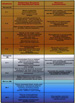 Figure
11. Chart of sedimentary structures, along with depositional facies and
reservoir characteristics in upper Morrowan strata in area of study.
Figure
11. Chart of sedimentary structures, along with depositional facies and
reservoir characteristics in upper Morrowan strata in area of study. Figure
12. Stratigraphic position and log responses of the
Figure
12. Stratigraphic position and log responses of the  Figure
13. Four types of fluvial facies: core samples, along with positions and
responses on well log. 1=lowermost paraconglomerate; 2=coarse-grained sandstone
(braided stream); 3=ripple- to cross-bedded fine- to coarse-grained sandstone
(meandering stream); 4=mudstone--silty/shaly interval (abandoned channel)
Figure
13. Four types of fluvial facies: core samples, along with positions and
responses on well log. 1=lowermost paraconglomerate; 2=coarse-grained sandstone
(braided stream); 3=ripple- to cross-bedded fine- to coarse-grained sandstone
(meandering stream); 4=mudstone--silty/shaly interval (abandoned channel) Figure
14. Estuarine facies: core sample of interbedded sandstone and shale, with trace
fossils, along with position and response on well log.
Figure
14. Estuarine facies: core sample of interbedded sandstone and shale, with trace
fossils, along with position and response on well log. Figure
15. Marine facies: core sample of fossiliferous shale, along with position and
response on well log.
Figure
15. Marine facies: core sample of fossiliferous shale, along with position and
response on well log. Figure
16. Petrologic log of lower Purdy Sandstone in Petroleum Inc. Hendrix #3,
Carthage
Figure
16. Petrologic log of lower Purdy Sandstone in Petroleum Inc. Hendrix #3,
Carthage  Figure
17. Cored interval of lower Purdy Sandstone in Petroleum Inc. Hendrix #3,
showing overall sequence and features of
Figure
17. Cored interval of lower Purdy Sandstone in Petroleum Inc. Hendrix #3,
showing overall sequence and features of 
 Figure
19. Petrologic log of Purdy Sandstone in Anadarko NE Hardesty Unit 11- 2, with
location of well on isopach map and photograph of cored interval.
Figure
19. Petrologic log of Purdy Sandstone in Anadarko NE Hardesty Unit 11- 2, with
location of well on isopach map and photograph of cored interval.  Figure
20. Cored interval of Purdy Sandstone in Anadarko NE Hardesty Unit 11- 2,
showing overall sequence and features of
Figure
20. Cored interval of Purdy Sandstone in Anadarko NE Hardesty Unit 11- 2,
showing overall sequence and features of  Figure
21. Photographs of
Figure
21. Photographs of  Figure
22. Diagram of lowstand systems tract, showing position of valley incisement and
area for deposition, and incised valley containing thin veneer of fluvial
sediments (F-1) on valley floor (a
Figure
22. Diagram of lowstand systems tract, showing position of valley incisement and
area for deposition, and incised valley containing thin veneer of fluvial
sediments (F-1) on valley floor (a Figure 23. Diagram of
transgressive systems tract, showing area for (a) aggradation of fluvial sands
(F-2, F-3, and F-4), (b) deposition of estuarine sediments (E-1 and E-2), and
(c) formation of marine deposits (M-1 and M-2) (after Wheeler et al., 1990).
Figure 23. Diagram of
transgressive systems tract, showing area for (a) aggradation of fluvial sands
(F-2, F-3, and F-4), (b) deposition of estuarine sediments (E-1 and E-2), and
(c) formation of marine deposits (M-1 and M-2) (after Wheeler et al., 1990). Figure
24. Diagram of setting for depositional sequence of Morrowan strata in the study
area, with core samples representing various components of the sequence (diagram
after Wheeler and others, 1990).
Figure
24. Diagram of setting for depositional sequence of Morrowan strata in the study
area, with core samples representing various components of the sequence (diagram
after Wheeler and others, 1990). Figure
25. Evolution of upper Morrowan successions in study area. A. Depositional
settings, in response to sea-level changes in cross section oriented down
depositional dip (after Luchtel, 1999). B, C. Sequence as incised valley fill
(LSE=lowstand surface of erosion; TSE=transgressive surface of erosion) (a
Figure
25. Evolution of upper Morrowan successions in study area. A. Depositional
settings, in response to sea-level changes in cross section oriented down
depositional dip (after Luchtel, 1999). B, C. Sequence as incised valley fill
(LSE=lowstand surface of erosion; TSE=transgressive surface of erosion) (a Figure
26. Upper Morrowan succession in Ferguson #1, NW Eva
Figure
26. Upper Morrowan succession in Ferguson #1, NW Eva  Figure
27. A. Classification of upper Morrowan sandstones (after Gerken, 1992;
Harrison, 1990; Munson, 1989). B. Diagenetic history of upper Morrowan
sandstones.
Figure
27. A. Classification of upper Morrowan sandstones (after Gerken, 1992;
Harrison, 1990; Munson, 1989). B. Diagenetic history of upper Morrowan
sandstones. Figure
28. Detrital constituents in upper Morrowan sandstones. A. Quartz (Q) sand
grains. B. Sedimentary rock fragment (SRF). C. Plagioclase (PI) in fine- to
medium-grained sandstone. D. Granitic rock fragment (GRF).
Figure
28. Detrital constituents in upper Morrowan sandstones. A. Quartz (Q) sand
grains. B. Sedimentary rock fragment (SRF). C. Plagioclase (PI) in fine- to
medium-grained sandstone. D. Granitic rock fragment (GRF). Figure
29. Diagenetic consitituents in upper Morrowan sandstones. A. Authigenic
kaolinite (K) derived from dissolution of feldspars that partitions
Figure
29. Diagenetic consitituents in upper Morrowan sandstones. A. Authigenic
kaolinite (K) derived from dissolution of feldspars that partitions  Figure
30. Photomicrographs of upper Morrowan sandstones showing porosity types. A.
Enlarged intergranular porosity. B. Enlarged intergranular porosity. C. Intragranular
porosity due to dissolution of feldspar. D. Microporosity in patch of kaolinite.
Figure
30. Photomicrographs of upper Morrowan sandstones showing porosity types. A.
Enlarged intergranular porosity. B. Enlarged intergranular porosity. C. Intragranular
porosity due to dissolution of feldspar. D. Microporosity in patch of kaolinite. Figure
31. Cross-plot of porosity and permeability measurements, upper Morrowan
sandstones.
Figure
31. Cross-plot of porosity and permeability measurements, upper Morrowan
sandstones. Figure
32. Core photographs and photomicrographs of Zone A in upper Morrowan sandstones
(F-2) in Hendrix #3 and Northeast Hardesty #11-2.
Figure
32. Core photographs and photomicrographs of Zone A in upper Morrowan sandstones
(F-2) in Hendrix #3 and Northeast Hardesty #11-2.  Figure
33. Core photograph and photomicrograph of Zone B in upper Morrowan sandstone
(F-2) in Northeast Hardesty #11-2.
Figure
33. Core photograph and photomicrograph of Zone B in upper Morrowan sandstone
(F-2) in Northeast Hardesty #11-2. Figure
34. Zone C1 in Northeast Hardesty #11-2: core photographs of upper
Morrowan sandstone (F-4) and conglomeratic sandstone (F-1) and photomicrograph
of estuarine sandstone (E-1).
Figure
34. Zone C1 in Northeast Hardesty #11-2: core photographs of upper
Morrowan sandstone (F-4) and conglomeratic sandstone (F-1) and photomicrograph
of estuarine sandstone (E-1).  Figure
35. Zone C2 in Hendrix #3: core photograph of upper Morrowan
conglomeratic sandstone (F-1) and photomicrograph of estuarine sandstone (E-1).
Figure
35. Zone C2 in Hendrix #3: core photograph of upper Morrowan
conglomeratic sandstone (F-1) and photomicrograph of estuarine sandstone (E-1).  Figure
36. Zone D: core photograph of upper Morrowan mudstone (M-1) in Northeast
Hardesty #11-2 and core photograph and photomicrograph of marine sandstone (M-2)
in Hendrix #3.
Figure
36. Zone D: core photograph of upper Morrowan mudstone (M-1) in Northeast
Hardesty #11-2 and core photograph and photomicrograph of marine sandstone (M-2)
in Hendrix #3. Figure
37. Pressure gradient map of Morrowan reservoirs in Anadarko basin, where the
reservoirs are overpressured, and Oklahoma Panhandle, characterized by
underpressured reservoirs.
Figure
37. Pressure gradient map of Morrowan reservoirs in Anadarko basin, where the
reservoirs are overpressured, and Oklahoma Panhandle, characterized by
underpressured reservoirs. Figure 38. Pressure-depth plots for four different localities in
Anadarko basin – Oklahoma Panhandle (locations shown in
Figure 38. Pressure-depth plots for four different localities in
Anadarko basin – Oklahoma Panhandle (locations shown in