Print this page
  Click to view article in PDF format.
GC3-D Design Philosophy – Part 4: The Even-Integer Rule*
Bob Hardage1
Search and Discovery Article #40664 (2010)
Posted December 17, 2010
*Adapted from the Geophysical Corner column, prepared by the author, in AAPG Explorer, December, 2010, and entitled “Last Call: The Even-Integer Rule”. Editor of Geophysical Corner is Bob A. Hardage ([email protected]). Managing Editor of AAPG Explorer is Vern Stefanic;  Larry
Larry Nation is Communications Director. Click for remainder of series: Part 1 Part 2 Part 3
1Bureau of Economic Geology, The University of Texas at Austin ([email protected])
This article is the fourth of a four-article series. The final guideline that should be used when designing a 3-D survey is the use of the even-integer rule for specifying the exact dimensions of a recording swath. This design principle can be stated as:
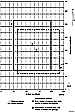
A recording swath should span an even number of receiver lines and an even number of source-line spacings (Figure 1).
This rule defines how wide a 3-D recording swath should be in the inline and cross-line directions so stacking fold is a constant, non-oscillating value across 3-D image space. This even-integer rule does not replace the previously described concept of using the depth of the primary imaging target to define the size of the recording swath; the rule merely adjusts swath dimensions by small amounts to ensure a uniform stacking fold is achieved. For example: If the depth and size of the primary imaging target cause a designer to define the in-line dimension of the recording swath to be 14,000 feet and the receiver station spacing to be 110 feet, the even-integer rule might make a designer adjust the inline dimension to 13,200 feet (120 receiver stations) or to 14,080 feet (128 receiver stations), depending on how many receiver stations occur between adjacent source lines. When applied in the cross-line direction, the even-integer rule says the recording swath should span an even number of receiver lines.
For example, a recording swath consisting of eight, 10 or 12 receiver lines is better than one consisting of nine, 11, or 13 lines. Note that the wording of the rule uses the phrase, “should span,” not the more restrictive condition, “must span.”
|
The reason for this even-integer guideline can be seen by referring to the equation for cross-line stacking fold FXL described in Part 3 of this article series, which is:
FXL = (1/2) (Number of receiver
If the number of receiver
An oscillating stacking fold is not fundamentally wrong; it simply introduces data-processing challenges that if not properly addressed cause a 3-D image to contain geometry-induced amplitude variations that have nothing to do with geology. When the even-integer rule is applied in the in-line direction, it requires the receiver
For example: A recording swath should span six, eight or 10 source-line spacings (which would involve seven, nine or 11 source
If for any reason - such as permitting constraints or lack of local surface access – a recording swath cannot span an even number of source-line spacings, the even-integer rule can be amended so the design requirement is:
Receiver
The rationale for this rule is that to avoid oscillations in stacking fold in the in-line direction, the stacking fold value FIL must be a whole number, not a fractional number. The only way to ensure FIL will be a whole number is to force the numerator in the FIL equation stated in last month’s article to be an even multiple of the denominator. Consequently, the dimension of a recording swath in the in-line direction should be an even multiple of the source-line spacing.
An example of the even-integer rule in 3-D design is illustrated as Figure 2 and Figure 3. The key geometrical parameters are:
● Source-line spacing = 1,320 feet. ● Receiver-line spacing = 880 feet. ● Source-station spacing = 220 feet. ● Receiver-station spacing = 110 feet.
Consequently, there are 12 receiver stations between adjacent source
For source stations b at the center of swath B, there are 42 receiver stations. Swath B thus spans an odd number (seven) of source-line spacings and violates the even-integer rule in the inline direction. Swath B is further undesirable because it does not start and stop on receiver
-� FIL = 3.5. ● FXL = 5.5. ● F = 19.25.
The 3-D stacking fold patterns produced by swaths A and B are compared on Figure 3. Swath A, which honors the even-integer design rule, creates a uniform stacking fold of 20 across the full-fold central portion of the 3-D grid. Swath B, which violates the even-integer rule, produces an oscillating stacking fold in both the in-line and cross-line directions, which results in a less-desirable checkerboard pattern of variable fold across the grid. Because the 3-D stacking fold is 19.25, the checkerboard pattern consists of abutted areas having stacking folds of 14, 18 and 22 that when averaged together give an average stacking fold of 19.25 over the full-fold portion of the image space. Although seismic data processors can usually adjust reflection amplitudes resulting from this type of irregular stacking fold so that the amplitudes are correctly balanced across the image space, it is prudent to use an acquisition geometry that does not create such data-processing problems.
Copyright © AAPG. Serial rights given by author. For all other rights contact author directly. |
 Even-integer rule