
 Print this page
PSIntegrated  Analysis
 of the Bakken Petroleum System, U.S. Williston Basin
By
Jack Flannery1 and Jeff Kraus2
Search and Discovery Article #10105 (2006)
Posted May 23, 2006
*Poster presentation, at AAPG Annual Convention, Houston, Texas, April 10-12, 2006 (with adaptation for HTML version)
Click to view posters in PDF format.
Poster 1 (3.6 mb) Poster (4.3 mb) Poster (3.4 mb)
1Tethys Geoscience, Denver Colorado
2Formerly Tethys Geoscience, Denver Colorado, currently ExxonMobil, Houston Texas ([email protected])
As much as 300 billion barrels of oil have been
generated from Upper Devonian-Lower Mississippian Bakken shales in the U.S.
Williston Basin. Recent industry activity has been focused on the middle Bakken
siltstone trend in Richland County, Montana. Operators there are enjoying
impressive success rates from wells that test 500 barrels of oil per day, on
average. Horizontal drilling, completion, and fracturing technology are
generally credited with opening up the historically disappointing play.
Companies are now extending the play in to other parts of the Basin. Future
success will rely largely upon developing a thorough understanding of the play
as it is currently being exploited and, especially, upon using that
understanding to identify key geologic controls of Bakken prospectivity that can
be capitalized on elsewhere.
Regional structure
and isopach maps, along with geochemical, thermal, and rock properties data, are
used to construct a three-dimensional thermal and fluid flow model of the basin.
The model provides unique insight into the evolution of the Bakken petroleum
system and allows us to predict reservoir quality, source maturation, and
volumes of oil expelled and currently trapped within the middle Bakken.
Integration and spatial analysis of modeled results, regional maps, and measured
data shed light upon the fundamental geologic variables and relationships that
control Bakken prospectivity. Key factors include maximum reservoir temperature,
stratigraphic architecture, and small-scale porosity development. We interpret
potential for additional middle Bakken exploration downdip from the current
siltstone play where the middle Bakken thickens and becomes sandier.
|
|
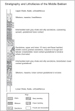
The Bakken Formation straddles the Devonian-Mississippian boundary and
is one of more than 20 oil and gas producing formations in the Williston
Basin (Figures 1-1 and
1-2). The Williston Basin chronostratigraphic
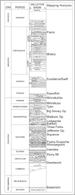
column (Figure 1-3) highlights stratigraphic units used to make the
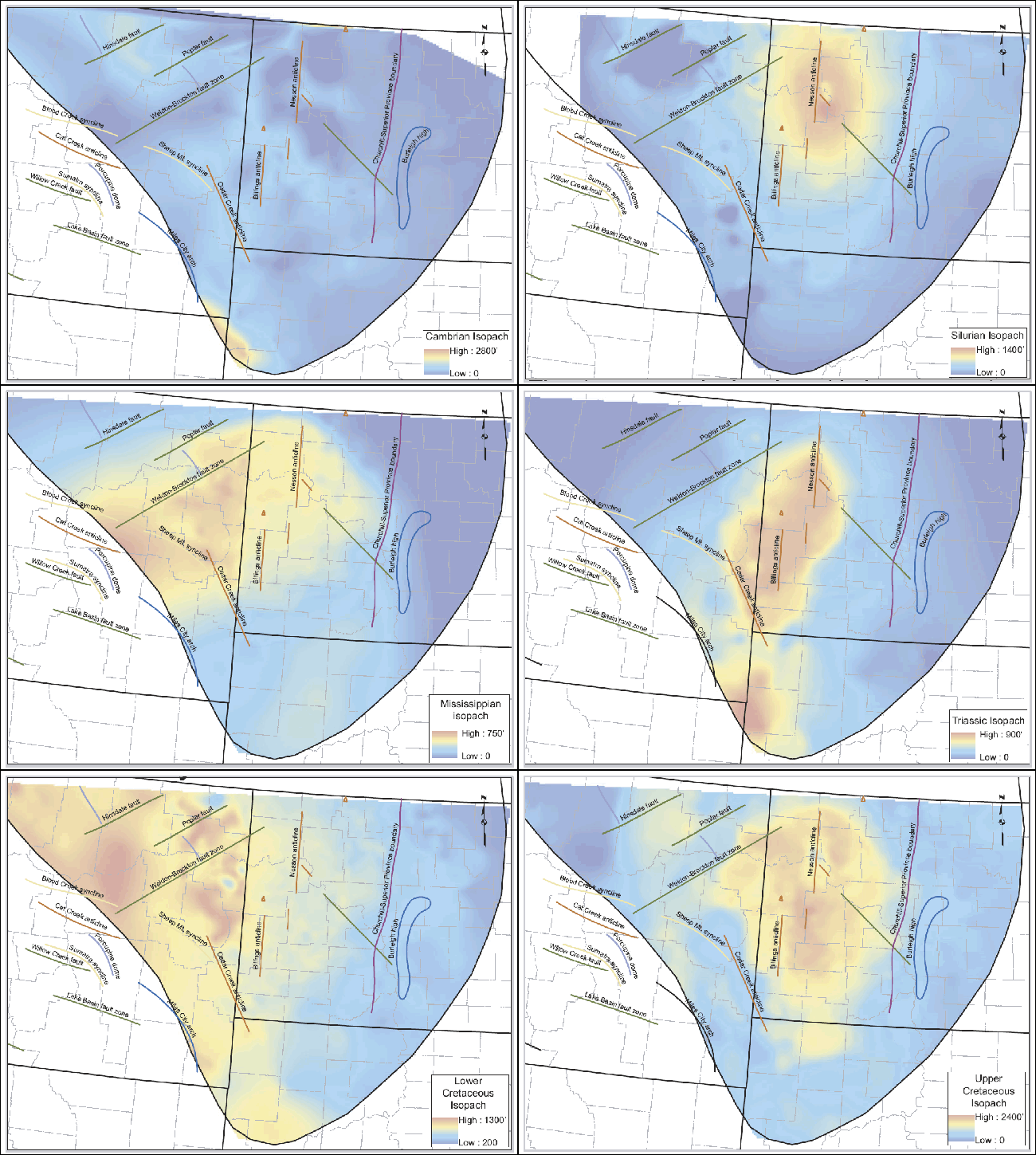
regional 22 depth structure and 19 isopach maps (e.g., Figures
1-4, 1-5,
1-6, 1-7,
1-8, and 1-9) that form the foundation of our regional
The Bakken Formation (Figures 1-10, 1-11,1-12, 1-13, 1-14, and 1-15) is informally subdivided into a middle dolomitic or silty member, which is sandwiched between upper and lower organic-rich, black shales. The black shales have generated approximately 300 BBO. Drilling in the active trend in Richland County, Montana is focused on the uppermost lithologic unit in the middle Bakken, which is predominantly dolomite in Montana and becomes more siliciclastic in North Dakota. The middle Bakken also contains a thick sand-rich unit that is present in North Dakota and Canada, but not in Montana. This sandstone unit presents an additional, largely untested target in the middle Bakken. It also provides the migration pathway for Bakken-sourced oils in to Saskatchewan.
The Bakken Formation pinches out along the southwestern margin of the
Basin. In the Richland County trend, the middle Bakken directly overlies
low-permeability Three Forks carbonates and is overlain by the upper
shale, which serves as the top seal. This stratigraphic trap is highly
effective and is a major control over the geographic extent which is
termed the Siltstone Pinch-Out Figure 1-16 shows, on an annual basis, production from the Bakken. The fundamental controls of middle Bakken prospectivity are: 1) Trapping Mechanism
2) Maximum Temperature
AcknowledgmentsData Sources: Technology: IHS Energy ESRI ArcGIS NDGS IES PetroMod3D USGS Spotfire DecisionSite Humble Geochem. Serv.
Bakken Petroleum SystemThermal Calibration
Geochemical Calibration
Modeling Results
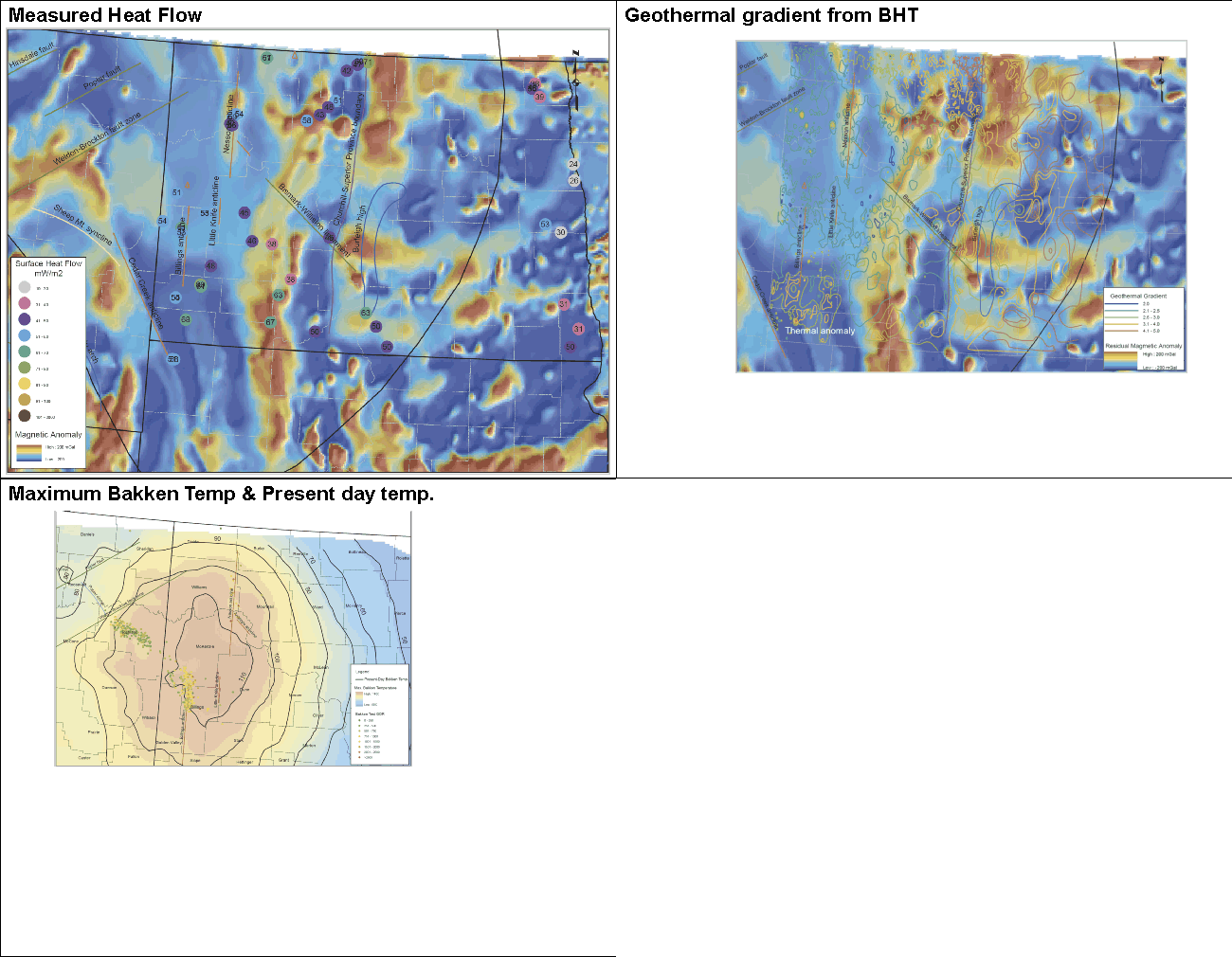
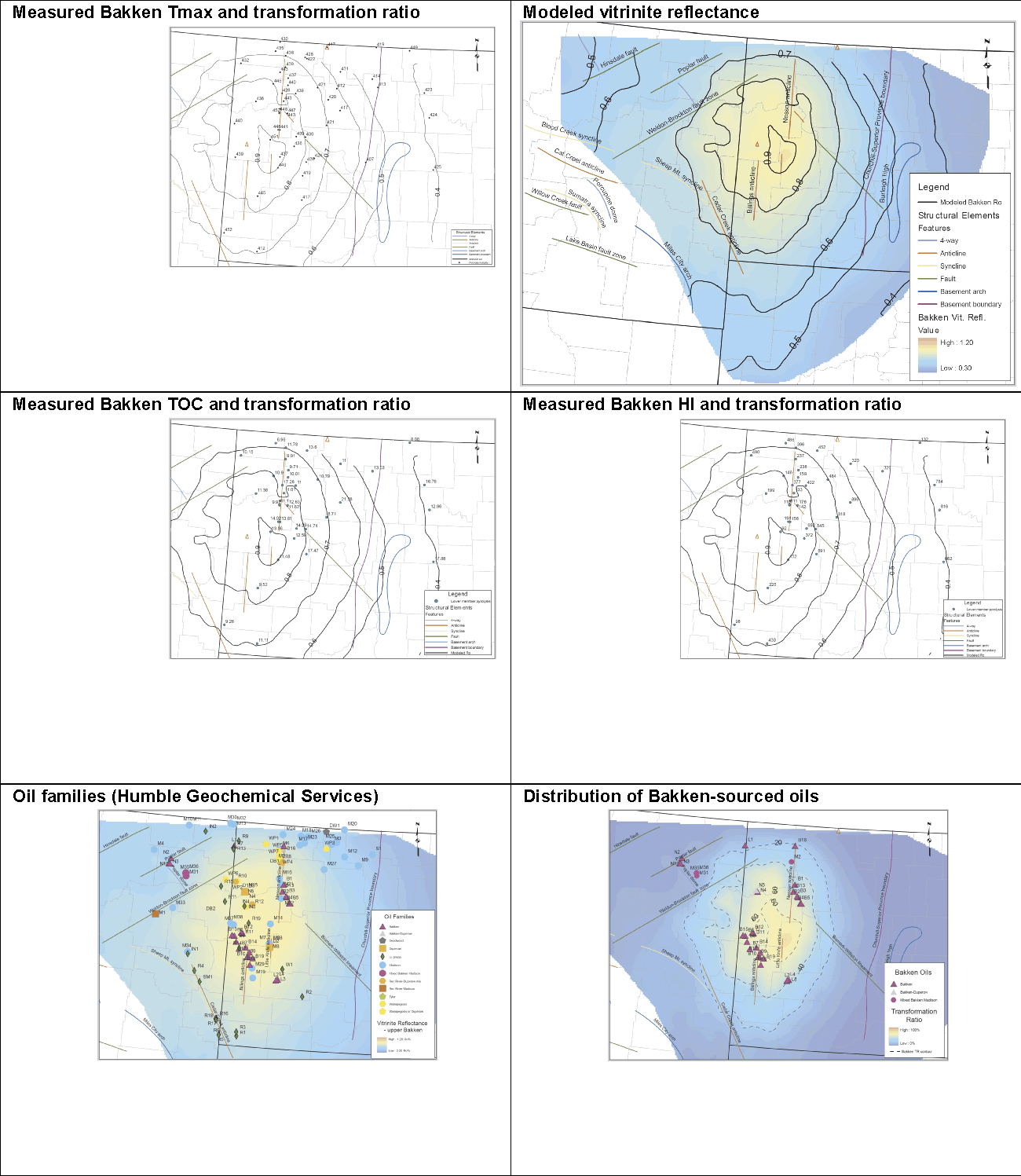
The basin model was calibrated with more than 12,000 corrected bottom hole temperature (BHT) measurements provided by the North Dakota Geologic Survey (NDGS) and the North America heat flow database, from Southern Methodist University (Figures 2-1 and 2-2). A relatively good correlation between regional heat flow and geothermal gradient provided additional support and was used as input to the 3D thermal modeling. A local thermal anomaly exists in the southwestern portion of North Dakota. Previous workers comment on a thermal anomaly along the Nesson Anticline, but this anomaly is not apparent in the complete database (Figures 2-1, 2-2, and 2-3). Thermal calibration was also substantiated byTmax data (Figure 2-4) from the upper and lower shale units. We had no vitrinite reflectance (only modeled reflectance [Figure 2-5]) or other paleothermometers to further calibrate the model. The middle Bakken reached its maximum temperature in the Early Tertiary and has since cooled 20-30C. Both the upper and lower shale units are very organic-rich across much of the basin (Figure 2-6). Measured hydrogen index decreases as maturity increases towards the basin center (Figure 2-7). Bakken-sourced oils (Figures 2-8 and 2-9) are generally found where the Bakken is mature, except in the Poplar Dome area where faulting has provided cross-formational migration pathways and in the northern part of the U.S. Williston Basin, where Bakken oil is migrating northward. The greatest volume of oil generated from the Bakken was in the northwest of the basin center (Figure 2-10), where both the upper and lower Bakken shale members are thickest and mature. The map of the relative volume of oil generated has been regridded and is unit-less (Figure 2-11).
|






|
|
|
|
|
|
|
|
|
|
|
|
|
|
|
 |


Critical Element
Analysis
Figure 3-1 demonstrates that oil test flow rate is depth dependent. Most successful Bakken wells have been drilled between 9,300 feet and 11,500 feet. The upper (shallow) limit is governed by thermal maturity and correlates with the depth at which significant oil expulsion begins.
Figure 3-2 shows a gradual increase in gas flow rate, which abruptly declines below 11,500 feet. This may signify a decline in reservoir quality with depth. However, more drilling is required to sufficiently determine whether a depth control over reservoir quality exists.
Figure 3-3 suggests a gradual increase in Gas:Oil Ratio (GOR) with depth, but the trend is poorly defined. Because GOR does not correlate well with depth or maturity, and the Bakken is a high-quality oil-prone source rock, possibly reservoir quality (RQ) or completion practices are the fundamental controls.
Figure 3-4 shows that tests with low oil flow rates tend to have higher gas flow rates. Because the Bakken is not overmature for oil generation anywhere in the basin, this relationship reinforces the idea that RQ and well completion practices govern gas production and GOR. Vertical Bakken tests have higher GOR than do horizontal. Recent Bakken completions in Richland Co., MT have lower GOR.
Figure 3-5 illustrates the depth-dependant relationship between oil expulsion and depth. Thickness and maturity control oil expulsion in the Bakken.
Figure 3-6 shows that local charge does not appear to govern oil test rates. However, in areas where the Bakken is immature, oil tests are low.
Play Fairway
Interpretation



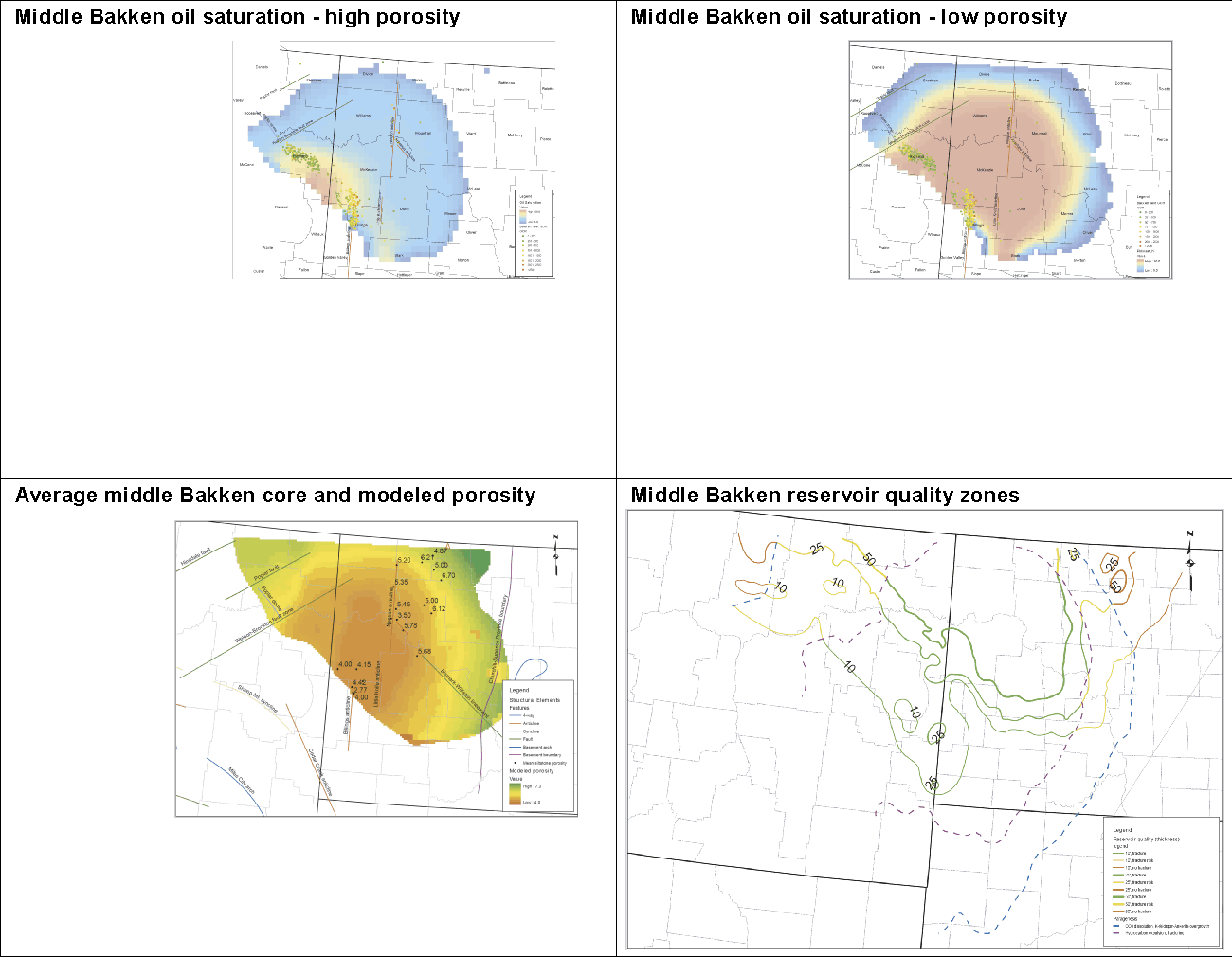
The first oil saturation map (Figure 3-7) is the result from PetroMod’s default compaction model. The second oil saturation map (Figure 3-8) is derived from the calibrated porosity-depth curve, and illustrates the result of 300 BBO with too little pore space to occupy. The actual distribution of oil saturation probably lies somewhere between these two results. We attempted to predict the occurrence of fracturing caused by overpressure during peak oil generation (>120C). We also modified default compaction parameters of the middle Bakken siltstones to match published core porosity data (Figure 3-9).
Depth of burial, estimated reservoir quality (Figure
3-10) and modeled
oil saturation (along with lower Bakken data [Figure
3-11) are used to
construct a map of middle Bakken play areas. The spots on the map are
middle Bakken wells completed since January 1, 2005, when we completed
our interpretation of the play fairways (Figure 3-12).
Conclusions
1) Maximum temperature, which was reached in the early Tertiary, is the governing factor over:
-
Oil generation
-
Fracture development
-
Primary reservoir quality.
2) The effectiveness of the stratigraphic trap along the southwestern basin margin is primarily responsible for:
-
>90% oil saturation
-
High drilling success rates.
3) These conditions also exist:
-
Downdip, toward the basin center
-
Along strike to the southeast.
4) Additional middle Bakken reservoirs exist in North Dakota; this
relationship may expand the play if:
if:
-
Structural traps can be identified
-
Fracture porosity is developed.
5) Bakken shales may prove productive with modern drilling and completion.