|
|
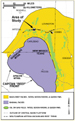
Grayburg Jackson Pool (study area) is one of several similar fields
overlying the crest of the Wolfcampian Artesia-Vacuum Abo reef trend.
Figure 1.1 is a map showing Upper
Guadalupian (Queen-Seven Rivers-Yates) production and depositional
facies of west Texas and southeastern New Mexico.
The axis of Artesia-Vacuum Abo reef trend, which lies north of the Seven
Rivers evaporite- carbonate carbonate transition, extends through the study area (Figure
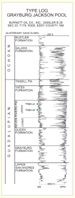
1.2) (Sheldon, 1954). Lithostratigraphic nomenclature for Grayburg
Jackson Pool and log features of the interval containing the reservoirs
are shown on the type log in Figure 1.3. transition, extends through the study area (Figure
1.2) (Sheldon, 1954). Lithostratigraphic nomenclature for Grayburg
Jackson Pool and log features of the interval containing the reservoirs
are shown on the type log in Figure 1.3.
“Potential oil pay zones” are based on log and core characteristics (i.e,.
neutron log porosity > 10%; core fluorescence). Present gas/oil contact
elevation is approximately 1830 feet above sea level.
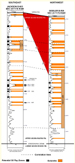
Figure 2.1 shows the correlation between
the two wells from which cores were examined as a part of this study.
Various facies types in the upper Seven Rivers Formation are described
with the photomicrographs shown in Figures 2.2-2.16. They range from
grainstone to boundstone. The carbonate units have been dolomitized.
Grainstones are illustrated in Figures 2.4,
2.10, 2.12,
and 2.15, and packstone is shown in Figures
2.2, 2.5,
2.6, 2.7,
2.8, 2.9,
2.16. Boundstone is represented by Figures
2.3, 2.11, and
2.13. Mudstone and anhydrite and shale are
illustrated in Figures 2.10,
2.13, and 2.14.
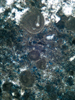 |
Figure 2.2. Dolomitized bioclastic
oolitic or pisolitic packstone. Gissler B #29, 1857.1 feet
depth, LA = 1.85 mm. |
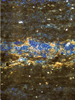 |
Figure 2.3. Dolomitized algally
laminated boundstone. Porosity is highest adjacent to wispy
pressure solution seams; possibly due to a thin horizon of
leached bioclastic material. Jackson B #35, 1884.9 feet depth,
LA = 2.54 mm. |
 |
Figure 2.4. Dolomitized grapestone
grainstone. Note micritic envelopes that have been filled by
anhydrite. Jackson B #35, 1895.8 feet depth, LA = 2.54 mm. |
 |
Figure 2.5. Peloidal bioclastic
packstone. Secondary porosity in this view is both interparticle
and moldic. Jackson B #35, 1895.9 feet depth. |
 |
Figure 2.6. Peloidal bioclastic
packstone. This close-up view from the same sample as in Figure
2.5 is of secondary moldic and intercrystalline porosity.
Jackson B #35, 1895.9 feet depth, LA = 0.38 mm. |
 |
Figure 2.7. Intraclastic
packstone/grainstone. Secondary porosity is both interparticle
and intercrystalline; Gissler B #29, 1897.3 feet depth, LA =
2.54 mm. |
 |
Figure 2.8. Dolomitized bioclastic
peloidal packstone. Note abundant intercrystalline and
interparticle porosity in this section. Replacement anhydrite
plugs some porosity. Gissler B #29, 1899.1 feet depth, LA = 2.54
mm. |
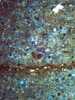 |
Figure 2.9. Sandy oolitic (?),
bioclastic peloidal packstone. Porosity in this very finely
crystalline dolomite is intercrystalline and interparticle. Note
the wispy pressure solution seam. Gissler B #29, 1911.4 feet
depth, LA = 2.2 mm. |
 |
Figure. 2.10. Anhydrite filled relict
porosity in pisolitic bioclastic grapestone grainstone. The
original isopachous cements fringing the pore have been
dolomitized along with the rest of the carbonates in this
section. Left - plane light; Right - crossed polarizers. Gissler
B #29, 1911.4 feet depth, LA = 0.38 mm. |
 |
Figure 2.11. Bioclastic peloidal
boundstone. Fracture porosity is open adjacent to dolomite, but
closed adjacent to anhydrite. Gissler B #29, 1915.9 feet depth,
LA = 2.54 mm. |
 |
Figure 2.12. Sandy pisolitic bioclastic
grapestone grainstone. Compaction has destroyed much of the
interparticle porosity in this section. Gissler B #29, 1922.4
feet depth, LA = 2.2 mm. |
 |
Figure 2.13. Anhydrite filling
fenestral porosity in algal laminated mudstone/boundstone
facies. Gissler B #29, 1944.7 feet depth, LA = 2.54 mm. |
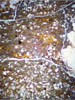 |
Figure 2.14. Sandy shale and nodular
anhydrite. A sabkha deposit. Jackson B #35, sidewall core at
2021.5 feet depth, LA = 2.54 mm. |
 |
Figure 2.15. Dolomitized grainstone
demonstrating secondary intercrystalline porosity. Jackson B
#35, sidewall core at 2042 feet depth, LA = 2.2 mm. |
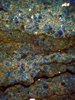 |
Figure 2.16. Bioclastic peloidal
dolomitized packstone. Note how wispy pressure solution fabrics
disrupt porosity distribution. Jackson B #35, sidewall core at
2078 feet depth, LA = 2.2 mm. |
Core Porosity and
Permeability (Figure 3.1)
The boundstone is characterized by low permeability even though the
porosity, in some cases, may be as much as 12-14% (Figure
3.1). The grainstones/packstones have higher permeability, and in
general they show a correlation between porosity and permeability. Due
to low permeability, “pay” porosity threshold is approximately 10%.
The predominance of thick units of massive to nodular chicken-wire
anhydrite interbedded with algally laminated carbonates indicates that
evaporative, supratidal, coastal sabkha conditions dominated this area (Figure
3.2). Thin, porous tidal-channel carbonate units represent
intermittent episodes of higher stands of base level, such that
intertidal depositional conditions shifted temporarily landward.
The shaded area in Figure 3.3 is maximum
pore volume (phi x ft >3). Although this figure is a “net pore volume”
map for the entire upper Seven Rivers, it illustrates distinct
shore-perpendicular (northwest-oriented) linear trends interpreted to be
indicative of tidal channels. This would suggest that the depositional
environment for porous units was probably intertidal.
1) Upper Seven Rivers Formation carbonates span a range of depositional
environments from tidal channels to intertidal algal mats. The
evaporites are interpreted to be supratidal sabkha deposits.
2) The pinchout of dolomite units into sabkha sulfate evaporites,
combined with drape over the underlying Artesia-Vacuum Abo reef,
provided excellent stratigraphic and structural conditions for trapping
petroleum.
3) Shoreline-perpendicular packstone/grainstone tidal channel facies
were extensively dolomitized, creating secondary porosity that may have
been preserved by early oil migration or by later dissolution of
gypsum/anhydrite.
4) Although porosity is potentially as high as 30% in the tidal-channel
facies, permeabilities are relatively low and the thin porous units are
preferentially oriented, making the Seven Rivers a challenging reservoir
for effective secondary recovery.
We wish to thank Burnett Oil Co. Inc., Fort Worth, Texas, for providing
the cores and thin sections studied.
Brister, B. S., and Ulmer-Scholle, D., 2000,
Interpretation of depositional environments of upper Seven Rivers
Formation from core and well logs, Grayburg Jackson Pool, Eddy
County, New Mexico in West Texas Geological
Society Publication #00-109, p. 65-72.
Esteban, M., and L.C. Pray, 1983, Pisoids and pisolite
facies (Permian), Guadalupe Mountains, New Mexico and West Texas, in
Coated grains: Springer-Verlag, p. 503-537.
Sheldon, V.P., 1954, Oil production from the Guadalupe
Series in Eddy County, New Mexico, in New Mexico Geological
Society: Guidebook, 5th Field Conference, p. 150-159.
Ward, Robert F., Christopher G. St. C. Kendall, and Paul
M. Harris, 1986, Upper Permian (Guadalupian) Facies and Their
Association with Hydrocarbons--Permian Basin, West Texas and New Mexico:
AAPG Bulletin, v. 70, p. 239-262.
Return to top.
|

 Print this page