|
The two sessions comprising the symposium, entitled
Giant Oil and Gas  Fields Fields of the Decade 1990-2000, represent the fourth
of a four-decade series, each commemorating important giant discoveries,
and resulting in the publication of AAPG memoirs, rich in their geologic
detail. of the Decade 1990-2000, represent the fourth
of a four-decade series, each commemorating important giant discoveries,
and resulting in the publication of AAPG memoirs, rich in their geologic
detail.
Presentations at the Denver 2001 symposium represent case
histories of giant fields in 14 countries:
-
Colombia (Warren et al.,
2001)
-
Brazil (Guimaraes et al.,
2001)
-
Mexico (Aquino et al., 2001;
Rosillo et al, 2001; Cabrera-Cuervo,
2001)
-
United States (Lawrence,
2001; Ayers, 2001)
-
Algeria (Lunn et al.,
2001)
-
Nigeria (Eyer and
Saugy, 2001)
-
Angola (Reeckmann et al.,
2001)
-
Kazakhstan (O’Hearn and Elliott,
2001)
-
Russia (Swirydczuk et al.,
2001)
-
Yemen (King et al.,
2001; Maycock and Galbiati, 2001)
-
Pakistan (Hurst et al.,
2001)
-
China (Patton et al.,
2001)
-
Indonesia (Lambert et al.
2001)
-
Australia (Seggie et al.
2001)
We are most grateful for the authors and their
respective companies for their contributions to the success of this
important series. As you probably know, I have been privileged to be
associated with this series during its more than forty-year span, and I
have been very proud of all those who have been played a part in its
longevity and accomplishments.
Figure
Captions 1-10
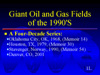 Figure 1—AAPG’s symposia of giant oil and gas fields: a four-decade
series.
Figure 1—AAPG’s symposia of giant oil and gas fields: a four-decade
series.
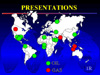 Figure 2—Giant fields represented by presentations in symposium at
AAPG Convention, Denver, 2001.
Figure 2—Giant fields represented by presentations in symposium at
AAPG Convention, Denver, 2001.
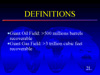 Figure 3—Definitions of giant oil and gas fields.
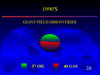 Figure 4—1990’s discoveries of giant oil vs. gas fields.
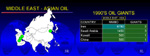 Figure 5—1990’s giant oil fields, Middle East – Asia.
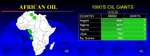 Figure 6—1990’s giant oil fields, Africa.
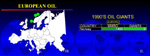 Figure 7—1990’s giant oil fields, Europe.
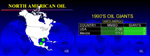 Figure 8—1990’s giant oil fields, North America.
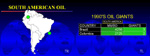 Figure 9—1990’s giant oil fields, South America.
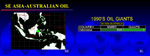 Figure 10—1990’s giant oil field, Southeast Asia – Australia.
Scope and Definitions
(Figures 3
and 4)
In
our study we use the definitions that a giant oil field contains more
than 500 million barrels of oil recoverable, and a giant gas field
contains more than 3 trillion cubic feet of gas (Figure
3).
During
the 1990’s 37 giant oil fields were discovered, and 40 giant gas
fields were also discovered (Figure 4). Let us now review these
discoveries in the context of their global location.
Giant
Oil Fields
Middle East –Asian Giant Oil Fields (Figure
5)
This region contains the largest oil field
found in the 1990’s: Azadegan, with 6 billion barrels of oil. The
field is located in southwestern Iran, near Iraq. Last November, Iran
and Japan reached an agreement allowing Tokyo priority bidding rights to
develop the field, a key goal for oil-dependent Japan.
The Saudi 1990’s giants include Hazmiyah and
Raghib, examples of Paleozoic exploration success in central Arabia.
The Chinese giant field is Peng Lai (Patton
et al., 2001).
African Giant Oil Fields
(Figure 6)
During the 1990’s African giant oil fields were
discovered in Angola, Nigeria, Algeria, Libya, and Equatorial Guinea.
Case history of Kizomba Field, offshore Angola, is
given by Reechmann et al. (2001); Nigerian fields are characterized by
Eyer and Saugy (2001).
Africa contains the fifth largest oil field
discovered in the 1990’s: Ourhoud in Algeria (Lunn et al.,
2001).
Production is from Triassic reservoirs at approximately 3000 meters.
European Giant Oil Fields
(Figure 7)
Only one
country was represented by discoveries of giant fields in the 1990’s:
Norway, with three giant offshore fields--Grane, Norn, and Skarv-Idun.
Grane, the most southern of the three, is the largest with 700 million
barrels recoverable. Production is from Paleocene submarine fan systems.
North
American Giant Oil Fields (Figure 8)
The deepwater fields, Crazy Horse and Mad Dog,
represent the United States’ giant discoveries. Crazy Horse was the
fourth largest oil field found in the 1990’s. Lawrence (2001)
describes exploration and development in this area.
Mexican 1990 giant discoveries are Zaap and Sihil (Aquino
et al., 2001). Rosillo et al. (2001) characterizes the
Jujo-Taecominoacan Field, and Cabrera-Cuervo (2001) also describes
offshore Litoral de Tabasco fields.
South
American Giant Oil Fields (Figure 9)
During the
1990’s two giant oil fields were discovered in onshore Colombia (Cusiana
[Warren et al., 2001] and Cupiagua); and three giants discovered
offshore Brazil are Roncador (Guimaraes et al.,
2001), Albacora East,
and 1-RJS-539.
Two of the five largest global oil discoveries in
the 1990’s occurred in South America: Roncador (2nd
largest) and Cusiana (3rd largest).
Southeast Asia – Australian Giant Oil Field
(Figure 10)
Only one giant oil field was discovered in the
1990’s in the SE Asia – Australian region: West Seno in Indonesia.
This is in sharp contrast to the several gas discoveries in the region,
as is noted below.
Figure
Captions 11-19
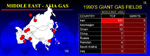 Figure 11—1990’s giant gas fields, Middle East – Asia.
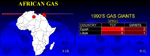 Figure 12—1990’s giant gas fields, Africa.
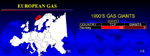 Figure 13—1990’s giant gas fields, Europe.
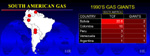 Figure 14—1990’s giant gas fields, South America.
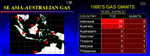 Figure 15—1990’s giant gas fields, Southeast Asia – Australia.
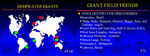 Figure 16—Giant field trends: 1990’s deepwater discoveries.
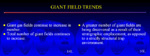 Figure 17—Giant field trends: gas discoveries, total discoveries, and
stratigraphic emplacement.
Figure 17—Giant field trends: gas discoveries, total discoveries, and
stratigraphic emplacement.
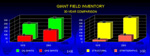 Figure 18—Giant field inventory—30-year comparison (1970-2000)—oil
vs. gas giants and structural vs. stratigraphic.
Figure 18—Giant field inventory—30-year comparison (1970-2000)—oil
vs. gas giants and structural vs. stratigraphic.
 Figure 19—Summary: factors related to 1990’s giant fields.
Giant Gas Fields
Middle
East – Asia Giant Gas Fields (Figure 11)
There were 14 giant gas fields discovered in the
Middle East and Asia during 1990’s, including four of the five largest
discoveries of all regions, three of which are in Iran, the other being
in Azerbaijan. The largest, South Pars field of Iran, “discovered”
in 1991, is the across-border extension of the supergiant North Field of
Qatar, discovered in 1971.
African
Giant Gas Fields (Figure 12)
There were 3 giant gas fields discovered in Africa
during the 1990’s, two of which are located offshore Nile Delta,
Africa. The third giant gas field is located in western Libya.
European
Giant Gas Fields (Figure 13)
There were three European giant fields discovered
in the 1990’s, all located in the Voring and More Norwegian frontier
basins. The largest gas field --
the deepwater Ormen Lange -- is the result of post-break-up compression,
which has formed some of the most attractive structural traps in this
Norwegian frontier area.
South
American Giant Gas Fields (Figure 14)
The six South American giants appear to lie in an
arc described by the deeper portions of the foredeep basins that run
north-south against the South American Cordillera. The largest gas field
discovery, Itau-San Alberto, is in Bolivia. With 14 tcf, it ranks as the
fifth largest gas discovery of the 1990’s.
Southeast
Asia – Australian Giant Gas Fields
(Figure 15)
There were thirteen giant gas fields discovered in
the 1990’s, spread out over this large area. All are offshore, with
the exception of Sumpal, which is in onshore South Sumatra. The largest
discovered field in the region is Tangguh-Vorwata with 11 tcf, in the
Bintuni basin (located in
the westernmost part of Irian Jaya, Indonesia).
Our Indonesian case history
is Peciko (Lambert et al., 2001), which produces gas from Upper Miocene
deltaic reservoirs. It is located in the prolific Kutei basin.
Giant Field Trends
Deepwater
Discoveries (Figure 16)
Due to advancing technology, there was and is a
clear shift toward the search and discovery below the deep waters
surrounding the global continents. During the 1990’s, giant deepwater
discoveries were made in offshore Brazil, Angola, United States,
Indonesia, Australia, Norway, Philippines, and Russia.
More
Giants, Greater Percentage of Giant Gas Fields (Figures 17 and
18)
Over
the 30-year course of our study of giant fields, and as documented in
the associated AAPG memoirs, we have seem some remarkable changes, two
of which are:
1. There has been a 53% increase in the number of
giant fields during the 30-year time period.
2. Within this inventory of fields, gas discoveries
are increasing at an accelerated rate when compared to oil discoveries.
This trend continued in the year 2000, when 8
giants were discovered, seven of which were gas. The lone oil discovery
was the supergiant East Kashagan found in the Caspian Sea.
Stratigraphic-controlled
giant fields (Figures 17 and 18)
Our
final giant field trend is the increase of stratigraphic-controlled
traps as a percentage of all traps. The data used for this comparison
are our original giant field tables published in 1968 in Memoir 14,
compared with present-day data provided by the IHS Group.
Historically,
many stratigraphic traps were found accidentally while drilling for a
structural objective. As pointed out by Dolson et al. (1999) in the AAPG
Treatise of Petroleum Geology, this was due to (1) an historical
emphasis on structures and (2) the difficulty in seismically imaging
stratigraphic-trap components. Hence 30 years ago only about 10% of the
giants were stratigraphically controlled. However, seismic imaging of
stratigraphic-trap components has become a reality. This has led to a
major increase of giant field discoveries with a strong stratigraphic
component. Ninety-three of the 427 giants fields on our 2000 list
contain strong stratigraphic components. We believe this trend will
continue into the future, tracking the on-going improvements in seismic
technology.
Summary and Conclusions (Figure
19)
Deepwater
areas are increasingly important settings for giant fields. Discoveries of
gas fields are increasing with respect to giant oil fields. Seismic
imaging has been critical to discovery of giants and will continue in that
role. A major result has been an increase in stratigraphic emplacement,
and that trend also will continue.
Acknowledgments
I
would like to acknowledge Jerry Eyer, my co-chairman of the first session
of the symposium, and Bob Merrill and Mike Horn, chairmen for the second
session; also, Henry Pettinghill is acknowledged for his input in
constructing the giant field summaries used in this study.
References
(Clicking on a reference will open it in PDF format)
Aquino,
J.A.L., J.M. Ruiz, M.A. Flores, and J.H. Garcia, 2001, The Sihil Field:
Another giant below Cantarell, offshore Campeche, Mexico: 2001 Annual
Meeting AAPG Abstracts.
Ayers,
W.B., 2001, Coalbed methane in the Fruitland Formation, San Juan Basin,
Western USA: A giant, unconventional gas play: 2001 Annual Meeting AAPG
Abstracts.
Cabrera-Cuervo,
C., 2001, Offshore litoral de Tabasco fields, Southeastern Mexico: 2001
Annual Meeting AAPG Abstracts.
Dolson,
J.C., M.S. Bahorich, R.C. Tobin, E.A. Beaumont, L.J. Terlikoski, and M.L.
Hendricks, 1999, Exploring for stratigraphic traps, in Exploring for oil
and gas traps: AAPG Treatise of
Petroleum Geology / Handbook of Petroleum Geology, p. 21-1 – 21-68.
Eyer,
J., and L. Saugy, 2001, Exploration of the Niger delta (abstract): 2001
Annual Meeting AAPG Abstracts.
Guimaraes,
P.D.T.M., H.D. Rangel, A.S. Barroso, M.K. Mihaguti, C.V. Stank, D.D.
Castro, M.B. Santos, R.R.P. Alves, and W.P. Lemos, 2001, The Barracuda and
Roncador giant fields, deep water Campos Basin, Brazil: 2001 Annual
Meeting AAPG Abstracts.
Hurst,
J.M., D. Schelling, A. Ayub, and P. Bird, 2001, Zarghun South: Unique
aspects of the frontier gas discovery in Baluchistan (Pakistan): 2001
Annual Meeting AAPG Abstracts.
King,
W.A., B.R. Mills, S. Gardiner, and A.A. Abdellah, 2001, The Masila fields,
Republic of Yeman: 2001 Annual Meeting AAPG Abstracts.
Lambert,
B., B.C. Duval, Y. Grosjean, I. Umar, and P. Zaugg, 2001, The Peciko case
history: Impact of an evolving geological model on the dramatic increase
of gas reserves in the Mahakam Delta, Indonesia: 2001 Annual Meeting AAPG
Abstracts.
Lawrence,
D.T., 2001, Successful exploration and development of significant oil
fields in the deepwater Gulf of Mexico: 2001 Annual Meeting AAPG
Abstracts.
Lunn,
B., B. Daniels, S. Linnard, and L. Okbi, 2001, The Ourhoud Field, Berkine
Basin, Algeria: 2001 Annual Meeting AAPG Abstracts.
Maycock,
I., and L. Galbiati, 2001, A giant field discovery in the Marib-Al Jawf
Basin, Republic of Yemen: 2001 Annual Meeting AAPG Abstracts.
O’Hearn,
T., S. Elliott, and A. Samsonov, 2001, Karachaganak Field, Kazakhstan:
2001 Annual Meeting AAPG Abstracts.
Patton,
B.D., J.B. O’Reilly, M.D. Kuykendall, R.P. Mott, and M.Q. Gui, 2001,
Petroleum geology of the Peng Lai 19-3 oil complex , Bohai Bay, People’s
Republic of China: 2001 Annual Meeting AAPG Abstracts. , Bohai Bay, People’s
Republic of China: 2001 Annual Meeting AAPG Abstracts.
Reeckmann,
S.A., D.K.S. Wilkin, and J. Flannery, 2001, Kizomba, a deepwatger giant
field, Block 15, Angola: 2001 Annual Meeting AAPG Abstracts.
Rosillo,
J., J. Corrillo, and C. Milland, 2001, Geological charactgerization of the
Jujo-Tecominoacan Field, Tabasco, Mexico: 2001 Annual Meeting AAPG
Abstracts.
Seggie,
R.J., R.B. Ainsworth, D. Johnson, J.P. Koninx, N.G. Marshall, A. Murray,
P.M. Stephenson, and S.E. Phillips, 2001, Petroleum geology of the
Sunrise/Troubadour super giant gas condensate field, Timor Sea, Australia:
2001 Annual Meeting AAPG Abstracts.
Swirydczuk,
K., B. Rapoport, and V. Scherbakov, 2001, Yuzhno Khilchuyu field, Timan
Pecora Basin, Russia: 2001 Annual Meeting AAPG Abstracts.
Warren,
E.A., A. Michell, C. Estrada, R.C. Merrill, W. Leel, J. Hervochon, and O.
Pulido, 2001, The Cusiana Field, Llanos Foothills, Colombia: lessons
learned from the rapid development of a giant oil field: 2001 Annual
Meeting AAPG Abstracts.
|

 Print this page