|
Figure Captions
 Figure 1. Index map for West Carney Hunton Figure 1. Index map for West Carney Hunton
 Field Field (WCHF) in Lincoln and Logan counties, Oklahoma. (WCHF) in Lincoln and Logan counties, Oklahoma.
 Figure 2. Distribution of
pre-Woodford
(Devonian) rocks in Oklahoma (from Jordan, 1965). The field area lies a
relatively short distance from the north and east subcrop edge of the
Hunton (purple). Arkoma = Arkoma Basin; H-PV = Hunton - Pauls Valley
Uplift. Figure 2. Distribution of
pre-Woodford
(Devonian) rocks in Oklahoma (from Jordan, 1965). The field area lies a
relatively short distance from the north and east subcrop edge of the
Hunton (purple). Arkoma = Arkoma Basin; H-PV = Hunton - Pauls Valley
Uplift.
 Figure 3. Tectonic/depositional features in
Oklahoma and environs during Late Paleozoic (After Northcutt and
Johnson, 1997). Figure 3. Tectonic/depositional features in
Oklahoma and environs during Late Paleozoic (After Northcutt and
Johnson, 1997).
 Figure 4. Stratigraphic section in the West
Carney area. Figure 4. Stratigraphic section in the West
Carney area.
 Figure 5. Production record, Marjo Operating
Company, Inc. No. 1 Schwake, showing increase in oil and gas and
decrease in water with time Figure 5. Production record, Marjo Operating
Company, Inc. No. 1 Schwake, showing increase in oil and gas and
decrease in water with time
 Figure 6. Stratigraphic column of
Ordovician-Devonian Hunton strata, along with subjacent and overlying
strata. Numerous unconformities are present within the Hunton. Figure 6. Stratigraphic column of
Ordovician-Devonian Hunton strata, along with subjacent and overlying
strata. Numerous unconformities are present within the Hunton.
 Figure 7. Hunton facies map with structural
map of WCHF area, on the base of the Hunton Group / top of the Sylvan
Shale. Structural features are represented generally by a southwesterly
dip with north-northeast-trending faults, along with an east-west fault
in the south. Cochrane Formation, dominantly limestone, is flanked to
the east and northeast, as well as to west and southwest by dolomite of
the younger Clarita Formation. Figure 7. Hunton facies map with structural
map of WCHF area, on the base of the Hunton Group / top of the Sylvan
Shale. Structural features are represented generally by a southwesterly
dip with north-northeast-trending faults, along with an east-west fault
in the south. Cochrane Formation, dominantly limestone, is flanked to
the east and northeast, as well as to west and southwest by dolomite of
the younger Clarita Formation.
 Figure 8. Isopach map of Hunton Group in WCHF
and locations of cored wells and lines of stratigraphic cross-sections
(Figures 13,
15,
16, and
17). Hunton shows a central north-trending “thin” and
a narrow easterly
trend in the northern part where the Hunton is absent or anomalously
thin. Figure 8. Isopach map of Hunton Group in WCHF
and locations of cored wells and lines of stratigraphic cross-sections
(Figures 13,
15,
16, and
17). Hunton shows a central north-trending “thin” and
a narrow easterly
trend in the northern part where the Hunton is absent or anomalously
thin.
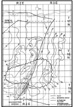 Figure 9. Isopach map of Mississippian strata
in area of WCHF; a thicker section in the downthrown block of a
north-northeast-trending fault indicates structural activity during
deposition. Figure 9. Isopach map of Mississippian strata
in area of WCHF; a thicker section in the downthrown block of a
north-northeast-trending fault indicates structural activity during
deposition.
 Figure 10.
Pre-Woodford subcrop map of
Oklahoma (from Amsden, 1975). Figure 10.
Pre-Woodford subcrop map of
Oklahoma (from Amsden, 1975).
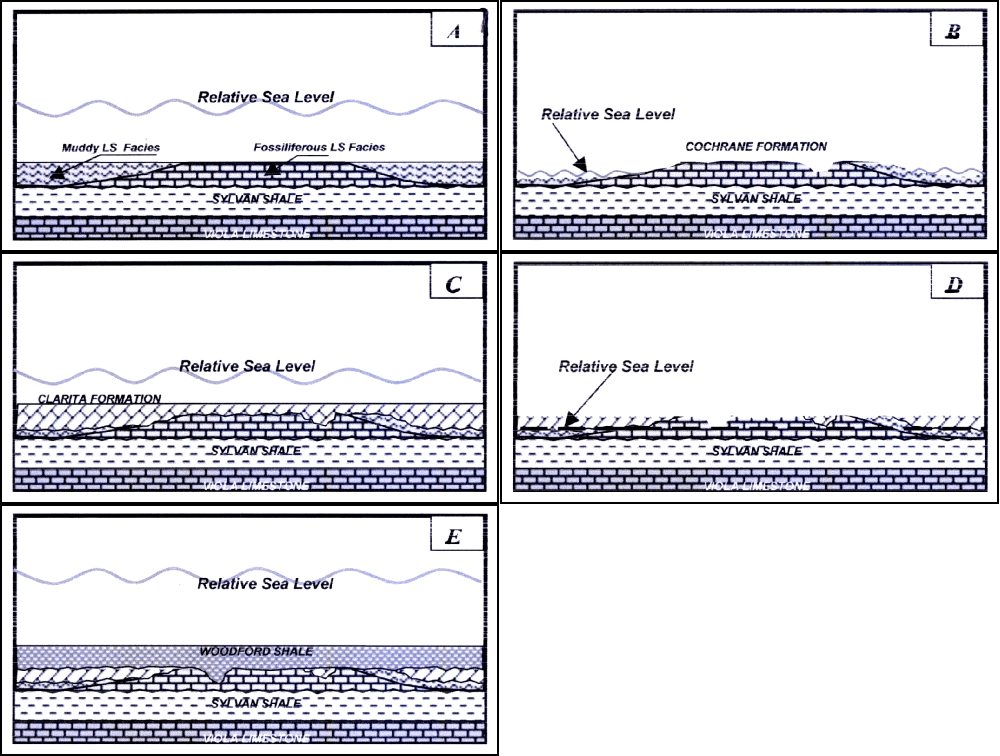
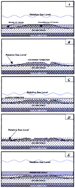 Figure 11. Sequence of diagrammatic east-west
cross-sections, showing the depositional history of the West Carney
Hunton Field. Figure 11. Sequence of diagrammatic east-west
cross-sections, showing the depositional history of the West Carney
Hunton Field.
Click here for sequence
of phases of depositional history.
 Figure 12. Map of vitrinite reflectance
of Upper Devonian formations in
Oklahoma
and Northwestern Arkansas (from Comer, 1992). Figure 12. Map of vitrinite reflectance
of Upper Devonian formations in
Oklahoma
and Northwestern Arkansas (from Comer, 1992).
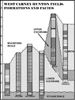 Figure 13. East-west stratigraphic
cross-section of Hunton Group, WCHF, showing formations and carbonate
facies. Location in Figure 8. Figure 13. East-west stratigraphic
cross-section of Hunton Group, WCHF, showing formations and carbonate
facies. Location in Figure 8.
 Figure 14. Facies model for Silurian carbonate
“shore” and shelf deposits (after Johnson, 1987). Figure 14. Facies model for Silurian carbonate
“shore” and shelf deposits (after Johnson, 1987).
 Figure 15. Stratigraphic cross-section (X-X’),
westerm part of WCHF, showing dolomite facies (thought to be Clarita) as
channel fill. Limestone facies that has been incised is regarded as
Cochrane. Figure 15. Stratigraphic cross-section (X-X’),
westerm part of WCHF, showing dolomite facies (thought to be Clarita) as
channel fill. Limestone facies that has been incised is regarded as
Cochrane.
 Figure 16. Stratigraphic cross-section (Z-Z’),
northern part of WCHF, with facies change from porous to nonporous
limestone (Cochrane) below unconformable contact with Woodford Shale.
Pre-Woodford erosion resulted in significant relief and local deep
incision. Figure 16. Stratigraphic cross-section (Z-Z’),
northern part of WCHF, with facies change from porous to nonporous
limestone (Cochrane) below unconformable contact with Woodford Shale.
Pre-Woodford erosion resulted in significant relief and local deep
incision.
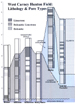 Figure 17. East-west stratigraphic
cross-section of Hunton Group, WCHF, showing lithology and pore types.
Well control is the same as for section in Figure 13.
Location in Figure
8. Figure 17. East-west stratigraphic
cross-section of Hunton Group, WCHF, showing lithology and pore types.
Well control is the same as for section in Figure 13.
Location in Figure
8.
 Figure 18. Pore types in Hunton Group,
WCHF,
with code, symbol, and description. Figure 18. Pore types in Hunton Group,
WCHF,
with code, symbol, and description.
 Figure 19. Plot of core porosity versus
neutron porosity, Hunton Group, WCHF. Figure 19. Plot of core porosity versus
neutron porosity, Hunton Group, WCHF.
Return
to top.
The West Carney Hunton Field (WCHF) is located
in Logan and Lincoln counties in north-central Oklahoma in T14N-T16N,
R1E-R3E (Figure 1). The field is in an area generally described as the
Central Oklahoma Platform or Eastern Oklahoma Shelf; a structural
element bounded by the Nemaha Range immediately to the west, the Ozark
Uplift to the east and northeast, the Hunton-Pauls Valley Uplift to the
south, and the Arbuckle Uplift and Arkoma Basin to the south and east (Figure
2). This location was on the northeast flank of the Oklahoma
Basin (Figure 3) during deposition of the Hunton but was separated from
the deeper part of the basin by the Nemaha Uplift during Pennsylvanian
time.
The field produces oil and gas from the Hunton
Group, which is a major target for petroleum exploration in the southern
Midcontinent. Stratigraphically, the Hunton Group lies between the
subjacent Sylvan Shale and the superjacent Woodford Shale (Figure
4).
The West Carney Hunton Field is located about 6 miles southwest of the
truncated edge of the Hunton beneath the Woodford Formation (Figure
2).
The Hunton crops out only in eastern Oklahoma, on the flanks of the
Ozark Uplift, and in southern Oklahoma, in the Arbuckle Mountain
complex. Because of its limited exposure and its distance from the study
area, understanding the Hunton Group in north-central Oklahoma must be
obtained from study of core data and wireline logs, types of data for
which this study has exceptional control.
Development of West Carney Hunton Field began
in 1996, when Altex Resources placed the Decker # 1 (NE Sec.1, T15N,
R2E) on a large beam pump and soon realized that large quantities of oil
and gas could be produced by moving larger amounts of water. Four
companies operate a majority of the wells in the field: Altex Resources,
New Dominion, Craig Elder, and Marjo Operating Company. The field, which
covers nearly 30,000 acres, currently has more than 230 producing wells
and 16 saltwater disposal wells. The field produces an average of 6000
barrels of oil, 55,000 MCF gas, and 86,000 barrels of water daily.
In 1999, the U.S. Department of Energy,
National Petroleum Technology Office awarded Contract DE-FC26-00BC15125
to the University of Tulsa Department of Petroleum Engineering, Dr.
Mohan Kelkar, Project Director, for a study of the “Exploitation and
Optimization of Reservoir Performance in Hunton Formation, Oklahoma”.
Participating in the study are Marjo Operating Company, Inc. and Joe
Podpechan, as the operating company, Dr. Kishore Mohanty, University of
Houston, who performs special core analyses, graduate students in the
Department of Petroleum Engineering, University of Tulsa, and Dr. James
R. Derby, Consultant. Dan Ferguson, U.S. DOE National Petroleum
Technology Office, Tulsa, Oklahoma, is the Project Manager.
This report focuses on a geological
description of the reservoir based on core descriptions by Derby and
Ramakrishna, and regional correlation and mapping by Podpechan.
Podpechan and Derby have cut most of samples for paleoanalysis and
thin-sections. Derby and Andrews wrote this report, and Andrews prepared
most of the illustrations.
This study is unusual in the abundance of data
available. Over 500 wells have penetrated the Hunton in the field; many
were drilled to the underlying Ordovician “Wilcox” (Simpson Group) in an
earlier, deeper play. Twenty-seven cores are currently available for
study. Marjo cores every well it drills. Cores of either the entire
Hunton or as much of the Hunton that could be recovered in two 60-ft.
core barrels have been cut in 27 wells. Cores are routinely slabbed,
photographed, and analyzed by Stim Lab. Fourteen wells have been
described in detail. Descriptions of these wells are available in the
project’s Budget Period 1 Report, which may be obtained from the DOE
office in Tulsa. Biostratigraphic age determinations from conodont
studies by Dr. James Barrick of Texas Tech University provides control
on correlations and formation assignment, based on samples from 8 wells.
Although production techniques and engineering
are part of this overall study, those topics will not be discussed in
detail here. David Chernicky and Scott Schad of New Dominion described
production techniques in an Oklahoma Geological Survey workshop in May,
2002. Vineet Marwah, University of Tulsa Department of Petroleum
Engineering, recently presented an interpretation of the primary
production mechanism of part of the field (in his M.S. thesis).
Engineers in this research project presented two papers on the Hunton
reservoir and production at the SPE/DOE Symposium on Improved Oil
Recovery, April 13-17, 2002, in Tulsa.
This study and the high level of interest
concerning it were prompted, at least in part, by the unique production
characteristics of the field. When initially completed, wells in the
field produce large amounts of water with a relatively low oil-and-gas
cut. As the water within the reservoir is pumped, the gas volume slowly
begins to increase, followed by an increase in oil cut (Figure
5).
Within a few days to a few months, depending on several factors, the
typical well represents a profitable venture.
The purpose of this work is to develop a
geological understanding of the Hunton Group in the West Carney Hunton
Field, especially in relation to optimizing reservoir performance and
exploitation of the Hunton reservoir. When faced with large initial
water rates associated with producing from this type of reservoir, most
oil and gas companies would cease operation before significant oil and
gas production is realized, resulting in a field of this nature being
bypassed. Alternatively, it is important to identify and define the
unique characteristics of this type of reservoir in order to avoid the
economic disaster caused by operators completing and pumping every new
well with the mistaken hope that commercial production will result, when
in fact, the reservoir is “wet” in the conventional sense, and
producible oil is not present. Understanding the geology related to the
reservoir in the West Carney Hunton Field may help in the early
assessment of other similar type reservoirs elsewhere.
Return
to top.
The stratigraphic section in the West Carney
area is shown in Figure 4. Units both above and below the Hunton Group
are expressed in terms of general lithology, age, and thickness. Permian
strata crop out within the study area. Depth to the Hunton Group in the
field averages about 5000 ft.
Numerous formations in the Pennsylvanian
produce oil in the area. The Ordovician Bromide sand (“Second Wilcox”)
also is a major petroleum producer in the area and the target of most
wells that fully penetrate the Hunton strata. Although the Arbuckle
dolomite does not produce oil and gas in the area, it is an excellent
zone for the disposal of salt water.
The interval of specific interest in the West
Carney Hunton Field is as follows:
Woodford Formation--a black shale and rich source rock. The Woodford is
reported to be the source of 70% of the oil produced in
Oklahoma (Comer and
Hinch, 1987).
Hunton Group--a shallow-shelf carbonate of latest Ordovician through
Middle Devonian age. Detailed subdivisions of the Hunton Group are shown
in Figure 6. Only the Lower Silurian portion has been recognized in WCHF.
Sylvan formation--a gray-green marine shale, commonly containing
graptolites, suggesting that it was deposited in relatively deep water,
below storm wave base.
The litho- and time-stratigraphic diagram of the Hunton Group in
Oklahoma prepared by Stanley (2001) is shown in Figure
6. This diagram
shows the biostratigraphic correlation of global conodont biozones and
North American brachiopod biozones with the fauna in the rock units of
the Hunton Group in Oklahoma. The Hunton Group ranges in age from latest
Ordovician (Hirnantian substage, Ashgillian stage ), about 440 Ma, to
Middle Devonian, 380 Ma; a time span of approximately 60 million years.
The Hunton Group in Oklahoma is generally in conformable contact with
the subjacent Sylvan shale, and in unconformable contact with the
Woodford Shale above.
As determined from conodont studies, the
entire West Carney field is composed of the Cochrane and Clarita
formations of the Chimney Hill Subgroup; representing an estimated 10
million years, or only 16% of total “Hunton time”. There is no present
evidence for the presence of the basal Keel Formation or for the
Henryhouse, Bois d’Arc, or Frisco formations above the Chimney Hill.
Therefore, within the West Carney field, the Hunton Group is in
unconformable relationship with both the underlying Sylvan Shale and the
overlying Woodford Shale. The hiatus above the Clarita and/or Cochrane
Formations in the field, accounts for some 50 million years of time
during which sediment was either never deposited, or if deposited,
subsequently eroded.
WCHF lies along the northern flanks of the
Paleozoic Oklahoma Basin (Figure 3). The strata deposited in most parts
of the Oklahoma Basin are widespread and laterally persistent,
indicating the relative tectonic and orogenic stability of the region
during Early Paleozoic. The Hunton Group was deposited in a broad,
shallow epicontinental sea, with depositional slope toward the
southwestward into the more rapidly subsiding Southern Oklahoma
Aulacogen. This southwest dip was accentuated in Late Devonian
(pre-Woodford) time with uplift of the broad Chautauqua Arch (Figure
3).
Before deposition of Pennsylvanian beds, there was truncation of the
Mississippian, Woodford, and Hunton in the WCHF area; based on subcrop
patterns (Jordan, 1962), the general area was gently tilted
east-southeastward, in response to the cumulative effects of the Nemaha
Uplift to the west and the Arkoma Basin to the east and southeast. The
eastward tilting apparently continued throughout the remainder of
Paleozoic, as evidenced by the east-southeast thickening of about 10 ft.
per mile of the Pennsylvanian sequence (cf. Levorsen, 1967, p. 543). The
area was subsequently tilted southwestward during the Mesozoic (probably
Jurassic), resulting in a modern structural dip of about 45 ft. per mile
southwestward (Figure 7).
This structural scenario is complicated by
tectonic movements and selective erosion affecting the Carney area both
prior to and following Hunton deposition. A regional thin in the Viola
in WCHF area suggests that the area may have been affected by a slight
paleotopographic high prior to and during Hunton time. Possibly the
absence of Keel in the field is due to nondeposition, or deposition and
subsequent erosion over this “high.” The distribution and thickness of
the Clarita, relative to the Lower and Upper Cochrane (Figures 7 and
8),
suggest some Early Silurian paleostructural influence. Post-Hunton
structural movements in the area are evidenced by the presence of faults
that did not affect Hunton thickness but did affect the thickness of the
Mississippian (Figure 9). However, post-Hunton - pre-Woodford activity
in the general area may have occurred, as evidenced by erosion of the
Hunton along the Seminole Uplift and local areas of “zero Hunton” both
southeast and northeast of WCHF as shown by Amsden (1975, pl. 9) (Figure
10).
Return
to top.
The rock units of the Hunton Group in WCHF,
and throughout all of Oklahoma, suggest a depositional history of
episodic cycles of deposition and erosion (Figures
6, 11), related to
worldwide sea-level, oceanic, and climatic events (Jeppsson, 1998;
Barrick, 2001). The Chimney Hill Subgroup, in ascending order, is
composed of the Keel, Cochrane, and Clarita formations (Figure
6). The
generally oolitic limestone comprising the Keel, latest Ordovician (Ashgillian)
to early Silurian (Llandoverian) in age, appears to be absent in WCHF.
Therefore, the relationship between the top of the Sylvan Shale, and the
base of the Cochrane Formation in the Carney area is unconformable.
In WCHF the Cochrane Formation consists of a variety of fossiliferous,
open-marine limestone facies. Conodont data, in combination with the
relative stratigraphic position of the rock units, indicate that a
widespread Lower Cochrane unit is unconformably overlain locally by an
Upper Cochrane unit. Within WCHF, the Cochrane Formation is composed of
a central fossiliferous limestone macrofacies, flanked by a nonporous
mudstone facies (Figures 7, 11), the age of which has not yet been
confirmed by paleontology.
Deposition of the upper Cochrane Formation was
followed by a fall in relative sea level, during which the Cochrane was
eroded differentially. Seemingly, the fossiliferous limestone
macrofacies in the center part of the field (Figure
7), was more
resistive to erosion than the nonporous mudstone facies on the flanks of
the field, with the result being a topographic high composed of the
fossiliferous Cochrane limestone (Figure 11B).
When relative sea level began to rise again,
the Clarita Formation was deposited across the area (Figure
11C), and
relatively thick sequences of Clarita, generally a shoal-water dolomite
or dolomitized limestone, are present on the east and west sides of the
field, where the Clarita was deposited in the post-Cochrane
paleotopographically lower areas.
The Clarita Formation is the youngest unit of
the Hunton Group present in the West Carney Hunton Field. The hiatus
between the Clarita and the Woodford represents approximately 50 million
years. Although the depositional history represented by this hiatus is
purely speculative, regional studies of the Hunton suggest that at least
the Henryhouse Formation, if not the Haragan-Bois d’Arc and the
apparently widespread but rarely preserved Frisco Formation, was
deposited across the field (Figure 10). As explained by numerous
authors, each of these formations is unconformity-bounded, and some
contain numerous sequences that are also unconformity bounded. The final
episode (of the multiple episodes) of deposition and erosion that
followed deposition of the Clarita Formation was a sea-level lowstand
and a long period of erosion and subaerial exposure during the 10
million years between the deposition of the youngest Hunton and onset of
Misener/Woodford deposition. Extensive karst development, including
multiple generations of cross-cutting karst dissolution and
sedimentation, is evident in nearly every core of the field, from the
top to the base of the Hunton (in numerous cases), suggesting complete
emergence during sea level lowstands.
After the final episode of erosion and
subaerial exposure during Hunton time, relative sea level rose again,
resulting in deposition of the Woodford Shale across the region. In the
West Carney Hunton Field, the Woodford was deposited uniformly across
most of the field, but it is exceptionally thick where the subjacent
Cochrane Formation has been incised (where Clarita is absent) (Figure
11E).
Return
to top.
Petroleum Migration History
The
Woodford Shale is considered to be the primary source rock for oil and
gas accumulations within the Hunton reservoir, with perhaps minor
amounts of hydrocarbons derived from the Sylvan Shale. In WCHF, the
Woodford Shale may have achieved the threshold depth of burial for oil
generation by the end of Permian time. In fact, the depth of burial was
likely greater, as an unknown amount of Permian and Mesozoic strata have
been eroded from the region. The Woodford in the area attained an
early-oil-generation stage, based on vitrinite reflectance (Figure 12
[Comer, 1992, Fig. 13]). Higher thermal maturity values are present
eastward, reflecting the eastward thickening of post-Woodford strata.
By mid-Mesozoic time oil and gas generated
east of WCHF would have migrated updip to the west, possibly filling
reservoirs in WCHF area. The subsequent southwest tilting would have
altered the reservoir configuration, possibly partially breaching the
seal, allowing water to invade a previously oil- and gas-filled
reservoir, leading to the complex conditions observed today.
The Hunton Group in WCHF produces oil and gas
from the Cochrane and Clarita formations of the Chimney Hill Subgroup.
The reservoir ranges from 24 to 146 ft. thick throughout the area. A
gentle homoclinal dip of approximately 40-45 ft. per mile to the
southwest; little to no structural closure (Figure
7) suggest a
stratigraphic mechanism of entrapment. The producing part of the field
is currently thought to be approximately 30,000 acres.
The field now has around 230 producing wells
and 16 saltwater disposal wells. All saltwater disposal wells are
open-hole completed in the Arbuckle dolomite, which is nearly 2000 ft.
thick. Approximately 50 (22%) of Hunton wells are located in those parts
of the field composed primarily of dolomite facies, whereas
approximately 180 (78%) wells produce from the Hunton limestone
macrofacies (Figure 7). Eight horizontal wells have been drilled and
completed in the West Carney Hunton Field. Relative economic success of
horizontal wells compared with “straight-hole” (vertical) wells has yet
to be determined; however, early indications are encouraging.
The field currently produces 6000 barrels of
oil per day, 55,000 MCF gas per day, and 86,000 barrels of water per
day. An average well will produce 26 barrels of oil per day, 239 MCF gas
per day, and 374 barrels of water per day. An exceptional well produces
in excess of 100 barrels of oil per day, 0.5 to 1 million cubic ft. of
gas per day, and in excess of 1500 barrels of water per day. The average
recovery per well is expected to be nearly 50,000 barrels oil, and
350,000 MCF gas. Volumetric calculations from wireline logs indicate
that approximately 5% of the oil in place is expected to be recovered
before enhanced procedures are introduced. One of the goals of this
study is to suggest ways to optimize reservoir performance and increase
the percentage of recoverable hydrocarbons.
WCHF unique production characteristics include
the heterogeneous nature of the field, prohibiting the use of the term
“typical” in reference to any single well. However, wells generally
perform in the following manner: 1. Wells produce large initial water
rate with low oil-and-gas cut. 2. The rate of gas production increases
within a few days. 3. Finally, the rate of oil production increases (Figure
5).
The heterogeneity of the field may contribute
to this behavior. The Hunton reservoir rock within WCHF is thought to
have a dual permeability system: a higher permeability component
consisting of “touching vugs” (Lucia, 1995) and solution-enhanced
fractures, and a lower permeability component consisting of
microporosity and intercrystalline porosity. At this time, the fluids
are thought to move readily through the higher permeability component;
however, more hydrocarbons are stored in the lower permeability
component. As a result, wells when initially completed produce large
quantities of water with a relatively low oil-and-gas cut, indicating
that the higher permeability component of the dual porosity system is
being “flushed.” Eventually enough of the fluid contained in the higher
permeability component is removed to create a pressure differential
between the low and high components of the dual permeability system. As
a pressure differential develops, fluid contained within the
microporosity of the low permeability system mobilizes and moves from an
area of high pressure to an area of low pressure; thus, it “bleeds” into
the high permeability component of the system. When the fluid reaches
the higher permeability component, it becomes recoverable. Gas, because
of its lower viscosity, is more readily moved than oil, as reflected by
the increase in the production of gas prior to the production of oil.
As the gas-and-oil cut slowly increases, the
well becomes commercial, and hopefully profitable. Moving and disposing
of such large amounts of water is a costly endeavor. The drilling of
saltwater disposal wells, a necessity in the area, costs between
$450,000 to $600,000 each. This “upfront” expenditure is needed before
substantial production can begin. A producing well costs between
$400,000 and $500,000 and costs an additional $2,000 to $6,000 each
month to operate. On average, the return on investment is between 2:1
and 3:1, depending significantly on oil and gas prices.
Return
to top.
Core Description
Early in the project, the operating company,
Marjo Operating Company, Inc., determined that coring the Hunton in
every well provided the best data for the most meaningful analysis. To
date, 27 wells have been cored (Figure 8). Marjo’s methodology is to run
two 60-ft. core barrels and take whatever core can be recovered in those
two runs. Stim Lab of Duncan, Oklahoma, upon receipt of each core,
performs the following:
-
Whole core ultraviolet
light photography, showing fluorescent oil-saturated intervals
-
Whole core
porosity/permeability/ grain density analysis (at one-ft. intervals)
-
Cutting and boxing of thin
slabs of core
-
Ordinary light photography
of the slabbed core.
These data and the well-log data, typically
gamma-ray, neutron-density, and resistivity logs, are made available to
the geologist. Prior to description of the core a core/log comparison
sheet is prepared, with the core-derived porosity, permeability, and
grain density values depth-adjusted and plotted adjacent to the
corresponding depths of the petrophysical well logs. This depth
adjustment is critical to the log analysis and engineering studies that
follow.
During a preliminary study of each core, samples are cut for
petrographic thin-sections, and for paleontologic (conodont) analysis.
Prior to detailed description of a core, it is desirable to have at
least a preliminary description of each sample in thin-section in order
to identify grain types and diagenetic fabrics accurately. These
microscopic data are entered on the data sheets as a guide to accurate
macroscopic recognition of pore types, grain types, and facies (Kelkar,
2002). . During core description, each analyzed interval is assigned a
porosity-type code and a facies code. The core is also described in
conventional lithogenetic or sedimentological units, and principal
porosity types are identified. Because secondary porosity is so
significant in the Hunton reservoir, the pore classification of Lucia
(1995) is utilized and the percentage of touching vugs is estimated for
each described interval (Kelkar, 2002). Finally, the karst features,
stylolites, and fractures of each core are described separately.
In the fourteen wells described to date, 11
distinct lithofacies have been identified in the Hunton , as well as 3
non-Hunton lithofacies. Some of these facies are illustrated in the
Appendix. Preliminary studies of the additional cores suggest that
additional lithofacies are present. In most cases, the original
depositional lithofacies can be identified regardless of the degree of
dolomitization. All facies can be recognized in limestone, partially
dolomitized limestone, and dolomite, if the allochems are recognizable.
Facies #2 is the descriptor for completely recrystallized or totally
crystalline rock in which no precursor sediment is recognizable.
Distinction is made between limestone, partially dolomitized limestone,
and dolomite.
Numeric codes for 14 identified lithofacies
-
Argillaceous Dolomite
(Greenish-gray, resembles Sylvan Formation)
-
Crystalline Dolomite (No
fossils or allochems identifiable)
-
Small Brachiopod Grainstone/Packstone/Wackestone
-
Fine Crinoid Grainstone/Packstone/Wackestone
-
Coarse Crinoid Grainstone/Packstone
-
Mixed Crinoid-Brachiopod
Grainstone/Packstone/Wackestone
-
Big Pentamerid Brachiopod
Coquina
-
Carbonate with Coral and
Diverse Fauna
-
Coral and Crinoid
Grainstone-Wackestone
-
Sparsely Fossiliferous
Wackestone
-
Mudstone, Carbonate
-
Fine- Medium Grainstone
-
Shale (Woodford, Sylvan)
-
Fine Sandstone (Misener
Sanstone)
Return
to top.
Stratigraphic Correlation and Facies
Interpretation
Initial attempts at stratigraphic correlation
of WCHF lithofacies yielded unsatisfactory results because of what
appears to be very abrupt lateral changes in facies. The addition of
paleontological data provided recognition that WCHF stratigraphy
consists of three separate sequences, with major topographic relief at
the unconformities. An east-west cross-section (Figure
13) shows over
100 ft. of deeply eroded Lower Cochrane overlain by an Upper Cochrane
sequence, which in turn is deeply eroded and overlain by a Clarita
sequence.
Seven conodont zones have been recognized in
Upper Ordovican and Silurian strata in WCHF. Conodont identifications
and interpretations, provided by Dr. James Barrick, Texas Tech
University, are in the Appendix of the DOE BP1Report (Kelkar, 2002).
Lithofacies relations between wells, as shown
in the 6-well cross-section (Figure 13), are interpreted, using the
classification of Johnson et al. (1997) (Figure
14), in terms of
Silurian benthic assemblages (BA) on an open-marine shelf. The big
pentamerid brachiopod assemblage (facies 7) is diagnostic for benthic
assemblage 3, with suggested water depths of 30 to 60 meters (in the
middle part of the shallow shelf). This facies is locally more than 60
ft. thick and locally is an excellent reservoir rock, with large vugs
between the equally large brachiopod shells. However, these vugs may be
occluded with karst infill and diagenetic cements, resulting in a poor
reservoir. The coral-, stromatoporoid-, and crinoid-dominated facies
(4,5,6,8,9), also common in the Cochrane, suggest a BA 2, or upper
shallow shelf position, in water depths of 10 to 30 meters. Therefore,
almost all of the Cochrane units described can be interpreted as middle
to upper-middle shallow-shelf depositional environments. This
lithofacies and macrofossil environmental interpretation are supported
by the conodont data (Kelkar, 2002). One of the interesting results from
this study is that in contrast to the “layer-cake” stratigraphy
characteristic of peritidal settings, the lateral relationships of WCHF
facies, shown in Figure 13, demonstrate extensive heterogeneity. Large
brachiopod biostromes (shell mound accumulations) grade laterally, in
some cases in less than one mile, to crinoidal grainstones or to coral
or stromatoporoid-dominated wackestones.
In contrast to the Cochrane described above,
the Clarita is dominated by dolomitized fine grainstones and some fine
mudstones with sedimentary features suggestive of shoal to
intermittently emergent conditions (BA 1). The geographically abrupt
lateral transition from BA 3 (in the Cochrane) to BA 1 (in the Clarita)
is extremely unlikely, and this study shows that they represent two
separate depositional events. Recognition of these two distinctly
different sequences allows the logs to be correlated and interpreted, as
illustrated in Figures 15 and 16. Confirmation of this interpretation is
based on conodont data from the Griffen well on the west side of the
field, where dolomitized grainstones contain microfauna characteristic
of the Clarita.
Paleoenvironmental interpretation of the
Clarita remains problematic. The mix of lithofacies, including fine to
medium crinoidal and small-brachiopod wackestones, packstones, and
grainstones, all suggest a very shallow-water, moderately high-energy
environment. A few beds of mudstone with sub-horizontal mottles suggest
sabkha conditions. The overprint of early karst and early dolomitization
also suggests a shoal to emergent environment; namely, BA 1. In
contrast, the contained conodont fauna is a deep-water open-marine fauna
consistent with the fact that the Wenlockian transgression is one of
strongest and most extensive Silurian sea level rises (Jeppsson, 1998).
The apparent conflict between observed lithofacies and apparent
biofacies probably reflects the allogenic nature of the packstones and
grainstones in addition to sea-level change(s) during and after
deposition of the Clarita. Thicker parts of the Lower and Upper Cochrane
(Figures 13, 17) probably reflect an emergent island surrounded by
shallow sea.
Return
to top.
Porosity Types
Porosity development in the Chimneyhill Subgroup in WCHF is a
combination of original sediment type and diagnesis. Most of the
sediment is so severely altered by early to middle diagenesis that
original sediment type no longer is a factor. For example, much of the
section is coarse grainstone, but most coarse grainstones are so
strongly affected by early dissolution that the grainstone fabric is
totally collapsed into a tight matrix of coarse, inter-sutured grains
with virtually no fine matrix or secondary spar. Other grainstones are
more conventionally filled with porosity-occluding spar or syntaxial
overgrowths. Pelmatozoan (“crinoid”) grains are especially subject to
development of syntaxial overgrowths that totally occlude any effective
porosity. In many Hunton packstones, effective porosity is developed
only as result of dissolution of fine carbonate mud matrix.
A
classification of porosity types for this study is given below. This is
simply an ad hoc listing of porosity types encountered so far and
does not preclude recognition of other types in the future. Each sample
analyzed by Stim Lab is assigned a porosity code, providing a ft.-by-ft.
description of the reservoir. Many of these porosity code assignments
may be modified in the future by more detailed information resulting
from thin-section or acetate-peel analysis of selected intervals.
Porosity types (Figures 17 and 18) are:
1.
Interconnected Vuggy porosity
Vuggy or Moldic, with intergranular,
solution-enlarged fracture, or other connection. Touching vugs in
general. No vugs in tight matrix.
2.
Coarse Matrix porosity
Inter-particle, Intergranular or
Intercrystalline, in coarse-grained rock, >.25 mm. particle size. Many
include dissolution porosity that is inter-particle micro-vugs
(dissolution of spar or matrix).
3.
Fine Matrix porosity
Inter-particle, Intergranular or
Intercrystalline, in medium- to fine-grained rocks, <.25 mm. particle
size. Includes fine non-touching vugs and non-touching fine Moldic
porosity along with intra-particle porosity
4.
Fracture
Fracture or Solution-enlarged Fracture without
significant matrix or vugs.
For this study, includes solution-enhanced
fractures with sand in-fill.
5.
Vuggy or Moldic in coarse crystalline (intercrystaline) matrix (>
.25 mm)
6.
Coarse crystalline with Intercrystalline porosity (> .25 mm)
7.
Medium to fine crystalline (Intercrystalline) (.25 mm to .02 mm)
8.
Fracture or Solution-Enlarged Fracture without significant matrix
porosity
9.
Interconnected Vuggy porosity
Vuggy or Moldic with Intergranular,
Solution-enlarged fractures or other connection. Touching vugs in
general. No vugs with tight matrix.
10.
Coarse Matrix porosity
Inter-particle, Intergranular or
Intercrystalline of coarse-grained rock, >.25 mm particle size. May
include dissolution porosity that is inter-particle micro-vugs
(dissolution of spar or matrix).
11.
Fine Matrix porosity
Inter-particle, Intergranular or
Intercrystalline of medium to fine-grained rocks, <.25 mm particle size.
Includes fine non-touching vugs and non-touching fine Moldic (MO)
porosity along with intra-particle porosity
12.
Fracture
Fracture or Solution-enlarged Fracture without
significant matrix or interconnected vuggy porosity. For this study,
includes solution-enhanced fractures with sand in-fill.
Distribution of Pore types
Figure 17 illustrates the vertical and lateral
distribution of pore types in a 6-well cross-section. It demonstrates
that the reservoir is extremely heterogeneous both vertically and
laterally, with no individual flow-units creating neat geometric
compartments of reservoir types. Modeling of the reservoir must
accommodate this known heterogeneity.
Log Interpretation of Porosity
Comparison of core porosity and log porosity
indicates that the Neutron-Density cross-plot (derived average porosity)
correlates best with measured core data in a majority of the wells
sampled (Figure 19).
Karst
features are present in all cored wells, but the nature of the karst is
highly variable between wells. Development of karst and its effects on
potential reservoirs are well illustrated by Loucks (1999). The features
illustrated are abundantly present in WCHF cores and are listed in each
well core description under the part designated for karst features.
Effects of karstification range from open fractures extending through
the entire Hunton and thick collapse breccias, with steeply dipping
beds, to minor fracture (crackle or mosaic) breccia and vuggy porosity.
One well, Houser 1-11 (Figure A-7), shows evidence of a cave 11 ft.
high, completely filled with a combination of collapse breccia,
cavern-fill parabreccia, and laminated void-filling silt. The abundance
of collapse breccias suggests that Hunton thickness in WCHF may have
been significantly affected by karst.
Karst
sediments range from medium sand to clay that fills open fractures,
caverns, vugs, inter-particle space in collapse breccias, and
intra-fossil cavities. Karst sediments may occlude porosity and reduce
permeability, at least as recognized by core analysis. For example,
Marjo Operating Company, Inc. Joe Givens #1-15 (sec. 15, T15N, R2E) is
extensively karsted, with sand-filled fractures extending to the base of
the Hunton; however, it shows very poor porosity on both well logs and
core analysis. (Some of the karst passages are obviously not filled, as
the Joe Givens #1-15 has a high fluid flow and is one of the better
producers.)
Engineering data and drilling experience clearly show that open karst
channels interconnect the wells. Marjo Operating Company, Inc. Geneva
#2-32 (NE-SW sec. 32, T16N, R3E) was being drilled in January, 2001,
when it lost circulation while coring and pumped in Lost Circulation
Material (LCM). A nearby operator was swab-testing the Altex Covey Heirs
#3-32 (SE-NW sec. 32, T16N, R3E) 1320 ft. away from the
Geneva #2-32 and almost immediately recovered
the LCM in their swab test. Formation pressure data has also verified
the free interconnection between some wells. At this time we have not
yet attempted to create an appropriate model for karst channels in WCHF,
as is clearly needed to simulate fluid flow through karst channels.
Return
to top.
This study remains a “work in progress” during
a 5-year study. From the evidence presented, it is obvious that the
Hunton in WCHF is a complex, heterogeneous reservoir with an intricate
geological history. We strongly suspect that the unique production
characteristics of the field are the result of an interaction between
the complex pore structure and flow units with the complex fluid
migration caused by paleostructural activity. and flow units with the complex fluid
migration caused by paleostructural activity.
Future work involves refining and verifying
the geological interpretation presented, and integrating geological data
with engineering data to analyze and characterize petrophysical flow
units of the reservoir.
Archie, G.E.,
1952, Classification of carbonate reservoir rocks and petrophysical
considerations: AAPG Bulletin, v. 36, no. 2, p. 278-298
Amsden, , T.W., 1980, Hunton
Group (Late Ordovician, Silurian, and Early Devonian) in the
Arkoma Basin of
Oklahoma: Oklahoma
Geological Survey Bulletin 129, 136 p., 16 pl..
Barrick, J.E., 2001, Conodont
biofacies and biostratigraphy of Silurian strata of the Hunton Group in
Oklahoma, and equivalent units in west Texas and eastern New Mexico,
in Johnson, K.S. (ed.), Silurian, Devonian, and Mississippian
geology and petroleum in the southern Midcontinent, 1999 Symposium:
Oklahoma Geological survey Circular 105, p. 169.
Choquette, P.W., and L.C. Pray, 1970, Geological nomenclature and
classification of porosity in sedimentary carbonates: AAPG Bulletin, v.
54, no. 2, p. 207-250.
Comer,
J.B., 1992, Organic geochemistry and paleogeography of Upper Devonian
Formations in Oklahoma and northwestern Arkansas, Oklahoma Geological
Survey Circular 93, p. 70-93, in Johnson, K.S., and Cardott, B.J.,
(eds) 1992, Source Rocks in the Southern Midcontinent, 1990 Symposium:
Oklahoma Geological Survey Circular 93, 352 p.
Comer,
J.B., and Hinch, H.H., 1987, Recognizing and quantifying expulsion of
oil from the Woodford Formation and age-equivalent rocks in Oklahoma and
Arkansas: AAPG Bulletin, v. 71, p. 844-858.
Dunham, R.J., Classification
of carbonate rocks according to depositional texture, in W.E.
Ham, ed., Classification of carbonate rocks—a symposium: AAPG Memoir 1,
p. 108-121.
Fritz, R. D., 1978, Structural
contour map of Oklahoma on the Pennsylvanian Wapanucka Limestone:
Unpublished Master of Science Thesis, Oklahoma State University.
Jeppsson, L., 1998, Silurian
oceanic events: Summary of general characteristics: in Landing,
E. and Johnson, M., (eds.), Silurian cycles: Linkages of dynamic
stratigraphy with atmospheric, oceanic, and tectonic changes: New York
State Museum Bulletin 491, p. 239-257.
Johnson,
M.E., 1987, Extent and bathymetry of North American platform seas in the
Early Silurian: Paleoceanography, v. 2, no. 2, p. 185-211.
Johnson, M.E., Y.I. Tesakov,
N.N. Predtetchensky, and B.G. Baarli, 1997, Comparison of Lower Silurian
shores and shelves in North America and Siberia: Geological Society of
America Special Paper 321, p. 23-45.
Johnson, K.S, 1989, Geologic
evolution of the Anadarko Basin: in Johnson, K.S. ed., Anadarko
Basin Symposium - 1988, Oklahoma Geological Survey Circular 90 (1989) p.
3-12.
Johnson , K. S, et al., 1988,
Southern Midcontinent Region, in Sloss, L. L. (ed). Sedimentary
cover-North American craton, U. S., The Geology of North America,
Geological Society of America, Boulder, v. D-2, p. 307-359.
Jordan, L., 1965, Geologic map
and section of Pre-Woodford rocks in Oklahoma: Oklahoma Geological
Survey Map GM-9.
Jordan, L., 1962, Geologic map and section of pre-Pennsylvanian rocks in
Oklahoma: Oklahoma Geological Survey Map GM-5.
Kelkar,
M., 2002, Exploitation and optimiztion of reservoir performance in
Hunton Formation,
Oklahoma: Final Report, budget period 1 on work performed under
contract No. DE-FC26-00BC15125, prepared for the National Energy
Technology Laboratory, National Petroleum Technology Office, U.S.
Department of Energy,
Tulsa,
OK, 305 p.
Levorsen, A.I., 1967, Geology of petroleum: W.H Freeman Co, San
Francisco, California, 724 p.
Loucks, R.G., 1999,
Paleocave carbonate
reservoirs: Origins, burial-depth modifications, spatial complexity, and
reservoir implications : AAPG Bulletin , v. 83, p. 1795-1834.
Lucia, F.J., 1995, Rock
fabric/petrophysical classification of carbonate pore space for
reservoir characterization: AAPG Bulletin, v. 79, p. 1275-1300.
Rottmann. Kurt, E.A. Beaumont, R.A. Northcutt, Zuhair Al-Shaieb,
Jim Puckett, and Paul Blubaugh, 2000, Hunton play in Oklahoma (including
Northeast Texas Panhandle): Oklahoma Geological Survey Special
Publication 2000-2, 131 p., 6 pls.
Stanley, T.M., 2001,
Stratigraphy and facies relationships of the Hunton Group, northern
Arbuckle Mountains and Lawrence Uplift, Oklahoma: Oklahoma Geological
Survey Guidebook 33, 73 p.
Return
to top.
Appendix
Photographs of Facies and Karst Features
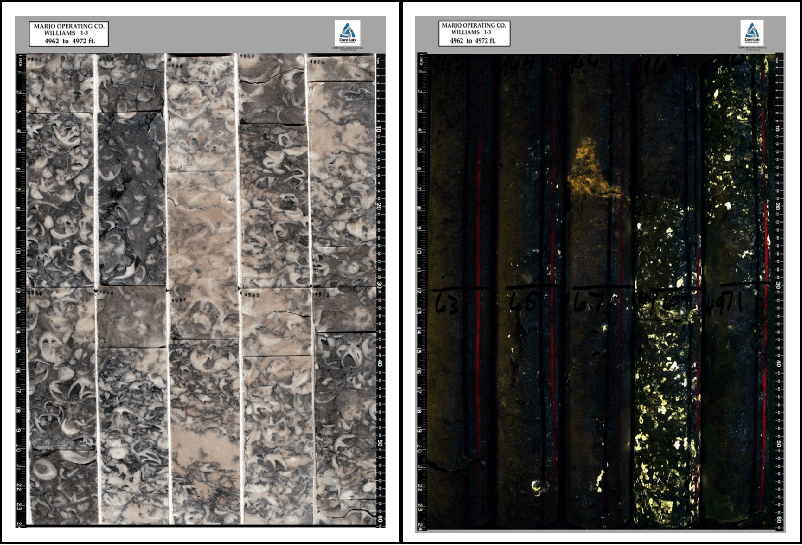
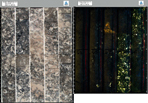 Figure A-1. Marjo Operating Company, Inc.
Williams #1-3, 4962-4972 ft. Facies 7 (coquina)--Lower Cochrane, Big
pentamerid brachiopod coquina. Benthic assemblage BA3—Middle shallow
shelf facies. A.Ordinary light. B. Ultraviolet light, showing rather
good porosity. Figure A-1. Marjo Operating Company, Inc.
Williams #1-3, 4962-4972 ft. Facies 7 (coquina)--Lower Cochrane, Big
pentamerid brachiopod coquina. Benthic assemblage BA3—Middle shallow
shelf facies. A.Ordinary light. B. Ultraviolet light, showing rather
good porosity.
Click here for sequence of A and B.
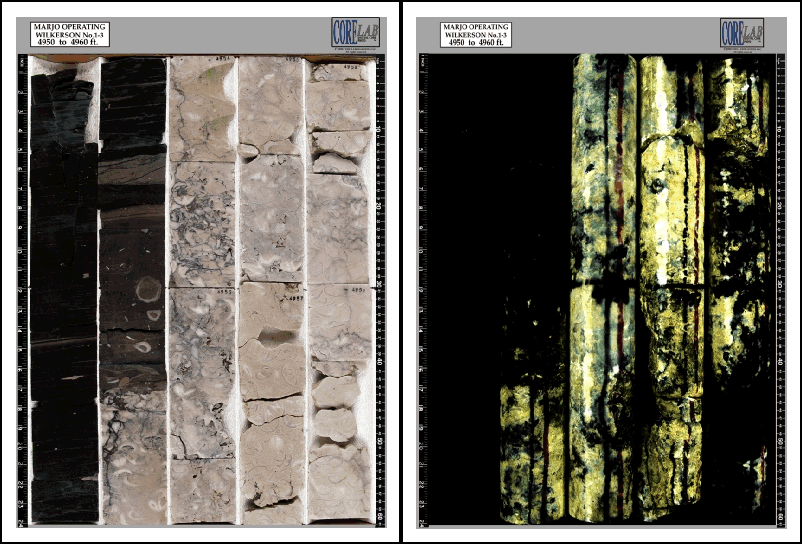
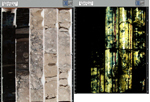 Figure A-2. Marjo Operating Company, Inc.
Wilkerson #1-3, 4950-4964 ft. Facies 7 (coquina)--Good porosity;
Woodford, with clasts of Hunton, above Lower Cochrane, pentamerid
brachiopod coquina. A. Ordinary light. B. Ultraviolet light. Figure A-2. Marjo Operating Company, Inc.
Wilkerson #1-3, 4950-4964 ft. Facies 7 (coquina)--Good porosity;
Woodford, with clasts of Hunton, above Lower Cochrane, pentamerid
brachiopod coquina. A. Ordinary light. B. Ultraviolet light.
Click here for sequence of A and B.
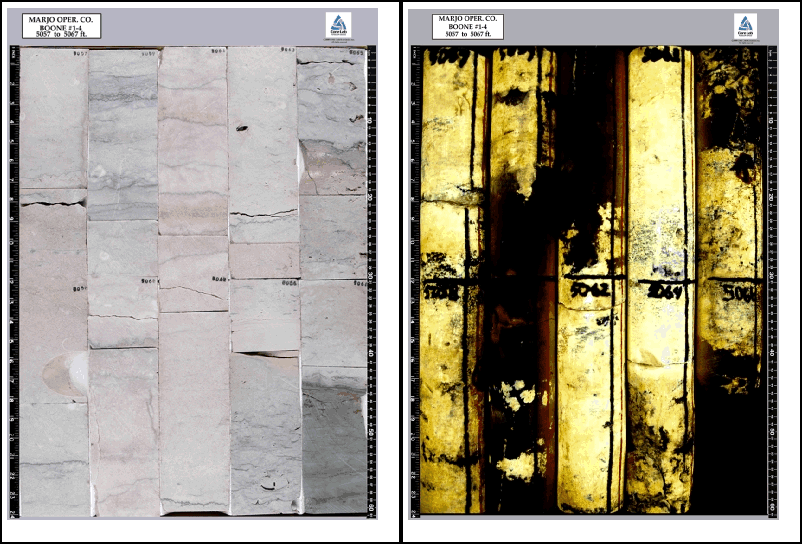
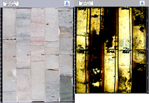 Figure A-3. Marjo Operating Company, Inc.
Boone #1-4, 5057-5067 ft. Facies 4,5,6 (packstone/wackestone)--“Good”
porosity, “moderate” permeability, Lower Cochrane: crinoidal packstone.
A. Ordinary light. B. Ultraviolet light. Figure A-3. Marjo Operating Company, Inc.
Boone #1-4, 5057-5067 ft. Facies 4,5,6 (packstone/wackestone)--“Good”
porosity, “moderate” permeability, Lower Cochrane: crinoidal packstone.
A. Ordinary light. B. Ultraviolet light.
Click here for sequence of A and B.
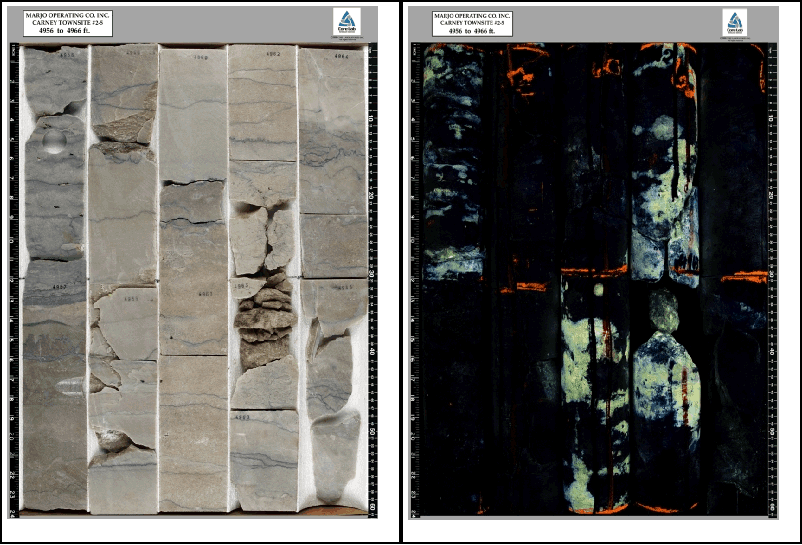
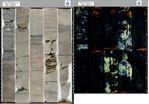 Figure A-4. Marjo Operating Company, Inc.
Carney Townsite #2-5, 4956-4966 ft. Facies 11 (mudstone) above Facies 3
(packstone)--Lower Clarita fine dolomite mudstone (with karst features);
Upper Cochrane fine brachiopod packstone, with porous intervals.
A.
Ordinary light. B. Ultraviolet light. Figure A-4. Marjo Operating Company, Inc.
Carney Townsite #2-5, 4956-4966 ft. Facies 11 (mudstone) above Facies 3
(packstone)--Lower Clarita fine dolomite mudstone (with karst features);
Upper Cochrane fine brachiopod packstone, with porous intervals.
A.
Ordinary light. B. Ultraviolet light.
Click here for sequence of A and B.
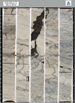 Figure A-5. Marjo Operating Company, Inc.
Houser #1-11, 4961-4971 ft. Karst features: example 1--Solution-enlarged
fracture filled with dark clay sediment (from overlying Woodford). Figure A-5. Marjo Operating Company, Inc.
Houser #1-11, 4961-4971 ft. Karst features: example 1--Solution-enlarged
fracture filled with dark clay sediment (from overlying Woodford).
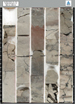 Figure A-6. Marjo Operating Company, Inc.
Houser #1-11, 5041-5951 ft. Karst features: example 2--Terra rosa,
crackle breccia, sediment-filled solution cavities. Figure A-6. Marjo Operating Company, Inc.
Houser #1-11, 5041-5951 ft. Karst features: example 2--Terra rosa,
crackle breccia, sediment-filled solution cavities.
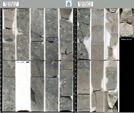 Figure A-7. Marjo Operating Company, Inc.
Houser #1-11, 5061-5077.6 ft. Karst features: example 3--Cavern filled
with breccia. Top cavern at 5061.5 ft.; base of cavern at 5072.1 ft.,
100-111 ft below top of Hunton. Figure A-7. Marjo Operating Company, Inc.
Houser #1-11, 5061-5077.6 ft. Karst features: example 3--Cavern filled
with breccia. Top cavern at 5061.5 ft.; base of cavern at 5072.1 ft.,
100-111 ft below top of Hunton.
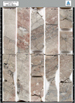 Figure A-8. Marjo Operating Company, Inc. JB #1-13, 5011-5021 ft. Karst
features: example 4--Dipping beds formed by cavern collapse, crackle
breccia, solution-enlarged fracture. Figure A-8. Marjo Operating Company, Inc. JB #1-13, 5011-5021 ft. Karst
features: example 4--Dipping beds formed by cavern collapse, crackle
breccia, solution-enlarged fracture.
Return
to top.
|

 Print this page
 Click to view images shown during oral presentation
in China, May, 2002.
Click to view images shown during oral presentation
in China, May, 2002.