
 Print this page
 Click to view page images in PDF format
 GAS
GAS HYDRATES ON THE HIKURANGI AND FIORDLAND MARGINS, NEW ZEALAND
Ingo A. Pecher1*, Stuart A. Henrys1, Andrew R.
Gorman2, and Miko Fohrmann2
1 Institute of Geological & Nuclear Sciences, P.O. Box 30368, Lower Hutt, New Zealand
*Corresponding author: Tel.: +64 4 5704-796, [email protected]
2 Department of Geology, University of Otago, Dunedin, New Zealand
The presence of gas hydrates offshore New Zealand has been inferred from bottom simulating reflections (BSRs) for over two decades (Katz, 1981). BSRs are widespread on the Hikurangi margin east of the North Island and on the Fiordland margin southwest of the South Island. New Zealand’s largest conventional gas field may be depleted in a few years and hence, there is increasing interest in the resource potential of gas hydrates. Most of our studies are currently focusing on the Hikurangi margin, mainly because of its proximity to major population centers, making it attractive for possible future gas production.
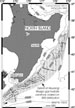
For this margin, we have performed first estimates of the resource potential in gas hydrates (Pecher and Henrys, 2003). Because of a paucity of adequate seismic data and lack of drilling and coring of gas hydrates, our estimates are highly uncertain. However, based on the distribution of BSRs, we were able to constrain the gas hydrate province to an area of about 50,000
km2 (Fig. 1).
Using conservative values for an average gas hydrate saturation of 2% of the pore space, the volume of gas locked in gas hydrates in this area is estimated to be over 20,000
km3 at standard temperature and pressure conditions. However, for economic extraction of gas it may be essential to identify potential gas hydrate “sweet spots”, i.e., areas of high gas hydrate concentration. Gas hydrate concentration is predicted to be directly controlled by methane flux into the gas hydrate stability zone (Xu and Ruppel, 1999). In agreement with this prediction, BSRs on the Hikurangi margin appear strongest in structures that favor fluid flow, in particular beneath anticlines and layer outcrops at the seafloor
(Fig. 2). We estimated how much of the margin may favor gas hydrate sweet spots our main criteria being (1) a strong BSR combined with (2) structures that may enhance fluid flow. We found that roughly 10% of the Hikurangi margin gas hydrate province may contain gas hydrate sweet spots. We assumed that gas hydrate concentration in these sweet spots would be at least 30% of pore space in a 10-m thick layer at 40% porosity – numbers that are arbitrary but conservative. We also assumed that only the gas that forms in excess of the pore volume that is occupied by gas hydrate would be available for gas production (one volume of gas hydrate generates only about 0.8 volumes of water – we therefore assumed that a fraction of ~0.2 of the original gas hydrate volume will be filled by gas at in situ pressure and temperature). Using these parameters, over 600
km3 of recoverable gas (over 20 trillion cubic feet) would be stored in gas hydrate sweet spots on this margin. More accurate estimates will require additional data, including measurement of gas hydrate saturation ideally from drilling.
We have begun to analyze seismic data for evidence of BSRs on the Fiordland margin. While this gas hydrate province appears to cover a smaller area than the Hikurangi margin, BSRs are widespread to the east of the deformation front of this incipient subduction zone. Finally, we are confident that gas hydrates occur elsewhere in New Zealand’s vast exclusive economic zone, which still contains large “seismically uncharted” areas.
References
Collot, J.-Y., J. Delteil, K. B. Lewis, B. Davy, G. Lamarche, J.-C. Audru, P. Barnes, F. Chanier, E. Chaumillon, S. E. Lallemand, B. Mercier de Lepinay, A. Orpin, B. Pelletier, M. Sosson, B. Toussaint, and C. Uruski, 1996, From subduction to intra-continental transpression: structures of the Southern Kermadec-Hikurangi margin from multibeam bathymetry, side-scan sonar, and seismic reflection: Mar. Geophys. Res., v. 18, p. 357-381.
Katz, H. R., 1981, Probable gas hydrate in continental slope east of the North Island, New Zealand: J. Petrol. Geol., v. 3, p. 315-324.
Pecher, I. A., and S. A. Henrys, 2003, Potential gas reserves in gas hydrate sweet spots on the Hikurangi Margin, New Zealand, Science Report, Institute of Geological and Nuclear Sciences, Lower Hutt, 32 pp.
Xu, W., and C. D. Ruppel, 1999, Predicting the occurrence, distribution, and evolution of methane gas hydrate in porous marine sediments: J. Geophys. Res., v. 104, p. 5081-5095.
 Figure
1. Distribution of BSRs on the Hikurangi margin. Lines 36 and 37 are shown in
Fig. 2.
Figure
1. Distribution of BSRs on the Hikurangi margin. Lines 36 and 37 are shown in
Fig. 2.
 Figure
2. Seismic lines GeodyNZ 36 and 37 (Collot et al., 1996), locations in Fig.
1, short-streamer high-resolution data collected with the R/V
L’Atalante’s high-speed seismic system. TWT: two-way traveltime,
CDP: common depth point. BSR strength is enhanced beneath anticlines (left) and at locations where layers crop out at the seafloor (right), both structures that are predicted to focus fluid flow. We suggest that such locations may represent gas
Figure
2. Seismic lines GeodyNZ 36 and 37 (Collot et al., 1996), locations in Fig.
1, short-streamer high-resolution data collected with the R/V
L’Atalante’s high-speed seismic system. TWT: two-way traveltime,
CDP: common depth point. BSR strength is enhanced beneath anticlines (left) and at locations where layers crop out at the seafloor (right), both structures that are predicted to focus fluid flow. We suggest that such locations may represent gas hydrate sweet spots.