Print this page
 Click to view article in PDF format.
Relating Petroleum  System
 and Play Development to Basin Evolution: Brazilian South Atlantic Margin*
Suzanne Beglinger1, Harry Doust1, and Sierd Cloetingh1
Search and Discovery Article #40520 (2010)
Posted March 25, 2010
*Adapted from extended abstract prepared for oral presentation at AAPG International Conference and Exhibition, Rio de Janeiro, Brazil, November 15-18, 2009. Please refer to closely related article by Susanne Beglinger et al., 2009, Relating Petroleum System and Play Development to Basin Evolution: West African South Atlantic Basins, Search and Discovery article #40440 (2009).
1 Tectonics, Faculty of Earth & Life Sciences, VU University, Amsterdam, Netherlands ([email protected])
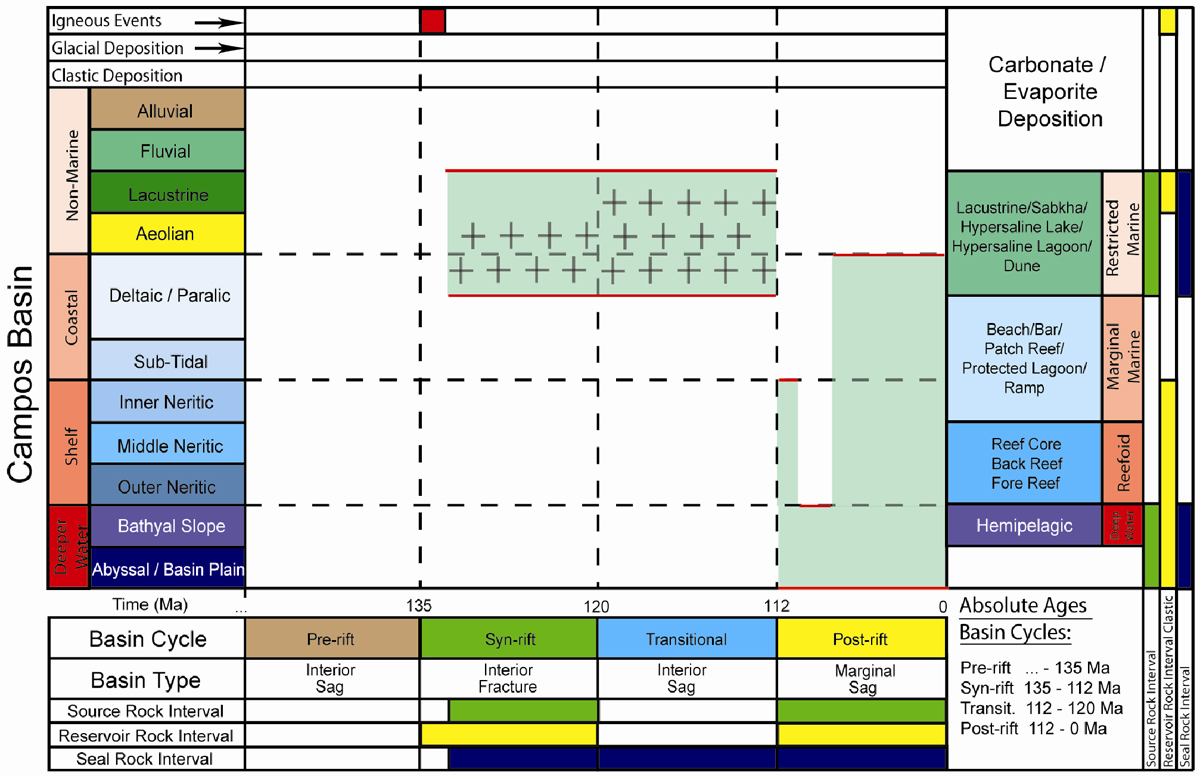
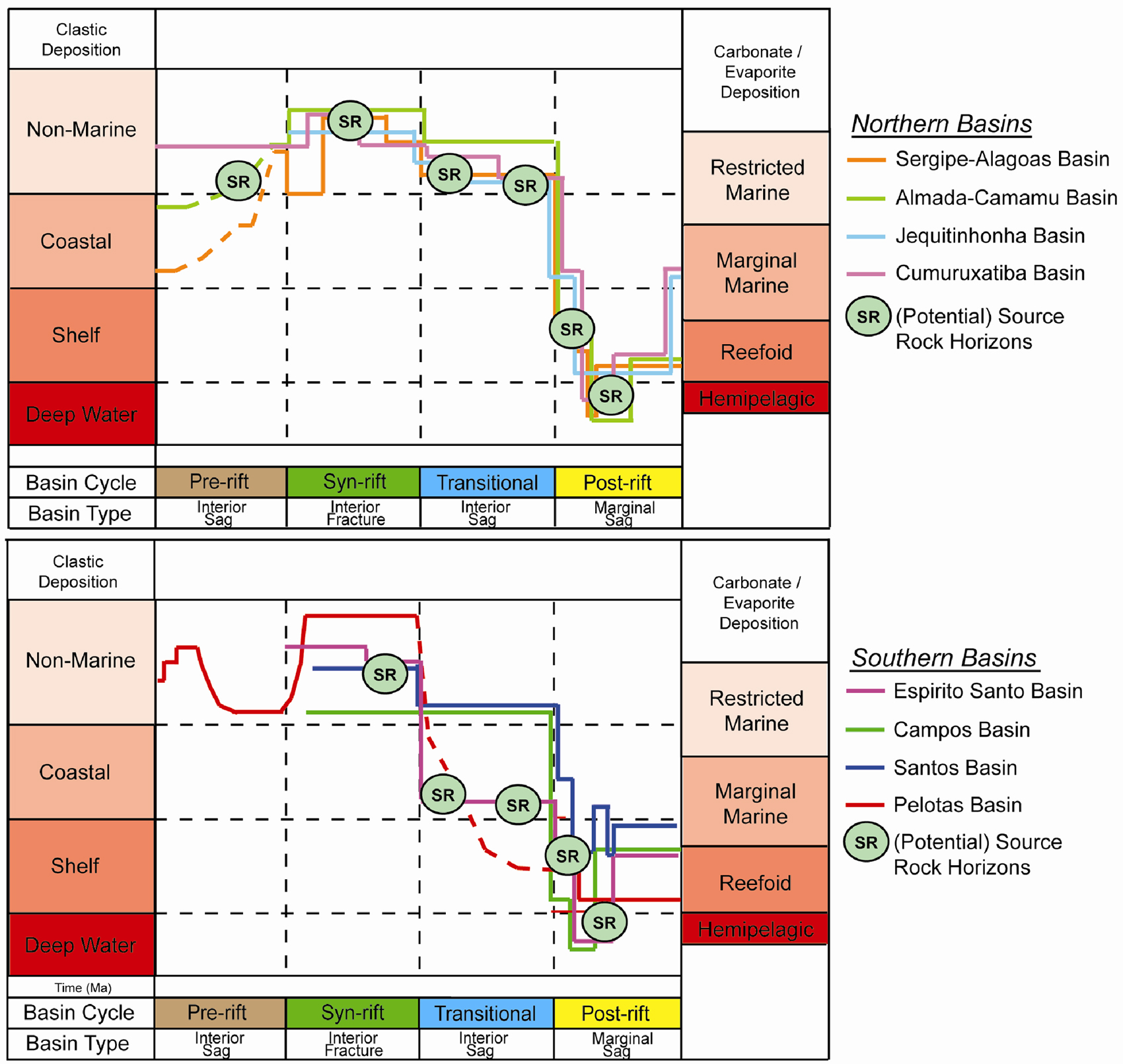
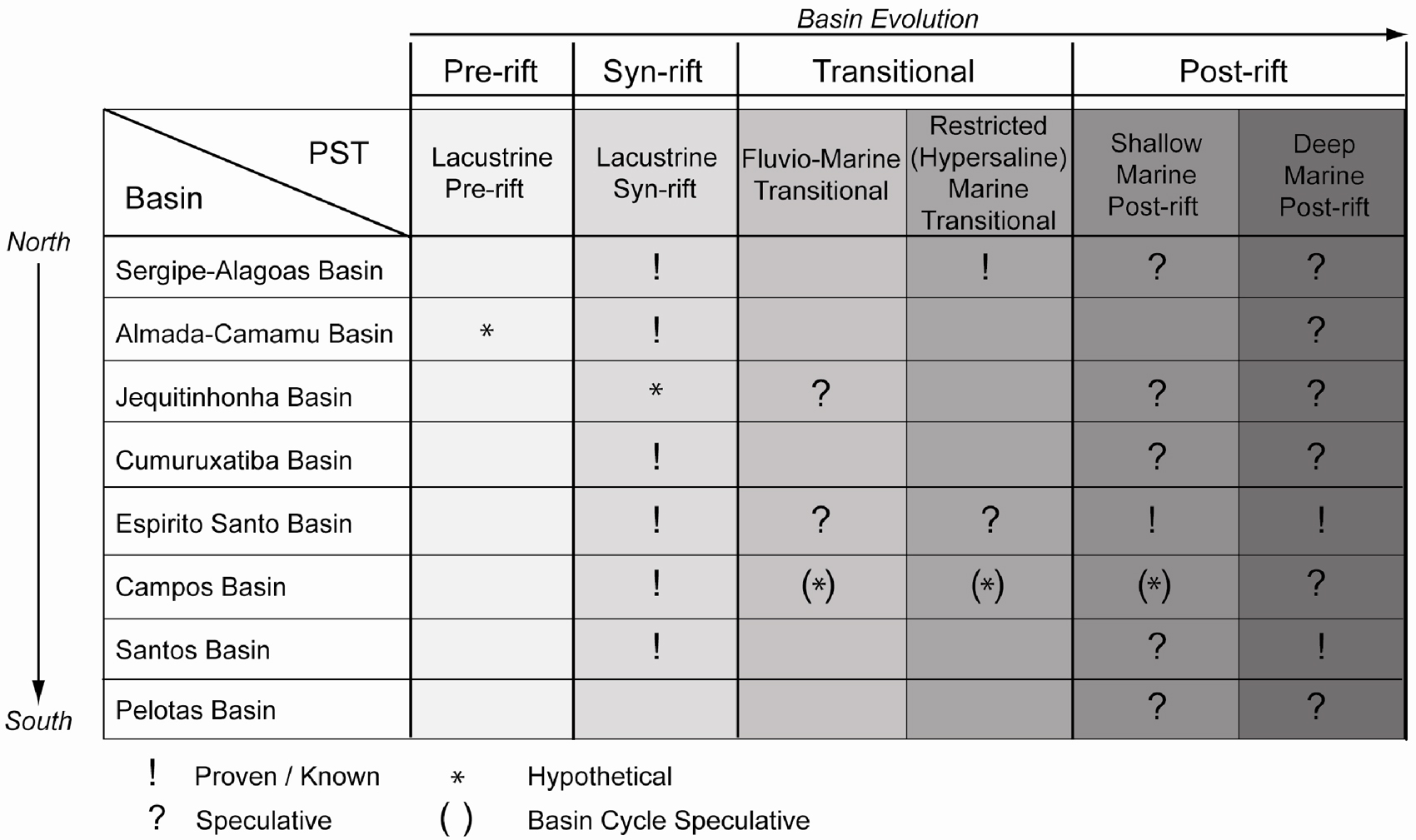
Sedimentary basins can be classified according to their structural genesis and evolutionary history and the latter can be linked to petroleum system and play development. The Brazilian marginal basins, comprising the Sergipe-Alagoas, Jacuipe, Almada-Camamu, Jequitinhonha, Cumuruxatiba, Espirito Santo, Campos and Santos basins, have experienced a similar tectonic and sedimentary basin evolution. Four basin cycles have been distinguished (pre-rift, syn-rift, transitional and post-rift), of which three are associated with at least one type of source rock giving rise to a specific type of petroleum system (PST).
The lacustrine syn-rift PST is regionally extensive and the most productive. Despite the widespread distribution of transitional and post-rift source rocks, the restricted hypersaline marine transitional PST and shallow and deep marine post-rift PSTs have only been proven active locally, due to the relatively low maturity of these source rocks. Play development is closely related to basin tectonic and sedimentary evolution: syn-rift plays are associated with lacustrine/fluvial facies in combination with trap geometries related to graben development. Post-rift plays include deltaic and shallow to deep marine clastic and carbonate facies in combination with traps which formed due to halokinesis.
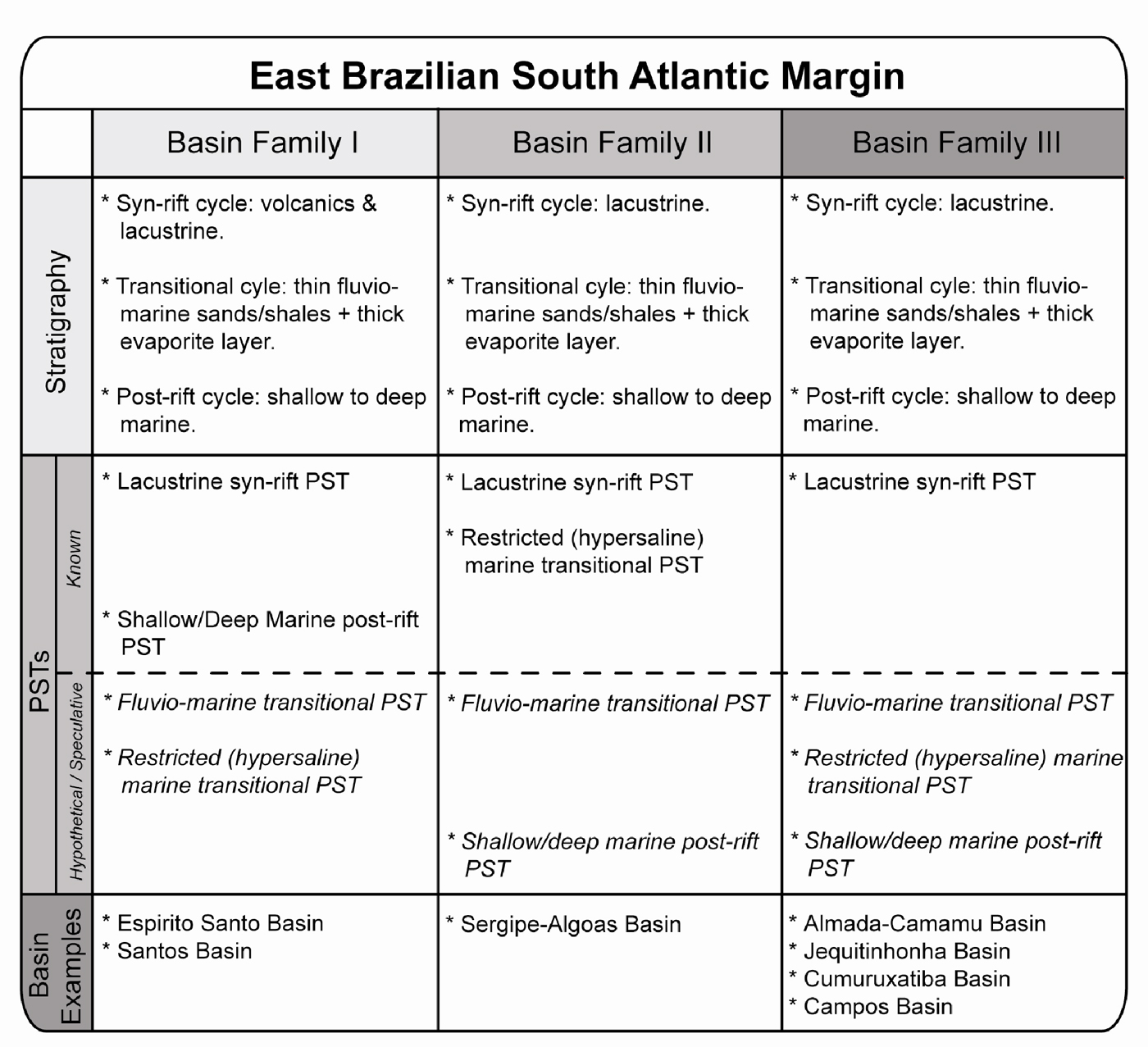
The number and variety of plays increase with basin evolution, as tectonic and sedimentary patterns become more complex. Three basin families have been identified, each characterized by approximately the same tectono-stratigraphic basin evolution, from a lacustrine/fluvial syn-rift and restricted hypersaline marine transitional period to a shallow to deep marine post-rift, but with varying subsidence patterns and hence varying maturity distributions of the different source rock intervals. Basin family I is characterized by the existence of lacustrine syn-rift and marine post-rift PSTs, and potentially a restricted hypersaline marine PST. Basins belonging to basin family II contain lacustrine syn-rift and restricted hypersaline marine transitional PSTs, and potentially a marine post-rift PST. Basin family III is characterized by the sole development of a lacustrine syn-rift PST. The recognition of basin families allows for analogue comparison
between basins with a similar geological background with respect to prospectivity, since similar tectono-stratigraphic basin evolution leads to the development of similar PSTs and plays.
|
|
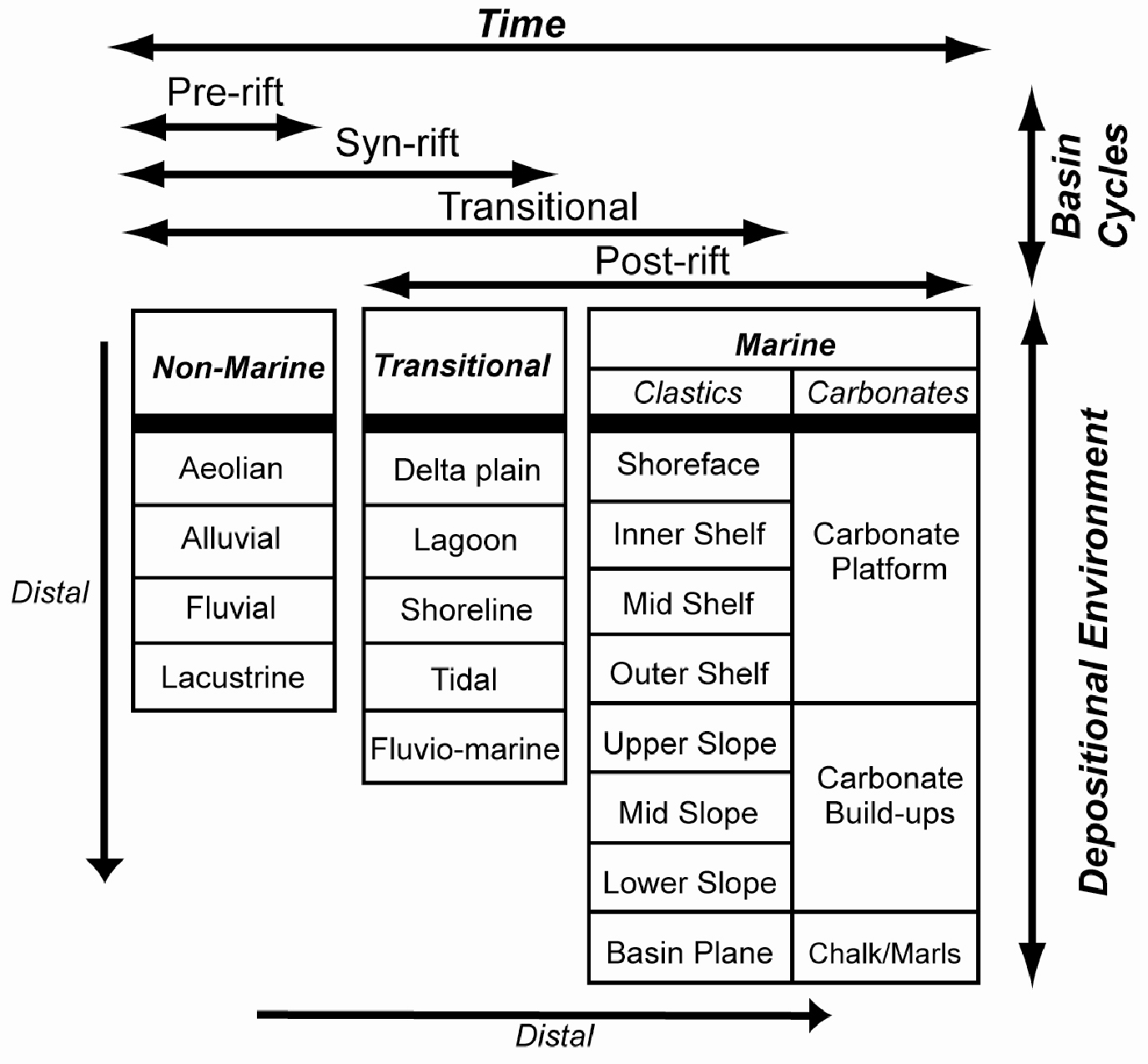
Sedimentary basins can be divided into relatively standard tectono-stratigraphic cycles and stages with characteristic hydrocarbon habitats. Therefore, in many cases we can compare petroleum systems in different basins with similar geological histories. This can aid us in recognizing types of petroleum systems (PSTs), as well as the plays associated with them, and thus assist in the evaluation of opportunities in unexplored and under-explored basins. Tools we use in this approach are the facies palette, trajectory plot, events chart, petroleum
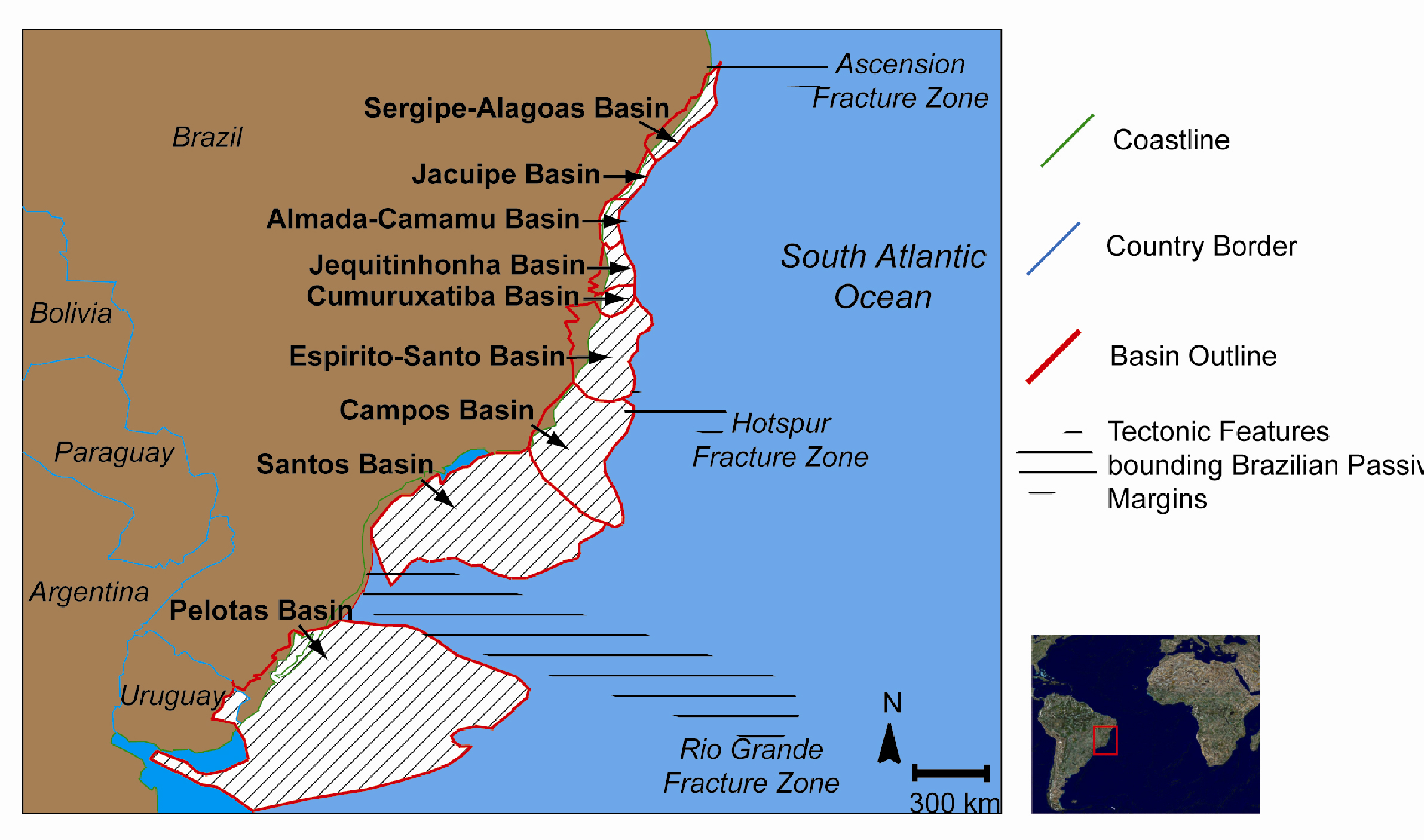
The Brazilian marginal basins (Figure 1), comprising the Sergipe-Alagoas, Jacuípe, Almada-Camamu, Jequitinhonha, Cumuruxatiba, Espirito Santo, Campos, Santos and Pelotas basins, experienced a similar tectonic and sedimentary
Three of these
Three
This The basins discussed here, except for the Pelotas and Jacuípe basins, are collectively characterized by the occurrence of prolific pre- and post-salt source rocks, salt related trapping structures, tectonic tilting and related Tertiary loading. However, exploration density is not uniform across the Brazilian Margin: shelf areas have been extensively explored, while both the syn-rift and post-rift in the deep to ultra-deep water offshore sectors of all basins remain under-explored. The risks concerning the syn-rift mostly involve the distribution and maturity of syn-rift source rocks, complex trapping geometries and poorly known reservoir quality. The main risk for the post-rift is related to the presence or absence of migration pathways from mature syn-rift source rocks to post-rift reservoirs through windows in the evaporites of the transitional cycle. Marine shales within the post-rift are only locally mature.
The Brazilian South Atlantic basins have experienced a similar tectonic and sedimentary Brown, Alistar R., 2004, Reservoir Identification, AAPG Memoir 42 and SEG Investigations in Geophysics, No. 9, Chapter 5, p. 153-197.
Bruhn, C.H.L., and R.G. Walker, 1995, High-resolution stratigraphy and sedimentary evolution of coarse-grained canyon-filling turbidites from the Upper Cretaceous transgressive megasequence, Campos
Brownfield, M.E. and R.R. Charpentier, 2006, Geology and total petroleum systems of the West-Central Coastal Kristian E. Meisling, Peter R. Cobbold, and Van S. Mount, 2001, Segmentation of an obliquely rifted margin, Campos and Santos basins, southeastern Brazil, AAPG Bulletin, v. 85, no. 11, p. 1903-1924. Tissot, B., G. Demaison, P. Masson, J.R. Delteil, and A. Combaz, 1980, Paleoenvironment and petroleum potential of Middle Cretaceous black shales in Atlantic basins: AAPG Bulletin, v. 4, no. 12, p. 2051-2063.
Copyright © AAPG. Serial rights given by author. For all other rights contact author directly. |