Print this page
 Click to view article in PDF format.
GC Tuning
 Effects' Impact on Seismic*
Gwang Lee1, Keumsuk Lee2, and Han Kim3
Search and Discovery Article #40474 (2009)
Posted November 30, 2009
*Adapted from the Geophysical Corner column, prepared by the authors, in AAPG Explorer, October, 2009. Editor of Geophysical Corner is Bob A. Hardage ([email protected]). Managing Editor of AAPG Explorer is Vern Stefanic; Larry Nation is Communications Director.
1Pukyong National University
2Korea National Oil Corp
3Korea Ocean Research and Development Institute
When reflection times are measured along the peaks, troughs or zero crossings of seismic traces, tuning effects make it difficult to measure accurate arrival times of individual reflection events. The thinnest interval over which a correct measurement of the distance between two closely spaced reflectors can be made is called the tuning thickness. The edges of reservoir bodies are often thinner than tuning thickness, and therefore a special approach – such as spectral decomposition or inversion – is required to reliably determine reservoir boundaries.
|
|
We examine the
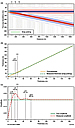
The thickness estimate and amplitude
When the wedge is thinner than the
The threshold thickness above which the measured amplitude (Figure 3c) gives the correct reflectivity of the top of the wedge is about 5λ/8 (60 m). For wedge thicknesses less than 5λ/8, the amplitude
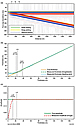
Figure 4a shows the synthetic seismic section when the wedge model is illuminated by the minimum-phase wavelet. The top and base of the wedge (yellow horizons) were picked by snapping to the leading zero amplitudes of the trough and the peak, respectively. Manual picking was used for the base of the wedge where snap picking became erratic due to
The thickness
Our synthetic modeling shows:
1)
2) Event amplitudes can be better measured from minimum-phase data than from zero-phase data. 3) Amplitude detuning is probably not required for minimum-phase data for bed thicknesses greater than about one-half of the Rayleigh resolution limit.
Because event amplitudes in zero-phase data are significantly affected by
|