Print this page
 Click to view poster in PDF format (~7.0 mb).
For easier viewing, Right click and save file to hard drive.
PSFractured Basement: New Exploratory Target in La Concepcion Field, Western Venezuela*
By
Jesus S. Porras1, Carlos E. Ferro2, Carla Castillo3, Vanessa Machado3, Luis Ochoa3, Nelson Chirinos3, and Fernan Perez3
Search and Discovery Article #10140 (2007)
Posted November 20, 2007
*Adapted from poster presentation at AAPG Annual Convention, Long Beach, California, April 1-4, 2007
1Petrobras Energía Venezuela, Maracaibo ([email protected])
2Petrobras Energía Venezuela, Caracas ([email protected])
3Petrowayuu Filial de PDVSA, Maracaibo ([email protected])
In Western Venezuela,  production
 from naturally
fractured basement has been known for decades. Since El Totumo, Limon and giant
Mara-La Paz oilfields discoveries in the early twentieth century, new commercial
oil production from basement had not been reported in years. In the 1960-decade,
unsatisfying results were obtained searching for oil from basement in El Mojan,
Sibucara, Los Lanudos, and La Concepcion fields. In La Concepcion field,
evidence in some wells suggested the existence of basement as a producing
reservoir.
from naturally
fractured basement has been known for decades. Since El Totumo, Limon and giant
Mara-La Paz oilfields discoveries in the early twentieth century, new commercial
oil production from basement had not been reported in years. In the 1960-decade,
unsatisfying results were obtained searching for oil from basement in El Mojan,
Sibucara, Los Lanudos, and La Concepcion fields. In La Concepcion field,
evidence in some wells suggested the existence of basement as a producing
reservoir.
However, a combination of factors including:
operational problems that impeded production testing, the experience of having
dry basement in some former wells and the insignificant production obtained in
the only well where basement was proved--when compared to its Cretaceous
production--prevented further pursuit of basement as a commercial target.
Nevertheless, it was not until 2004 when commercial
production from basement was obtained through well C310, initially producing at
4600 bopd. Further drilling continued basement development; well C313 was
completed in July 2004, producing 3915 bopd, and well C314 was completed in
November 2004, producing 3714 bopd. Recently, in 2006, well C325 also confirmed
basement production.
This poster aims to describe the main characteristics of fractured basement in La Concepcion field. Also, it is intended to evaluate the reservoir under a new perspective, in order to determine its potential, after exploration, and further studies and analyses.
As a result, additional opportunities could be obtained, and as a consequence, hydrocarbons reserves would be increased.
|
|
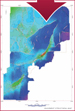
La Concepcion field is located approximately 20 km west of the city of Maracaibo, in the northwestern Maracaibo Basin, Venezuela.
Discovered in 1924, the field produces
from two main reservoirs: a siliciclastic reservoir currently
depleted (Eocene) and a naturally fractured carbonate reservoir
(Cretaceous). At present, combined cumulative An interesting volume of oil has been produced from basement in the last three years. Nearly five million barrels of produced oil are accredited to basement reservoir.
Basement producing wells are located instructural highs (pop-up structures), on central and southern areas of the field and are related to secondary minor faults linked to major bordering faults.
La Concepcion Basement Facts
The stratigraphic column encompasses passive margin carbonate sediments (Cretaceous) and a thick foredeep mixed siliciclastic-carbonate sequence (Paleocene-Eocene) overlying the igneous-metamorphic basement, object of this study.
La Concepcion Basement is composed by igneous (granitic) to metamorphic rocks (gneiss) and is mainly composed by crystalline or milky quartz, pink or orange feldspar, biotite and secondary mafic minerals. Oil is stored in fractures.
Figures 3-1 – 3-2
All data presented in this study was obtained from files that contain drilling, mudlogging and operations information from wells. Sample cuttings as well as fragments of cores were used for petrographical and visual description of rocks. Standard analyses were performed to these samples. A visit to the Isla de Toas outcrop was done for a better understanding of the fracturing mechanisms. Literature from nearby- and around the world oil fields was used in order to have a wide picture of reservoirs in fractured basement rocks.
For each well, the acquired data was
incorporated and displayed in a composite chart that contents: depth
of basement, thickness, footage, drilling parameters, hydrocarbon
shows, underbalanced drilling information, testing and
Oil Migration,
Sourcing, and Vertical migration due to rock dilatancy, as well as lateral up-dip migration through faults, are the suggested mechanisms responsible to charge reservoirs. (1) Short vertical migration from source rock (La (Luna formation), passing the naturally fractured limestone of Cogollo Group into basement, may be explained by dilatancy phenomena. This hypothesis was proved -and well documented-in Mara–La Paz fields through pressure measurements done in both reservoirs. Particular observations about secondary sealing have been made in La Concepcion field. (2) Lateral migration from longer distances is attributed to horizontal movement through faults and fracture conduits. Lateral migration took place in zones where source rock and fractured limestones are directly in contact with basement. A restricted zone with these characteristics has been identified in the field. Producing wells of basement are located within this zone. Faults and fractures are the main pathways for hydrocarbon migration. Like many of the basement reservoirs of the world, an unconformity is identified above the basement in La Concepcion. All producer wells show calcite-filled fractures acting as a cap-rock, above the productive section of basement. In producing wells, calcite-filled fractures are found once the top of basement has been reached. Oil in basement has been produced in the same area known as producer in overlying sediments (Cogollo Group) and has the same composition. La Luna Formation is believed to be the source rock for both reservoirs.
Thickness of calcite-filled fractures interval can vary from 50 to more than 200 feet. Origin of calcite has not been determined yet, even though it is supposed to come from dissolution and precipitation of calcium-carbonate rich waters of Cogollo Group.
Figures 5-1 – 5-2
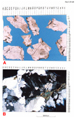
Banded–gneissic-structures due to moderate metamorphism have been recognized in sample cuttings. Petrographically, basement is a holocrystalline igneous plutonic rock, with granular hypidiomorphic texture. It is s composed of polycrystalline quartz, less monocrystalline, with strong wavy extinction, crystals of moderate to intensely altered plagioclase and potassic feldspars, moderately kaolinized with wavy extinction, represented by orthoclase, and scarce microcline. The igneous basement (granite, granodiorite) has been described as mottled white and black, light gray, and pink, coarsely crystalline, with clear and milky quartz, white and pink,or orange, feldspar, biotite, and dark minerals (hornblende).
Outcrops of basement occur north of La
Concepcion Field in the Isla de Toas area. In this area, basement is
very sheared and fractured and is intruded by basalt and rhyolite
dikes and sills. Fracturing is the result of intense deformation due
to right lateral strike-slip motion of the Oca The granite of Isla de Toas is stratigraphically and chronologically correlateable with outcrops of the Perijá Range and subsurface samples of deep wells of the basin, including La Concepcion wells. This granite consists of two textural varieties: one is rose colored, very fine-grained with orthoclase feldspar, perthite, quartz and phenocrysts of hematite and magnetite. The other type of granite, gray in color, is characterized by a porphyritic texture, which in local areas is pegmatitic. On weathering, the granite changes from pink to gray and the biotite becomes golden brown. The rock becomes soft and crumbly and is easily eroded. Both granites have been identified in the La Concepcion subsurface. Basement exposure can be used as an excellent analog for reservoir description and fracturing modeling.
Three old wells, all located in the southern structure, have been cored in basement. The total cored length is 69 feet with only 24% of recovery (16’8”), demonstrating the high grade of fracturing.
Figures 6-1 – 6-7, Table 6-1
Formation Water Analysis Chemical analyses have been done to four producer wells in order to characterize basement formation water. There are three main components that help to determine the formation water origin.
1) Basement formation water is enriched in Ca+2, ranging from 12000 to 14000 ppm; even higher Ca+2 content can be found as in well C313 (>30000 ppm), comparable to neighbor fields, Mara and La Paz. 2) Cl-1 content is higher in basement than Cretaceous formation water, ranging from 32000 to 38000 ppm. 3) Lower Na+1 content is common in basement formation water (<9000 ppm).
On average, in La Concepcion field, total dissolved solids and salinities are very similar for both basement and Cretaceous waters, there is not a defined pattern; hence to characterize formation water all chemical parameters must be considered.
Figures 7-1 -7-2, Table 7-1
First well with commercial
Development of basement reservoir
continued with drilling the wells C313 and C314, completed in July
and November 2004 and initially producing 3915 bopd (C313) and 3714
bopd (C314), raising basement
Evidence of oil and gas has been
observed in several wells that penetrated basement: increase of gas
The most obvious case could be
observed in well C302, which according to a PLT initially taken,
1250 bopd came from basement (33% of the produced petroleum by the
well). On the other hand, the cumulative
In December 2006, well C325 was drilled on North Cretaceous structure. This well is located in the northern tip of the reservoir and it is structurally lower than the rest of wells of the area. It penetrated approximately 630 feet into basement, produced gas and oil, and showed an important entrance of water that defined a possible oil-water contact. The rest of the wells, structurally higher, presented a low water cut. Crude oil from basement average 36° API (light oil) and seems to be the same type that is in overlying Cretaceous reservoir. Fingerprint analyses from both reservoirs show similar characteristics between crude oil. These results support both the hypothesis that oil found in basement comes from Cretaceous reservoir through fractures, and also, the fact of have been generated by the same source rock (La Luna Formation).
Both Cretaceous and Basement reservoirs
can be characterized by high decline rates in short periods of time.
According to the
Although
According to the behavior of
Two pressure measurements (wells C310 and C313) were taken once the reservoir was discovered. These values are considered representative of basement initial conditions. A third and last pressure measurement was done in July 2005 in well C314. When comparing initial pressure of basement as to the obtained on the producing Cretaceous reservoir, there is a fall of 250 psi (Original pressure of Cretaceous = 4800 psi). This can be indicative of some type of communication with either overlying Cretaceous reservoir of Cogollo Group, or drainage of some of the wells completed in the Cretaceous that penetrated some producing intervals in basement, such as well C302 where a PLT indicates a significant contribution from basement.
Figures 8-1 – 8-5, Tables 8-1 – 8-4
The basement is drilled near-balance
through deviated wells with directional trajectories perpendicular
to the strike of
Drilling results show that 75% of deep
wells reached more than one hundred feet into basement. Ten wells
have penetrated 500 to 1000 feet. Maximum thickness reached by a
well is 1440 feet. The productive section of basement has not been
fairly well defined because the difficulty of run image and/or
Drilling within the basement has
been a common practice from several years. Among forty deep wells
drilled in the field with cretaceous objectives, twenty-nine reached
basement. Only four of these have proved
Figures 9-1 – 9-2, Table 9-1
Key Factors
for Basement La Concepcion basement reservoir does not differ from most basement reservoirs of the world. Reservoir characteristics as referred by several authors are found in La Concepcion basement. Statistical analyses have established that for producing from basement, the following factors must simultaneously occur:
La Luna/Cogollo Group in
Productive wells are located within the uplifted structures and are related to secondary minor faults linked to the major bordering faults. Fractures develop around the faults. The fractures provide both storage capacity and the fluid-flow pathway in La Concepcion basement reservoir.
Cap-rock
or Width of zones with calcite–filled fractures is variable across the field. Presence of massive limestones within basement have been detected in various wells. They may be interpreted as part of faulted blocks.
Hydrocarbon shows
Nearness to a source rock or
Figures 10-1 – 10-7, Table 10-1
Analogy with Other Fields The basement reservoir of La Concepcion has the same constraints and characteristics of nearby fields of Western Maracaibo Basin: Mara, La Paz, El Totumo, Limon and Sibucara.
Figure 11-1, Table 11-1
1. Although basement reservoir from La
Concepcion field has most of the characteristics of other basement
reservoirs of the world, including neighbor oilfields of Mara-La
Paz, it is not well known the
2. Basement 3. A productive well from basement is obtained when most of the key factors simultaneously occur in the reservoir. 4. In La Concepcion field, basement reservoir is basically conformed by igneous-metamorphic-rocks of acid composition. 5. Pressure levels at initial conditions differ significantly from Cogollo Group to basement reservoir. Nevertheless, current conditions indicate similar pressure levels for both reservoirs, which could be interpreted as a possible communication between these hydrocarbon accumulations. 6. Improvements in geological, seismic and reservoir characterization, have allowed identify basement as a new target in this mature field.
Table 12-1
The authors wish to thank Petrobras Energía Venezuela and Petrowayuu Filial de PDVSA for the approval and permission to publish this paper.
Feo-Codecido, G., Smith, F.D., Aboud, N., and Di Giacomo, Estela. 1984, Basement and Paleozoic rocks of the Venezuelan Llanos basins, in Bonini, W.E., et al., eds., The Caribbean-South American plate boundary and regional tectonics: GSA Memoir 162, p. 175-187. García, J., Gonzalez, G., Leandri, P., Lorin, T., and Reymond, A., 2000, La Paz Field study: Multidisciplinary approach in fractured reservoir characterization and applications to field development: Memorias VII Simposio Bolivariano Exploración Petrolera en las Cuencas Subandinas, Caracas, Venezuela, p. 662-688.
Geoscience Limited, 2002,
Hydrocarbon Guariguata, R.C., 1956, Campos Petrolíferos del Basamento en el Oeste de Venezuela: VI Congreso Venezolano de Ingeniería, Valencia, Venezuela, 27 p. Guariguata, R.C., and Richardson, J.A., 1959, El Basamento en el Oeste del Lago de Maracaibo: III Congreso Geológico Venezolano, Caracas, Venezuela, 28 p.
Koning, T., 2003, Oil and
gas Landes, K.K., Amoruso, J.J., Charlesworth, Jr., L.J., Heany, F., and Lesperance, P.J. 1960, Petroleum resources in basement rocks: AAPG Bulletin, v. 44, p. 1682-1691. LCV S.R.L., Geologia Integrada, 2000, Cuttings study: Internal Report for Perez Companc. Marchal, D., Gonzalez I., Benito, J., and Balseiro, P., 2005, Technologies and exploitation strategies applied to the development of a naturally fractured carbonate reservoir: The Cretaceous Cogollo Group in La Concepcion Field, Maracaibo Basin, Venezuela:2005 SPE Latin American and Caribbean Petroleum Engineering Conference, Rio de Janeiro, Brazil, 20–23 June 2005, SPE Paper # 97384.
Nelson, R.A., Moldovanyi,
E.P., Matcek, C.C., Azpiritxaga, I., and Bueno, E., 2000, P’an, Ch.-H., 1982, Petroleum in Basement Rocks: AAPG Bulletin, v. 66, p. 1597-1643.
Sircar, A., 2004,
Hydrocarbon Smith, J.E., 1956, Basement reservoir of La Paz-Mara oilfields, Western Venezuela: AAPG Bulletin, v. 40, p. 380-385.
|