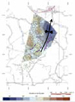
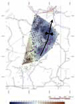
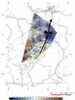
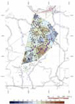
Print this page
 Click to view posters in PDF format.
PSLeakage Risks Associated with Coal Sequestration in Some Areas of the Central Appalachians: Subsurface, Seismic and Geomechanical Evaluations*
By
Tom Wilson1, Hema Siriwardane1, Xiaochao Tang1, Brian Connolly1, and Jamie Tallman1
Search and Discovery Article #80007 (2007)
Posted July 25, 2007
*Adapted from poster presentation, AAPG Annual Convention, April 1-4, 2007
1West Virginia University, Morgantown, WV 26506-6300 ([email protected])
Potential risks associated with carbon dioxide
sequestration in coal seams are examined in an unmined area of central West
Virginia between the Northern and Central Appalachian coal regions. The study
incorporates subsurface mapping, 2D seismic interpretation and geomechanical
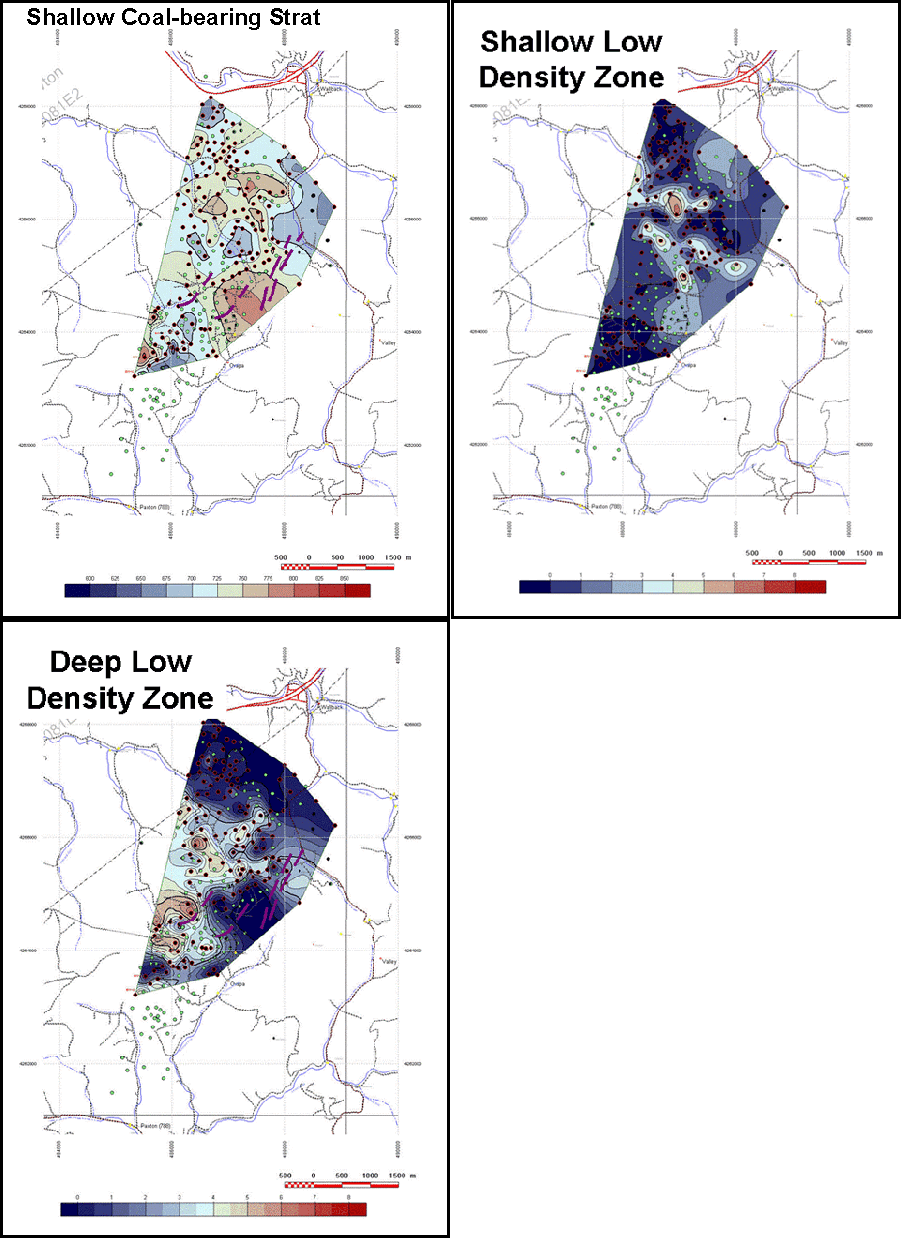
simulation. Isopach  maps
maps of interpreted low-density coals reveal significant
thickness variation and discontinuity throughout the 12 square kilometer study
area. Systematic thinning and thickening observed in isopach maps of 200 to 300
foot coal-bearing intervals suggest that deeper faults were periodically active
during deposition. Interval transit time variations observed in 2D seismic lines
across the area also reveal syndepositional reactivation of deeper faults.
Reactivation during and following deposition is likely to have opened and
extended fracture systems through coal-bearing intervals into overlying strata.
Isopach maps of individual low-density intervals reveal pod-like distribution.
Low hydrostatic pressures limit injection to gaseous phase CO2. A
geomechanical model was developed for the site using sonic (DT shear and
compressional) and density logs from a key well in the area.
of interpreted low-density coals reveal significant
thickness variation and discontinuity throughout the 12 square kilometer study
area. Systematic thinning and thickening observed in isopach maps of 200 to 300
foot coal-bearing intervals suggest that deeper faults were periodically active
during deposition. Interval transit time variations observed in 2D seismic lines
across the area also reveal syndepositional reactivation of deeper faults.
Reactivation during and following deposition is likely to have opened and
extended fracture systems through coal-bearing intervals into overlying strata.
Isopach maps of individual low-density intervals reveal pod-like distribution.
Low hydrostatic pressures limit injection to gaseous phase CO2. A
geomechanical model was developed for the site using sonic (DT shear and
compressional) and density logs from a key well in the area.
Geomechanical simulations predict surface displacements and pore pressures in response to CO2 injection. The likelihood that overburden fracture systems are enhanced through late stage deformation and the presence of considerable heterogeneity and discontinuity in coal distribution, combined with overburden deformations produced by CO2 injection, all represent increased risk of leakage for any coalbed sequestration activities that might be conducted in this or similar areas of the basin.
|
|
The DOE NETL metric for storage permanence is
99% retention after 100 years (see Carbon Sequestration Technology
Roadmap and Program Plan, 2006). This requires detection limits of less
than 0.01%/year. Monitoring, measurement, and verification (MMV) of the
carbon sequestration process has been an essential component of carbon
sequestration research from its inception (Wells et al., 2006).
Geophysical characterization activities play an important role in the
MMV process. In this study we selected an area for assessment located in
central West Virginia between the northern and central coal regions (Figure
1-1) along the eastern margin of the Rome Trough. There is currently
no mining or coal exploration activities in this area. Thus it is an
area where minable and unminable coals likely exist and where some
overlap in future mining and sequestration/enhanced coalbed methane
recovery efforts may occur. The area has been extensively drilled for
oil from the lower Mississippian Big Injun sandstone. Several miles of
seismic data over the field were available for this study, including 28
miles of vibroseis data and 14 miles of higher resolution weight-drop
data. A vibroseis line (Figure 1-2) across
the area reveals the major structural elements affecting the site. The
combined offset across the deeper normal faults (green and turquoise) is
approximately 2200 feet at the level of the Cambrian/ Eocambrian or
acoustic basement interface. Note that there is considerable disharmony
between the deep and shallow
The broader band weight drop data (Figure 1-3) provide improvements in the ability to locate faults, fracture zones, and coal reflections compared to the narrower band vibroseis data (Figure 1-4). 3D seismic coverage using high a frequency vibrator source will provide greater bandwidth and resolution.
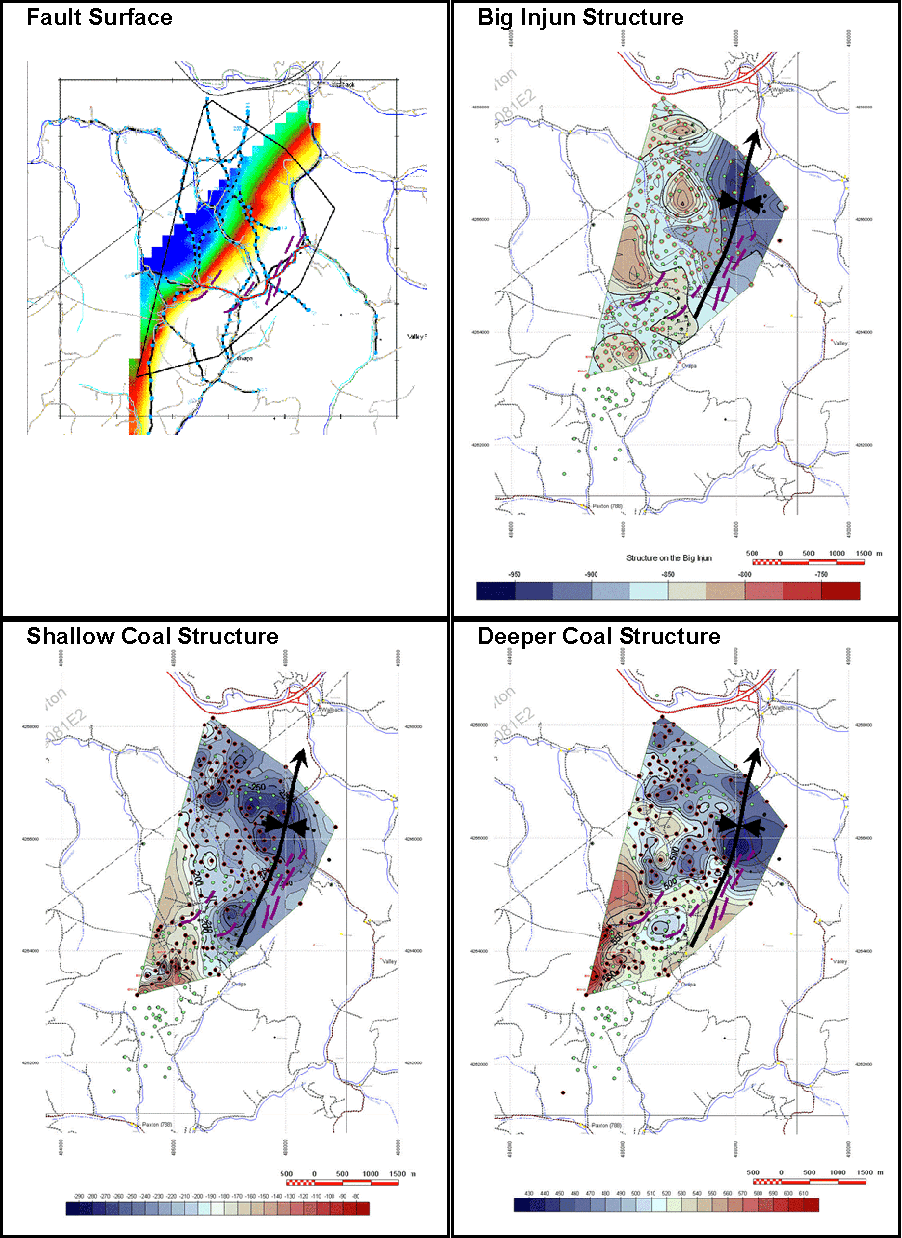
The basement faults underlying the area (Figure
1-2) dip to the northwest. Two-way traveltimes define the areal
extent and geometry of the easternmost fault through the area (Figure
1-5). Shallow faults mapped through small offsets or zones of
reduced coherence in the reflection seismic response (Figure
1-6) occur along an extension of the deeper margin fault into the
near surface. The locations of these minor faults are noted by purple
lines on the various
Traveltime differences between reflections observed in the coal-bearing section suggest that the margin fault rotated down to the southwest and west during deposition (see traveltime difference plots—Figures 1-9 and 1-10). Movement appears to have been localized along branching faults that produce local thickening of the coal section to the southwest and west. However, the trend of this 2D line is roughly along strike on the eastern half of the line and cross-strike along its western half so that the relationship of fault movement relative to the trough is complex to interpret.
Subsurface coverage provided by the seismic
extends a little farther to the southeast than that provided by the well
control. Seismic two-way time
Late stage uplift along the outer fault
(green fault shown on the seismic line—Figure
1-2) produces a structural high in shallower strata to the
northwest. Late stage uplift of the basement block to the northwest
produces a syncline over the footwall to the east-southeast along the
upward projection of the deeper basement fault (Figures
1-5, 1-6, and 1-7).
The Big Injun sandstone lies about 2000 feet beneath the area. Oil
production from the Big Injun is concentrated along the west flank of
the syncline.
Isopach
Deformation of overburden strata in response to CO2 injection was computed using finite element simulations. The model consisted of a total of 24 layers derived from borehole logs in the area (Figure 2-8). Density, shear wave, and compressional wave velocities were used to estimate Young’s modulus.
A geomechanical simulation was conducted
using a model with properties similar to those associated with the
deeper zones at the site. With variable topographic relief across the
area, depths to the deeper coal reach nearly 1600 feet in places. The
simulation involved injection of 568 tons of CO2 over a 365
day period at a
The influence of syndepositional fault
displacements on coal deposition is subtle and debatable. Faults with
clear offsets at
This study was funded through Montana State
University Zero Emissions Research Technology (ZERT) research
subcontract G137-05-W0221 to West Virginia University ZERT titled
Sequestration of Carbon Dioxide in Appalachian Coal Deposits. Our
thanks to Dick Bajura (National Research Center for Coal and Energy) for
his support of these endeavors. Landmark Graphics Discovery Suite
software was used to construct
Carbon Sequestration Technology Roadmap and Program Plan, 2006, Office of Fossil Energy, National Energy Technology Laboratory: http://www.fossil.energy.gov/programs/sequestration/publications/programplans/2006/2006_sequestration_roadmap.pdf. Wells, A., Hammack, R., Veloski, G., Diehl, R., Strazisar, B., Rauch, H., Wilson, T., and White, C., 2006, Monitoring, mitigation and verification at sequestration sites: SEQURE technologies and the challenge of geophysical detection: The Leading Edge, p 1264-1270. Wilson, T. H., 2000, Seismic evaluation of differential subsidence, compaction and loading in an interior basin: AAPG Bulletin, v. 84, no. 3, p. 376-398. Wilson, T., and Miller, R., 2006, Introduction to the special section: Carbon Sequestration/EOR: The Leading Edge, p. 1262-1263. |