Print this page
 Click
to article in PDF format.
Click
to article in PDF format.
World Developments in 2006
Search and Discovery Article #10120 (2007)
Posted January 31, 2007
*Adapted from article entitled “’06 Charts Some Remarkable Finds” published in AAPG Explorer, January, 2007. The list of major discoveries, together with the tables, was provided by IHS (formerly IHS Energy), with IHS comments.
In a year of nationalizations (e.g., Venezuela and Bolivia) and severe contract and political challenges (Russia and just about everywhere else), 2006 was a year with few jaw-dropping discoveries being reported. However, there were some important finds that opened up some new areas, bolstered nearby producing areas and provided more building blocks for the future.
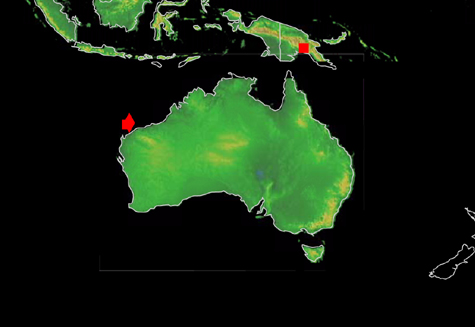
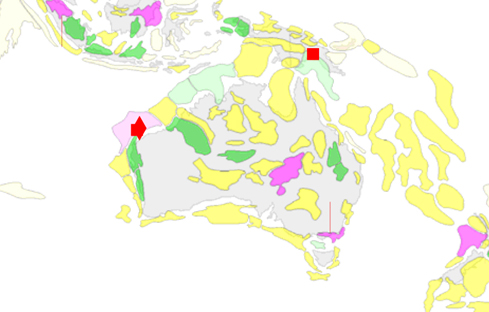
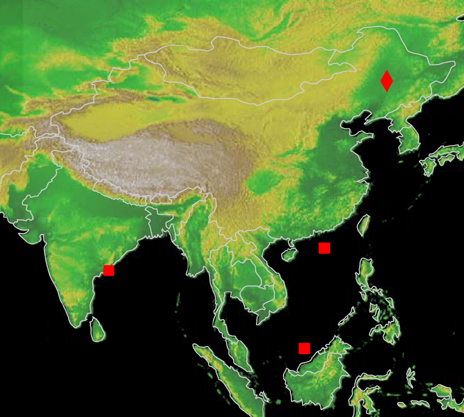
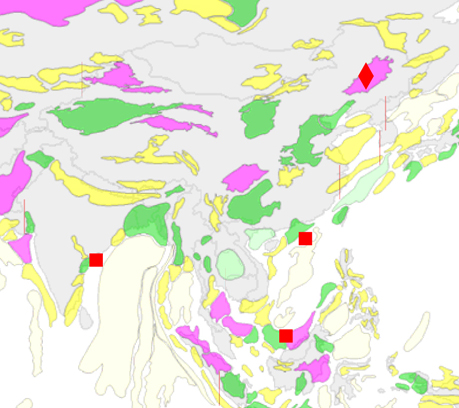
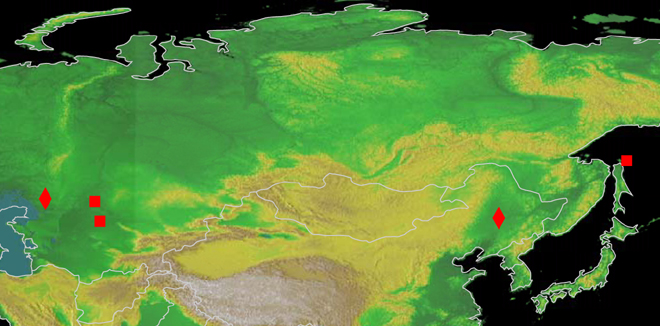
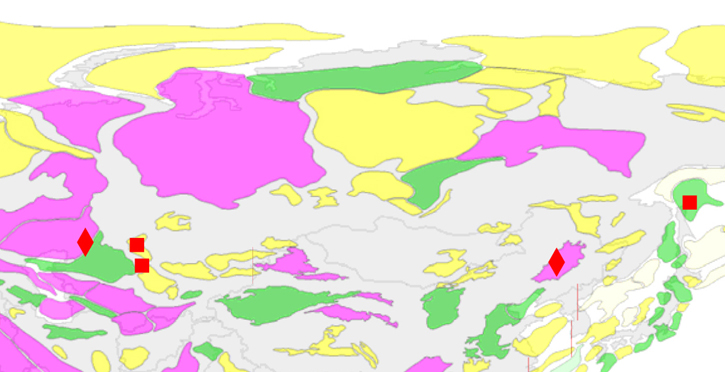
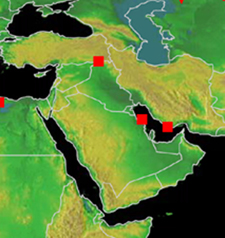
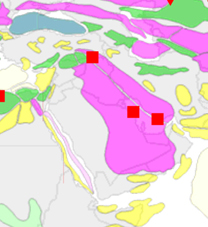
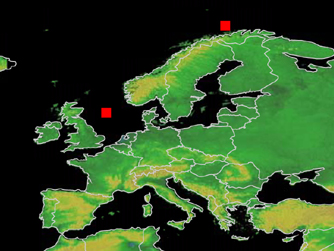
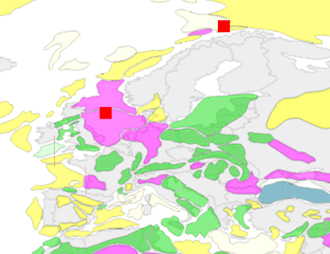
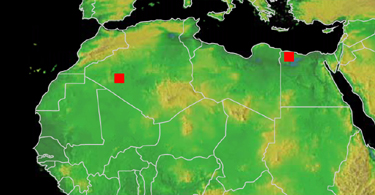
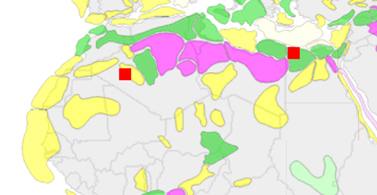
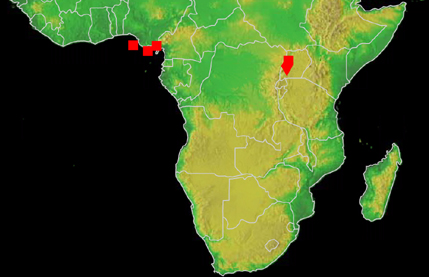
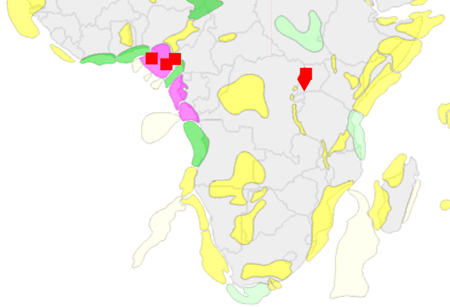
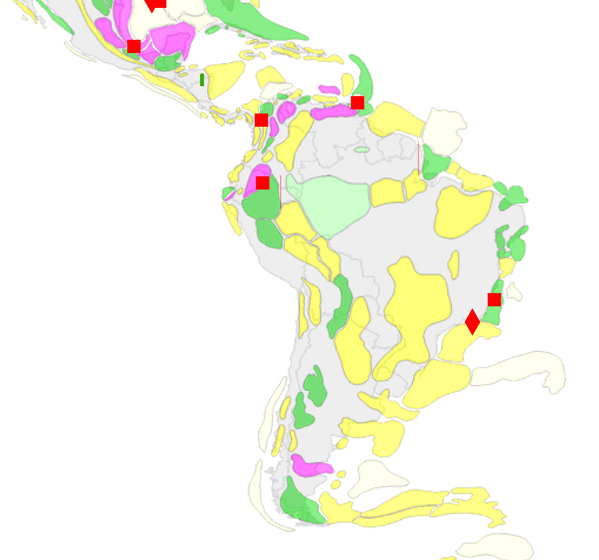
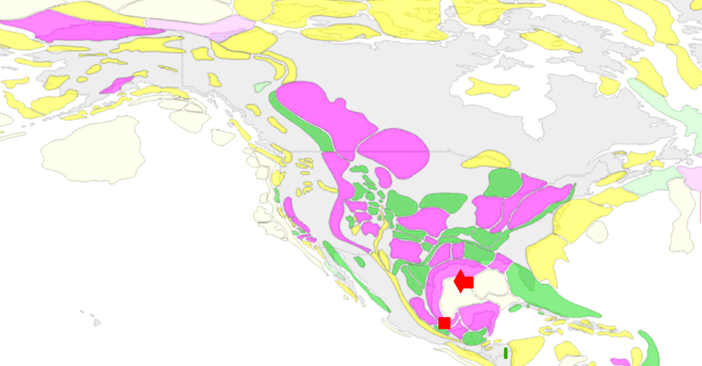
The following are major discoveries, provided by IHS (formerly IHS Energy) over the past year, with IHS commentary on the impact of the finds and some scouting reports on the wells. They are shown on a relief map (Figure 1) and on Sedimentary Provinces map of St. John et al. (1984) (Figure 2). Each region is accompanied by a list of discoveries, also provided by HIS (Tables 1, 2, 3, 4, 5, 6, 7, 8, & 9).
|
|
(Maps [Figures 1_1, 2_1] Discovery List—Table 1)Australia Drilled by Chevron, Clio 1 (n), is located to the west of Gorgon Field. Although no official reserves estimate has been released, it is understood to be “significant” and to have encountered a 190-meter gas column in the Mungaroo Sands, the biggest to date in Australia. It also is rumored to be lower in CO2 than the nearby Gorgon Field, which could mean that the Gorgon gas project could be developed without initially requiring so much CO2 re-injection and so lowering the upfront development costs. Xena 1ST1 (t), drilled by Woodside, is not a large discovery (reserves estimated at less than 0.5 Tcf), but it is located in the same block as the 2005 Pluto discovery, which is undergoing a fast track LNG development. On its own, Pluto is considered just about large enough to support such a project. However, various developmental problems, such as, much of the Burrup Peninsula becoming protected due to Aboriginal rock art and the possibility of domestic gas reservations, mean that additional gas, again discovered on a 100% Woodside-owned basis, can only help this project fly. The year 2006 saw very few significant oil discoveries, with the biggest commercial success being Tap’s Amulet discovery on the North West Shelf. This has reserves of 10-15MMbo. Other significant discoveries, for commercial rather than size reasons, were Coogee’s Swift North and Swallow wells. Together with Montara, these discoveries have reserves in the region of 30 MMbo (24 MMbo from Montara) and will now make a joint development conceivable. This could help open up the Ashmore and Cartier region to future exploration and development activities.
Papua New Guinea SPI’s Elk 1 wildcat in Papuan Foldbelt license PPL 238 is potentially a significant find that has tested up to 50 MMcfg/d, while a second DST over the interval 1,640-1,856m flowed 21.7 MMcf/d through a 60/64-inch choke. High quality condensate with an API between 46-49° also flowed. Analysis suggests the existence of a possible oil leg at Elk and a theoretical gas column in excess of 1,000 meters.
Far East(Maps [Figures 1_2, 2_2] Discovery List—Table 2)China Located in 1480 meters of water in the South China Sea, Husky’s Liwan 3-1 1 (n) in the PSCA 29/26 license is a significant gas discovery, as it is the first true deepwater discovery, and it has possibly identified a structure with potential reserves of 6 Tcf. The well is located on the eastern end of the Zhu II Depression, seeking objectives in the Upper Oligocene Zhuhai Formation and Lower Miocene Zhujiang Formation. The well logged 56 meters of net gas pay in two zones, and extends the natural gas trend first revealed by Panyu 30-1 1 and Panyu 34-1 1 wells. Sinopec Star’s Yaoshen 1 (t) wildcat is a good gas discovery well, a single drillstem test flowing 7.2 MMcfg/d from a deep volcanics reservoir between 3540-3750 meters in the Lower Cretaceous Yingcheng Formation. The discovery is estimated to hold roughly 1.1 Tcf of 2P gas in-place.
India Drilled by Reliance, the D6-MA-1 (Dhirubhai 26) exploration well on the KG-DWN-98/3 (D6) (Krishna-Godavari Offshore) is located in 1800 meters of water and is the first Cretaceous discovery to be made on the acreage. It is understood to have penetrated 26 meters of net oil pay and 72 meters of net gas pay; the oil horizon tested at an equipment-restricted flow rate of over 6700 bo/d and 10.96 MMcf/d through a 64/64-inch choke, while the upper gas horizon flowed over 32 MMcf/d and 3370 bc/d through a 80/64-inch choke. The well is believed to have opened a significant new play and could have a material impact on the future exploration potential of the block.
Malaysia In the PC4 1 well, located in the north of the open SK-310A permit, Petronas encountered a 630-meter gas column, a record for Sarawak.
Commonwealth of Independent States (CIS)(Maps [Figures 1_3, 2_3] Discovery List—Table 3)Kazakhstan Petrom claims its Rovnaya South 1 (n) wildcat in the Turgay Basin is a significant discovery, with the well flowing 6.9 MMcfg/d and 440 bc/d, from what is thought to be the Middle Jurassic Doshchan Play. TengizChevroil wildcat Ansagan 1X (t), some 18 kilometers west of the Tengiz Field, establishes a 135-meter oil column in a low permeability reservoir in what is believed to be a pre-salt Carboniferous limestone unit. The result high-grades a number of pre-salt structures in the area.
Russia The Vasyukanskaya Yuzhnaya 1 wildcat makes it three out of three for BP/Rosneft on its offshore Kaygan-Vasyukanskiy block (Sakhalin-5 project), an area that was opened by the Pela Lache find in 2004. Rosneft estimates reserves for the structure at 110 MMb.
Uzbekistan The Yumay 1 wildcat drilled by Uzbekneftegas proved to be a modest oil discovery in the gas-prone basin Amu-Darya Basin. The well flowed 264 bo/d through a 3.5mm choke from the Callovian-Oxfordian carbonates. Middle East(Maps [Figures 1_4, 2_4] Discovery List—Table 4)Iran NIOC’s Kish 2 gas discovery is ranked a supergiant find with reserves of 36 Tcf and one of the most important gas discoveries in the world in recent years. The Triassic Kangan Formation tested 31 MMcfg/d; the underlying Permian Upper Dalan tested at 30 MMcfg/d; with the Nar Member flowing at 14 MMcfg/d, all using the same 5/8-inch choke.
Iraq DNO’s Tawke 1 in the Kurdistan region was suspended after the well yielded a maximum flow of 5000 bo/d from one shallow reservoir estimated to be up to 800 meters thick, at a depth of 350 meters. DNO had estimated oil reserves in the Tawke structure at 330 MMb in place with 100 MMb recoverable, figures that may increase given the successful appraisal. The well is regarded as the country’s first significant oil find since 1993.
Saudi Arabia Saudi Aramco’s Karan 6 deeper pool wildcat tested gas at a rate of 40 MMcf/d, and is claimed as the Kingdom’s largest gas discovery with reserves of 10 Tcf. The well was the first in an 11-well deep gas exploration program, and through 2006 it was followed by gas finds at Nujayman, Kassab and Zamlah.
Europe(Maps [Figures 1_5, 2_5] Discovery List—Table 5)Norway Statoil encountered gas in several Late Triassic Sandstones in its 7122/6-2 (Tornerose) well. Although not tested, the discovery is to be evaluated as part of the resource base for a potential expansion of the LNG plant at Melkøya. Further development of the LNG plant, however, would require more gas than Tornerose could potentially supply. This result is seen as giving a boost for Barents Sea exploration plans.
United Kingdom ConocoPhillips well 30/6-6 (and 6z) on the Shoei prospect confirmed the presence of a substantial commercial hydrocarbon accumulation. Partner BG Group reported that the estimated recoverable reserves are between 100 and 275 MMboe, making this one of the largest North Sea finds in recent years. It is on first round acreage that has been held under license for over 40 years.
Saharan
|