Print this page
PSShale Facies and Seal Variability in Deepwater Depositional Systems*
By
William C. Dawson1 and William R. Almon1
Search and Discovery Article #40199 (2006)
Posted July 5, 2006
*Poster presentation at AAPG Annual Convention, April 9-12, 2006.
Click to view posters in PDF format.
Poster 1 (0.8 mb) Poster 2 (2.7 mb) Poster 3 (3.8 mb) Poster 4 (1.2 mb) Poster 5 (1.2 mb)
Poster 6 (1.1 mb) Poster 7 (0.8 mb) Poster 8 (0.7 mb) Poster 9 (1.4 mb)
1Chevron, Inc, Houston, TX) ([email protected]; [email protected])
Fine-grained
lithotypes are dominant components of deep-marine depositional systems. Analyses
of Tertiary-aged samples from wells in deep marine basins reveal the common
presence of eight major shale  types
types : 1) well-laminated organically-enriched
shales; 2) slightly silty, weakly laminated shales; 3) silty shales weakly
laminated shales; 4) distinctly mottled silty shales; 5) very silty shales and
argillaceous siltstones; 6) calcareous shales and claystones; 7) shale clast
conglomerates; and 8) shales with contorted laminae. Most importantly, these
fine-grained strata are baffles and barriers to fluid flow which ultimately
control the migration and distribution of hydrocarbons. Mercury injection
capillary pressure (MICP) data indicate these shale facies comprise six distinct
seal types. Seal types 1, 2, and 6 have significantly greater critical seal
pressures relative to seal types 3, and 4. Seal type 5 consistently has the
lowest sealing capacities. Shale facies and seal character vary systematically
and exhibit a strong correlation with sequence stratigraphic position,
suggesting that at least some depositional parameters influence sealing
capacity. Silt-poor shales can have excellent to exceptional sealing behavior.
Increased percentages of silt-sized detrital grains (greater than 20%) allow
preservation of relatively large-diameter pore throats, resulting in lower
sealing capacities. Well-developed laminar fabrics, organic matter, and early
marine carbonate cementation can significantly enhance seal character, whereas
bioturbation generally degrades overall seal behavior. Because of variations in
fabric and texture, these shale types have different compaction trends (in terms
of depth and porosity). Consequently, using an “average” compaction trend can
result in erroneous interpretations of burial history and timing of hydrocarbon
migration events from basin models.
: 1) well-laminated organically-enriched
shales; 2) slightly silty, weakly laminated shales; 3) silty shales weakly
laminated shales; 4) distinctly mottled silty shales; 5) very silty shales and
argillaceous siltstones; 6) calcareous shales and claystones; 7) shale clast
conglomerates; and 8) shales with contorted laminae. Most importantly, these
fine-grained strata are baffles and barriers to fluid flow which ultimately
control the migration and distribution of hydrocarbons. Mercury injection
capillary pressure (MICP) data indicate these shale facies comprise six distinct
seal types. Seal types 1, 2, and 6 have significantly greater critical seal
pressures relative to seal types 3, and 4. Seal type 5 consistently has the
lowest sealing capacities. Shale facies and seal character vary systematically
and exhibit a strong correlation with sequence stratigraphic position,
suggesting that at least some depositional parameters influence sealing
capacity. Silt-poor shales can have excellent to exceptional sealing behavior.
Increased percentages of silt-sized detrital grains (greater than 20%) allow
preservation of relatively large-diameter pore throats, resulting in lower
sealing capacities. Well-developed laminar fabrics, organic matter, and early
marine carbonate cementation can significantly enhance seal character, whereas
bioturbation generally degrades overall seal behavior. Because of variations in
fabric and texture, these shale types have different compaction trends (in terms
of depth and porosity). Consequently, using an “average” compaction trend can
result in erroneous interpretations of burial history and timing of hydrocarbon
migration events from basin models.
|
|
Introduction (Figures 2-1, 2-2, 2-3, and 2-4)
Seal capacity (MICP) analyses
combined with petrological data reveal a strong correlation between
shale facies Our data show that burial-driven compaction (i.e., systematic reduction of pore throat size during progressive burial) is not the primary control on seal capacity. These samples are from depths where compaction should be well-advanced, yet a broad range of sealing capacities is present. Other possible controls include early marine (carbonate) cementation and sedimentation rate. Alternatively, variations in texture related to high-frequency sequence stratigraphy could be responsible for some observed variability in seal character. Excellent top seals occur most frequently in upper parts of transgressive systems tracts. Silt-rich highstand and lowstand shales have relatively low sealing capacities.
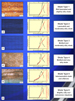
Deepwater Seal Shale type 1 Shale type 2 Shale type 3 Shale type 4 Shale type 5 Shale type 6
Seal capacity decreases from shale type 1 to shale type 6. Seal capacity in shale type 6 is enhanced by diagenesis (early marine cementation).
Deepwater Gulf of Mexico
West Africa Deepwater
This core penetrated sand-rich LST that is encased in marine shales with excellent seal character. The “best” seal (8063 feet) overlies this LST; this fissile shale represents a minor (probable 4th-order) condensed interval. The bottom seal is provided by the fossiliferous black shale (msf/HST) at 8110 feet. The sealing capacity of these silty shales has been enhanced by calcite cementation.
Summary (Figures 8-1, 8-2, and 8-3) Each
shale end-member has distinctive textures and fabrics, which appear to
exert strong influence on seal character. Plotting critical seal
pressure (MICP) at 10% non-wetting phase saturation) as a function of
compositional parameters reveals moderate to strong correlations for
some deepwater shale
ConclusionsSix standard seal lithotypes are recognized consistently in deepwater depositional settings. MICP data in combination with petrological analyses show a strong correlation between seal character and shale facies. Fabric (e.g., the presence of well-defined microlaminae) is associated with significantly greater sealing capacity in marine shales. Bioturbation tends to degrade sealing capacity. Silt content is a key parameter that affects seal character. Samples containing more than a threshold value (ap0proximately 20% detrital silt) can have a markedly lower sealing capacity. Early carbonate cementation is known to enhance sealing capacity. An increasing content of total clay and carbonate shows a strong positive correlation with increasing critical seal saturation. Each
shale facies compacts at a
ReferencesAlmon, W.R., et al., 2002, Sequence stratigraphy, facies variation and petrophysical properties in deepwater shales, Upper Cretaceous Lewis Shale, south-central Wyoming: GCAGS Transactions – Special Symposium, v. 52, p. 1041-1053. Aplin, A.C., Fleet, A.J., and Macquaker, J.H.S. (eds.), 1999, Muds and mudstones: Physical and fluid flow properties: Geological Society London Special Publication No. 158, London, 190p. Aplin, A.C., Matenaar, I.F., and van der Pluijm, B., 2003, Influence of mechanical compaction and chemical diagenesis on the microfabric and fluid flow properties of Gulf of Mexico mudstones: Jour. Geochemical Exploration, v. 78-79, p. 449-451. Berg, R.R., 1975, Capillary pressures in stratigraphic traps: AAPG Bulletin, v. 59, p. 939-956. Dawson, W., and Almon, W.R., 2002, Top seal potential of Tertiary deep-water shales, Gulf of Mexico: GCAGS Transactions, v. 52, p. 167-176. Diamond, S., 1970, Pore size distribution in clays: Clays and Clay Minerals, v. 18, p. 7-23. Downey, M.W., 1984, Evaluating seals for hydrocarbon accumulations: AAPG Bulletin, v. 68, p. 1752-1763. Heling, D., 1970, Micro-fabrics of shales and their rearrangement by compaction: Sedimentology, v. 15, p. 247-260. Hildenbrand, A., and Urai, J.L., 2003, Investigation of the morphology of pore space in mudstones – first results: Marine and Petroleum Geology, v. 20, p. 1185-1200. Ingram, G.M., Urai, J.L., and Naylor, M.A., 1997, Sealing processes and top seal assessment, in Moller-Pedersen, P., and Koestler, A.G., eds., Hydrocarbon Seals: importance for Exploration and Production, MPF Special Publication 7, Elsevier, p. 165-174. Jennings, J.J., 1987, Capillary pressure techniques: Application to exploration and development geology: AAPG Bulletin, v. 71, p. 1196-1209. Nygard, R., et al., 2004, Compaction behavior of argillaceous sediments as function of diagenesis: Marine and Petroleum Geology, v. 21, p. 349-362. Potter, P.E., Maynard, B.J., and Depetris, P.J., 2005, Mud and Mudstones: Springer- Verlag, Berlin, Germany, 297p. Schieber, J., 1999, Distribution and deposition of mudstones facies in the Upper Devonian Sonyea Group of New York: Jour. Sedimentary Research, v. 69, p. 909-925. Stow, D.A.V., Huc, A.Y., and Bertrand, P., 2001, Depositional processes of black shales in deep water: Marine and Petroleum Geology, v. 18, p. 491-498. Surdam, R.C., ed., 1997, Seals, Traps, and the Petroleum System: AAPG Memoir 67, 317p. Sutton, S.J., et al., 2004, Textural and sequence stratigraphic controls on sealing capacity of Lower and Upper Cretaceous shales, Denver Basin, Colorado: AAPG Bulletin, v. 88, p. 1185-1206.
AcknowledgmentsThe authors thank Chevron Corporation for granting permission to present these data and interpretations. MICP analyses were completed by Poro-Technology of Stafford, TX. Discussions with S.J. Sutton have contributed to our understanding of shale sedimentology and diagenesis. D.K. McCarty provided X-ray diffraction analyses. Thin sections were prepared by W. Lawrence, and scanning electron microscope images are courtesy of E. Donovan and J. Jones. Biostratigraphic data were provided by R.G. Lytton. Graphic design was provided by L.K. Lovell (Chevron).
|