
 Print this page
 Click
to view presentation in PDF format (37MB).
Click
to view presentation in PDF format (37MB).
Recommend--download to hard drive
Images in sequence of 12 PDF files
Recommend--online viewing
The Sun / Earth Climate System: A Geoscience Perspective*
By
Arthur R. Green1
Search and Discovery Article #70014 (2005)
Posted May 19, 2005
*Adapted from 2004-2005 AAPG Distinguished Lecture; Funded by the AAPG Foundation through the J. Ben Carsey Endowment. Illustrations by Dolores Claxton.
1Chief Geoscientist, ExxonMobil Exploration Company, Houston, TX, Retired; current address: Gig Harbor, WA ([email protected])
|
|
Conclusions
Scientific Methods and ContextFigures 1-3
Reports of the U.S. National Research Council Natural Academy of Science (Figure 1)
The solar-terrestrial connections: Space weather--Selected publications (Figure 2)
Toward a Synthesis of the Newtonian and Darwinian World ViewsPhysicists seek simplicity in universal laws that create and control climate. Earth system scientists revel in complex interdependencies (Physics Today, October, 2002).
PhysicsThe more you look, the simpler it gets. Universal patterns, search for laws. Predictive (chaos and quantum mechanics notwithstanding). Central role for ideal systems (ideal gas, harmonic oscillator).
EcologyThe more you look, the more complex it gets. Weak trends; reluctance to seek laws. Mostly descriptive; explanatory. Disdain for caricatures of nature / analogs.
“I have witnessed the dysfunctional consequences of this bimodal legacy," Dr. John Harte (particle physicist), Energy Resource Group, University of California, Berkeley.
To complicate the biomodal thinking of physicists and earth systems scientists, economists follow preferred economic models; geopoliticians and nations follow trends of perception; and the layman follows______?
Climate (Figure 3)The word climate is derived from the Greek Klima or region of the earth's surface. A basic definition is:
CLIMATE is a broad composite of the average meteorological conditions of a geographic region, measured in terms of such things as temperature, rainfall, snowfall, ice cover, and winds over an extended period of time.
CLIMATE is also used to refer to the mean state of a planet or geographic regions, such as continents or oceans.
Major Climatic Forcing Mechanisms of the Sun - Earth Climate SystemExternal MechanismsFigures 4-12
Itemization of External MechanismsSolar radiation and galactic forcing - an emerging science Sunspot variation and irradiance changes - directly affects temperature Solar ultraviolet wavelength variability - affects ozone production and upper atmosphere winds Magnetic variation - affects rainfall and cloud cover, at least partially, through control of the earth's electrical field Celestial influence? Earth's orbital changes - linear cycles within a non-linear system Eccentricity - rotation } Obliquity (tilt) } Milankovitch Cycles 19-23 K, 1 K & 100-400 K Precession of equinoxes } Asteroid impacts - creates dust clouds and tidal waves Aerosols - blockage of sun's radiation Extinction The Moon Gravity deflections Earth and ocean tides - interaction with Coriolis force Biological rhythms Solar Radiation and Galactic Forcing Sunspot variation and irradiance changes Solar ultraviolet wavelength variability Magnetic variation Celestial influence?
Comments on External Mechanisms (Figures 4, 5, 6, 7, 8, 9, 10, 11, and 12)The Sun (Figure 4) The diameter of the sun is 864,000 miles. Hydrogen and helium compose 95% of it. Energy is generated by thermonuclear fusion that converts hydrogen to helium. Solar flairs hurl radiation and particles into space. The plasma temperature is about 1million degrees. Bright region "sun spots" have higher density of coronal gas than dark regions.
Solar radiation - an emerging science (Figure 5) Sunspot variation and irradiance changes directly affect temperature.
Magnetic variation affects rainfall and cloud cover, at least partially, through control of the earth's electrical field (Figure 6).
Earth's orbital changes-linear cycles within a non-linear system (Figures 10 and 11). Eccentricity - changes in the shape of the orbit about the sun (100k-400k cycles). Obliquity - tilt of the Earth (23 1/2o) (41k cycle) (illustrated with major atmosphere patterns by George R. Rumney, 1968). Precession of equinoxes - the timing of the Earth's closest approach to the sun (19k-23k).
Asteroid impacts (Figure 12)- creates dust clouds and tidal waves and faunal and floral extinctions.
The moon - Earth tides and ocean currents.
Major climatic forcing mechanisms of the Sun - Earth climate system Internal Itemization of Internal MechanismsSubsurface atmosphere Atmosphere - involved in every physical process of potential importance to abrupt climate change: temperature, humidity, cloudiness, wind. Albedo (reflectance) - the ratio of reflected to incident radiation from the sun. Atmosphere - water vapor is the largest greenhouse gas because it's molecules absorb along wavelengths. Earth surface (land-sea-ice) Circulation cells and patterns - rapidly propagate the influence of any climate forcing from once part of the globe to another. Gas composition – chemistry - carbon dioxide (CO2), methane (CH4), nitrous oxide (N2), halocarbons, troposphereic nitrogen oxides, carbon monoxide (CO), sulfate aerosols - city heat. Greenhouse warming gases Aerosols Ocean-terrestrial-atmosphere feedback Internal oscillation zones Hydrosphere - water is fundamental to creating and regulating the earth's climate. Oceans - enormous heat capacity, to store and transfer heat in 3 dimensions. Thermohaline circulation - a major long term regulator of temperature - a switch? Internal dynamics (El Niño) - a 2-3 year heating event that sets weather patterns. Lakes - overturning, moisture, areal extent, outburst floods. River systems Subsurface aquifers - facilitates biological processes (respiration and photosynthesis), physical processes (erosion), and chemical processes (dissolution and chemical weathering). Carbon cycle Biosphere - a key component in global biogeochemical cycling (storage and release) of carbon, nutrients and other chemicals that influence climate. Life forms (marine and terrestrial). Carbon dioxide (biological pump) cycle - stores and releases CO2. Methane - wetlands and animals. Forests - O2 and albedo. Anthropologic evolution - man, his works and products. Cryosphere - polar ice is rare in the earth's history and generates a delicate climate system. Terrestrial - sea level and elevation changes, albedo feedback and yields fresh water Marine - ice-rifted debris, increases the planet's albedo, sea air exchange. Lithosphere - 100 km thick layer above the aesthenosphere, mantle, and core - forms the earth's dynamic "plates." Plate tectonics - 8 major plates and 26 minor plates in dynamic interaction. Shape and distribution of continents and oceans / pathways - change current patterns and upwelling. Mountain building - orographic lift - monsoons - weather patterns and creates river drainages. Uplift and subsidence - equilibrates heat of the earth, forms sedimentary basins. Volcanism Gases - composition - greenhouse gases and aerosols. Ash clouds - albedo and mineral nutrients. Magma Topography and bathymetry
Subsurface Atmosphere (Figures 13-16)Figures 13-16
Why a Geoscientist (Figure 13) The reductionist methods of breaking complex systems into simple parts has been partially successful in assessing risk. But it has left a vacuum when it comes to predicting complex fluid streams (oil and gas) in the subsurface realm. How do we use the information gleaned about the parts to build up a theory of the whole? The deep difficulty here lies in the fact that the complex whole may exhibit properties that are not readily explained by understanding the parts. The complex whole, in a completely nonmystical sense, can often exhibit collective properties, self organizing"emergent" features that are lawful in their own right. (Stuart Kauffman, e.g., 1995)
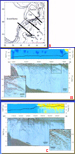
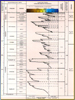
Sedimentary basin systems--"Similarity to climate systems" (Figures 14, 15, and 16)
The Atmosphere (Figures 17, 18, 19, 20, 21, 22, 23, 24, and 25)Figures 17-25
Climate ReconstructionLarge-scale temperature reconstructions after millennial-scale variations have been removed by de-trending with a cubic smoothing spline with a 50% frequency-response cutoff width equal to 67% of the length of the common period (1000-1980): purple, Briffa (2000); blue, Mann et al (1999); red, Esper et al. (2002); green, Jones et al. (1998). The series are not smoothed to illustrate the full range of variability up to centennial scales. The inter-series correlations between all four reconstructions are 0.42 for non-smoothed data and 0.63 for 50-year smoothed data, both calculated over the 1000-1980 period. Inter-series correlations for each century (1901-1980 for the 20th century) remain fairly high and stable over time (numbers provided in brackets). The lowest correlation (0.27) occurs in the 11th century, despite the fact that the relative data overlap (e.g., Tornetraesk and Polar Urals tree ring data used in all reconstructions) is greatest during this early period. In boxes, the number of the northern hemisphere regional proxy records considered in the large-scale reconstructions are provided for 1900, 1500, and 1000 (colors as for the curves). Values in parentheses indicate numbers of tree ring records. For Mann et al. (1999), 112 in 1900 includes records from the southern hemisphere, and the numbers for 1500 and 1000 include principal components derived from 21 western and 6 southern U.S. tree sites that are counted as two regional records.
HydrosphereFigures 26-30
Role of WaterWater is fundamental to creating and regulating the Earth's climate.
“How will Earth's climate respond to ongoing changes in greenhouse gases and ocean circulation? Answers about the future might be found in the past.” -- Edouard Bard (Figure 26)
Isotopic Climate Indicators (Figures 31, 32, 33, 34, and 35)Deep sea sediments provide the most stratigraphically complete and globally representative proxy records of paleoclimate change.
Figures 31-35
“Ice
|




 |
Figure
36. Titles of two volumes regarding ice |
Climate Change and Human History/Migrations (Figures 37, 38, 39, 40, 41, 42, 43, and 44)
Figures 37-44


Lithosphere (Figure 45)
Lithosphere is a 100-km-thick layer above the aesthenosphere, mantle, and core. It forms the Earth's dynamic plates
Plate Tectonics - 8 major plates and 26 minor plates in dynamic interaction
-
Shape and distribution of continents and oceans - change current patterns and upwelling - spreading rifts.
-
Mountain building - orographic lift - monsoons - weather patterns and creates river drainages.
-
Uplift and subsidence - equilibrates heat of the earth, forms sedimentary basins.
Volcanism - interaction of the earth's interior with the atmosphere
-
Gases - composition - greenhouse gases.
-
Ash clouds - albedo and mineral nutrients.
-
Magma - minerals, heat, nutrients and topography.
-
Topography and bathymetry - seafloor spreading ridges, large igneous provinces (LIPS), and mountain ranges with glaciers, ocean current pathways.
 |
Figure 45. Dynamics of planet earth; planetary - terrestrial - marine factors. |
Climatology - A Developing "Science" (Figure 46)
Climate science is developing rapidly - we are in the steep part of the learning curve. Climate change science must integrate atmospheric science with the other physical sciences.
 |
Figure 46. Complexity of climatology, with its interacting mechanisms. |
Coupled Behavior and Feedback
-
The interacting mechanisms can exhibit collective, non-linear properties "emergent" features that are lawful in their own right.
-
The search for predictable properties of hybrid forces is emerging as a fundamental research strategy in climate research.
Future Research Areas
Processes
-
Ocean circulation - deep and global
-
Sea-ice transport and processes
-
Land-ice behavior - conditions beneath ice sheets
-
The hydrological cycle - storage, runoff and permafrost
-
Modes of atmospheric behavior - cloud formation
-
The sun's irradiance variability
-
Develop additional proxies of paleoclimates - (isotopes & biologic)
Advanced Modeling
-
Fully coupled whole earth system models - to generate scenarios of abrupt climate change with high spatial and temporal resolution for tracking
-
Advanced statistical methods to
 model
model to understand thresholds and non-linear ties in
geophysical, ecological and economic systems
to understand thresholds and non-linear ties in
geophysical, ecological and economic systems
Tools
-
Enhanced computational resources for modeling
-
New satellite data for mapping temperature, detailed bathymetry, uplift-subsidence and eustatic sea level
-
A grid of earth measuring stations for better geographic coverage and temporal resolution - EarthScope, Nanno / reporting stations
Climate Change Science Program (Figures 47, 48, and 49)
Figures 47-49
|
|
|
|
|
|
|
|
Figure 49. Climate science and technology management structure (Mahoney, 2002). |



Global Climate and Energy Project (Figures 50, 51, 52, 53, 54, and 55)
“Our investment in GCEP is a demonstration of our long-held belief that successful development and global deployment of innovative, commercially viable technology is the only path that can address long-term climate change risks while preserving and promoting prosperity of the world's economies. ExxonMobil is proud to work with a university of the reputation, experience, and ability of Stanford, and to be among the select group of sponsors coming together to make this project happen.” (Lee Raymond, ExxonMobil Chairman and CEO.)
“There is much to do, but there is much that can be done, and the time to start is now.” (Professor Franklin [Lynn] Orr, GCEP Project Director.)
Figures 50-55
|
|
Figure 50. GCEP (Global Climate & Energy Project), Stanford University (www.gcep.stanford.edu) |
|
|
|
|
|
|
|
|
|
|
|
|
|
|


Green Market and Environmental Crisis (Figures 56 and 57)
As emissions rise. . ., a new market is born. It shows industry moving on global warming. Even as Bush opposes Kyoto, firms are trading rights to emit greenhouse gases. (Jeffrey Ball, The Wall Street Journal, January, 2003.)
Figures 56-57
|
|
|
|
|




A Geoscientist's View+
Some people, NGO's, politicians and some environmental scientists, genuinely subscribe to a gloomy picture of the Earth's future. Many of these scientists are not uninformed, nor naive, or unprofessional, or captive to special interests; but they have indeed moved into a pessimistic sphere that generates an environment of righteousness, elitism, environmental orthodoxy, and a view of "science" that aims at forgone conclusions and the need forever-increasing research grants.
The last decade has seen a rapid advancement of the climate sciences. The intellectual stream of thought from Data -> Information -> Knowledge -> Integration -> Wisdom has experienced step function advancements at many levels since the early 1990's. State-of-the-Art science for decision-making is critical for global environmental care and economic prosperity.
I am optimistic about the Earth's environmental future, and I believe there is plenty of evidence to support an optimistic, though not cornucopian, view of our planet's environmental future.
If one believes that affluence fosters environmentalism, then the essential prerequisites for our earth's environmental future are a global transition from poverty to affluence coupled with transition to freedom and democracy and the growth of scientific knowledge.
(+After Dr. Jack M. Hollander, 2003)
Summary
-
Climate science is developing rapidly - we are in the steep part of the learning curve. Climate change science must integrate atmospheric science with the other pertinent scientific disciplines.
-
We do not yet understand the complex processes of climate system well enough to construct rigorous models of future climate change.
-
The continents and oceans are being systematically "wired" with broadband communications, sensors and satellites that are recording vast amounts of global data and information.
-
The massive data sets and rapidly evolving concepts of climate change will spark public debate at an increasing rate.
-
Mutual respect and honest debate are critical to the advancement of the science.
 |
++Other references are given with the text and figure captions.
Abdul Aziz, Hayfaa, Sanz-Rubio, Enrique, Calvo, J.P. Hilgen, F.J., and Krijgsman, W., 2003, Palaeoenvironmental reconstruction of a middle Miocene alluvial fan to cyclic shallow lacustrine depositional system in the Calatayud Basin (NE Spain): Sedimentology, v. 50, p. 211-236.
Alley, R.B., 2000, Ice-core evidence of abrupt climate changes: Proceedings of the National Academy of Sciences, v. 97, p. 1331-1334.
Alley, R.B., P.A. Mayewski, T. Sowers, et al., 1997, Holocene climatic instability: A prominent widespread event 8200 years ago: Geology, v. 25, p. 483-486.
Barry, R.G., and R.J. Chorley, 1968, Atmosphere, weather and climate (first edition): Methuen and Co. Ltd., London), 319 p.
Bord, Edouard, 2002, Climate shock: Abrupt changes over millennial time scales: Physics Today, December.
Briffa, K.R., 2000: Annual climate variability in the Holocene; interpreting the message of ancient trees: Quaternary Science, v. 19, p. 87-105.
Bryant, E.A., 1997, Climate process and change: Cambridge University Press, 209 p.
Burns, S.J., D. Fleitmann, A. Matter, et al., 2003, Indian Ocean climate and an absolute chronology over Dansgaard/Oeschger events 9 to 13: Science, v. 301, p. 1365-1367.
Campbell, W.H., 2003, Introduction to geomagnetic fields, 2nd edition: Cambridge University Press, 350 p.
Cande, S.C., and D.V. Kent, 1995, Revised calibration of the geomagnetic polarity timescale for the Late Cretaceous and Cenozoic: Journal of Geophysical Research, v. 100, p. 6093-6095.
Cann, R.L., and A.C. Wilson, 2003, The recent African genesis of humans, in New look at human evolution: Scientific American Digital Special Edition; also, Wilson, A.C., and R.L. Cann, 1992, The recent African genesis of humans: Scientific American, v. 266, p. 68-73.
Cronin, T.M., R.Z. Poore, J.J. Dowsett, and R.S. Thompson, 1993, Pliocene climates, in Proceedings of the U.S. Geological Survey global change research forum, Herndon, Virginia, March 18-20, 1991, p. 51-52.
Crowley, T.J., 1996, Remembrance of things past: Greenhouse lessons for the geologic record: Consequences, v. 2., p. 3-12.
Crowley, T.J., 2000, Causes of climate change over the past 1000 years. Science, v. 289, p. 270-277.
Crowley, T. J. and Lowery, T., 2000: How warm was the Medieval Warm Period ? A comment on "Man-made versus Natural Climate Change". Ambio 39, 51-54.
Crowley, T.J., and G.R. North, 1991, Paleoclimatology: Oxford University Press, New York.
Cuffey, K. M., and G.D. Clow, 1997, Temperature, accumulation and ice sheet elevation in central Greenland through the last deglacial transition: Journal of Geophysical Research, v. 102 (C12), p. 26383-26396.
Cuffey, K.M., R.B. Alley, P.M. Grootes, J.F. Bolzan, and S. Anandakrishnan. 1994. Calibration of the delta18O isotopic paleothermometer for central Greenland, using borehole temperatures: Journal of Glaciology, v. 40, p. 341-349.
Dansgaard, W., S.J. Johnsen, H.B. Clausen, et al., 1993, Evidence for general instability of climate from a 250-kyr ice-core record: Nature, v. 364, p. 218-220.
Esper, J., Frank, D.C., and Wilson, R.J.S., 2004, Climate reconstructions - low frequency ambition and high frequency ratification: EOS 85, no. 12, p.113, 120.
Esper, J., Cook, E.R., and Schweingruber, F.H., 2002, Low-frequency signals in long tree-ring chronologies and the reconstruction of past temperature variability: Science, v. 295, p. 2250-2253.
European Southern Observatory, 2003, Cover (spiral galaxy NGC 1232, September 21, 1998).
Fuchs, R.J., E. Brennan, J. Chamie, et al., eds., 1994, Mega-city growth and the future: United Nations University Press, Tokyo.
Gagosian, R.B., 2003, Abrupt climate change: Should we be worried?--presentation for panel on abrupt climate change at the World Economic Forum, Davos, Switzerland, January 27, 2003 (http://www.eprida.com/hydro/climate/woodshole/WHclimatereport.htm)
Gagosian, R.B., 2002, Can global warming trigger an ‘Ice
Age’?: Presentation, July, 2002: Woods Hole Oceanographic Institution.
Gerhard, L.C., and W.E. Harrison, 2001, Distribution of oceans and continents: A geological constraint on global climate variability, in Geological perspectives of global climate change: AAPG Studies in Geology #47, p. 35-49.
Graedel, T.E., and P.J. Crutzen, 1993, Atmospheric change: An earth system perspective: Freeman and Co., New York, 446 p.
Hansen, J., R. Ruedy, J. Glascoe, and M. Sato, 1999, GISS analysis of surface temperature change: Journal of Geophysical Research, v. 104, p. 30997-31022.
Hicke, J.A., Asner, G.P., Randerson, J.T., et al., 2002, Satellite-derived increases in net primary productivity across North America, 1982–1998. Geophysical Research Letters, 29 1029/ 2001GL013578.
Holbrook, W.S., P. Paramo, S. Pearse, and R.W. Schmitt, 2003, Thermohaline fine structure in an oceanographic front from seismic reflection profiling: Science, v. 301, p. 821-824.
Hollander, Jack M., 2003, The real environmental crisis: Why poverty, not affluence, is the environment's number one enemy: The University of California Press, 251 p.
Hoyle, Fred, 1981, Ice: The ultimate human catastrophe: The Continuum Publishing Company.
Jet Propulsion Laboratory, 2004, Education – Class activities: TOPEX/Poseidon on-line tutorial (http://topex-www.jpl.nasa.gov/education/tutorial.html).
Johnsen, S.J., H.B. Clausen, W. Dansgaard, et al., 1992, Irregular glacial interstadials recorded in a new Greenland ice core: Nature, v. 359, p. 311-313.
Johnston, Nels, Carmen Revenga, and Jaime Echeverria., 2001, Managing water for people and nature: Science, v. 292, 11 May, p. 1071-1072.
Jones, P.D., Briffa, K.R., Barnett, T.P., and Tett, S.F.B.,
1998, High-resolution palaeoclimatic records for the last millennium:
interpretation, integration and comparison with General Circulation
Model control run temperatures. The Holocene, v. 8, p. 455-471.
Kauffman, S., 1995, At home in the universe: The search for laws of self organization and complexity: Oxford University Press, 321 p.
Kerr, Richard A., 1993, Even warm climates get the shivers: Science, v. 261, p. 292.
Krishnamurti, T.N., 2002, United Nations Environment Programme (UNEP) Assessment Report: Part III: Global and future implications, p. 47.
Kuring, N., 2002, UNEP assessment report, p. 1.
Lean, J., J. Beer, and R. Bradley, 1995, Reconstruction of solar irradiance since 1610: Implications for climate change: Geophysical Research Letters, v. 22, p. 3195-3198.
Leroux, M., The mobile polar highs: A new concept explaining present mechanism of meridional air-mass and energy exchanges and global propagation of palaeoclimatic changes: Global and Planetary Change, v. 7, p. 69-93.
Lockwood, M., Stamper, R., and Wild, M.N.: 1999, A doubling of the sun’s cornal magnetic field during the last 100 years: Nature, v. 399, p. 437-439.
Lunar and Planetary Laboratory, University of Arizona, 2003, Chicxulub impact event (http://www.lpl.arizona.edu/sic/impact_catering/chicxulub/chicx_title.html.
Lyle, M.W., et al., 2002, Leg 199 Scientific Prospectus: ODP, v. 199.
Mahoney, J.R., 2002, The U.S. climate change science program: NOAA presentation (www.sab.noaa.gov/Presentations/SAB_2002_11November-09_Climate%20Change%20Program%20-%20Mahoney.ppt).
Mann, M.E., Bradley, R.S., and Hughes, M.K., 1999, Northern hemisphere temperatures during the past millennium: Inferences, uncertainties, and limitations: Geophysical Research Letters, v. 26, p. 759-762; also, Mann, M.E., Bradley, R.S. and Hughes, M.K., 1998: Global-scale temperature patterns and climate forcing over the past six centuries. Nature, v. 392, p. 779-787.
Pang, K.D., and Yau, K.K., 2002, Ancient observations link changes in sun's brightness and earth's climate. EOS, Transactions, American Geophysical Union, v. 83, p. 481, 489-490.
Petit J.-R., J. Jouzel, D. Raynaud, et al., 1999. Climate and atmospheric history of the past 420,000 years from the Vostok ice core, Antarctica. Nature, v. 399, p. 429-436.
Plagnes, V., Causse, C., Fontugne, M., et al., 2003, Cross dating (Th/U and 14C) limits for an open system: calcite covering prehistoric paintings in Borneo: Quaternary Research, v. 60, p. 172-179.
Prakash, A., 2005, Photo in Fieldwork campaign in Ruqigou coalfield, China: International Institute for Geo-Information Science and Earth Observation (ITC) (http://www.itc.nl/personal/coalfire/poster/fieldwork.pdf); also Discover, October 1999, and Stracher, Glenn B., 2002, Coal fires: A burning global recipe for Catastrophe: Geotimes, October, p. 36-37, 66.
Ramankutty, N., and J.A. Foley, 1999, Estimating historical changes in global land cover: Croplands from 1700 to 1992: Global Biogeochem. Cycles, v. 13, p. 997–1027.
Rumney G., 1968. Climatology and the World's Climate. MacMillan Company, New York.
Scotese, Christopher R., 2003, Modern world, in Site Map: PALEOMAP Project (http://www.scotese.com/modern.htm).
Sittel, M, 1994, Differences in the means of ENSO extremes for maximum temperature and precipitation in the United States: Center for Ocean-Atmospheric Prediction Studies, The Florida State University, Technical Report 94-2, unpaginated.
Trenberth, K.E., and B.L. Otto-Bliesner, 2003, Paleoclimate: Toward integrated reconstruction of past climates: Science, v. 300, p. 589-591.
UNEP (United Nations Environment Programme), 2002, UNEP Assessment report, p. 1, 12, 47.
UNEP and C4, 2002, The Asian Brown Cloud: Climate and Other Environmental Impacts. United Nations Environment Programme (UNEP), Nairobi: Executive Summary, p. 289-296 (illustration(s) courtesy of N. Kuring, NASA Goddard Space Flight Center).
Unisys Weather, 1999, Upper air chart and surface temperature charts for February 13, 1999; in archives for
February 1999 (http://weather.unisys.com/archive).
and surface temperature charts for February 13, 1999; in archives for
February 1999 (http://weather.unisys.com/archive).
Vail P.R., and R.M. Mitchum, Jr., 1979, Global cycles of relative changes of sea level from seismic stratigraphy: resources, comparative structure, and eustatic changes in sea level, in Geological and geophysical investigations of continental margins: AAPG Memoir 29, p. 469-472.
Zachos, J., M. Pagani, L. Sloan, et al., 2001, Trends, rhythms, and aberrations in global climate 65 Ma to present: Science, v. 292, p. 686-693.