|
Figure Captions
|
 |
Figure 1. Rocky Mountain  gas gas production by vintage.
Reproduced with
permission of Oil & Gas Journal. production by vintage.
Reproduced with
permission of Oil & Gas Journal.
|
|
 |
Figure 2. San Juan Basin
gas production by vintage.
Reproduced with permission
of Oil & Gas Journal. |
|
 |
Figure 3. Growth anticipated in Rocky Mountain region, at various
prices. *Prices at Henry Hub, Louisiana.
Volumes as estimated by U.S. Geological
Survey. Reproduced
with permission of Oil & Gas Journal. |
|
 |
Figure 4. Gas pyramid.
Source: Kuuskraa and Schmoker (1998), after Masters (1979).
Reproduced with permission
of Oil & Gas Journal. |
|
 |
Figure 5. Current level
of technology.
Reproduced with permission of Oil & Gas Journal. |
|
 |
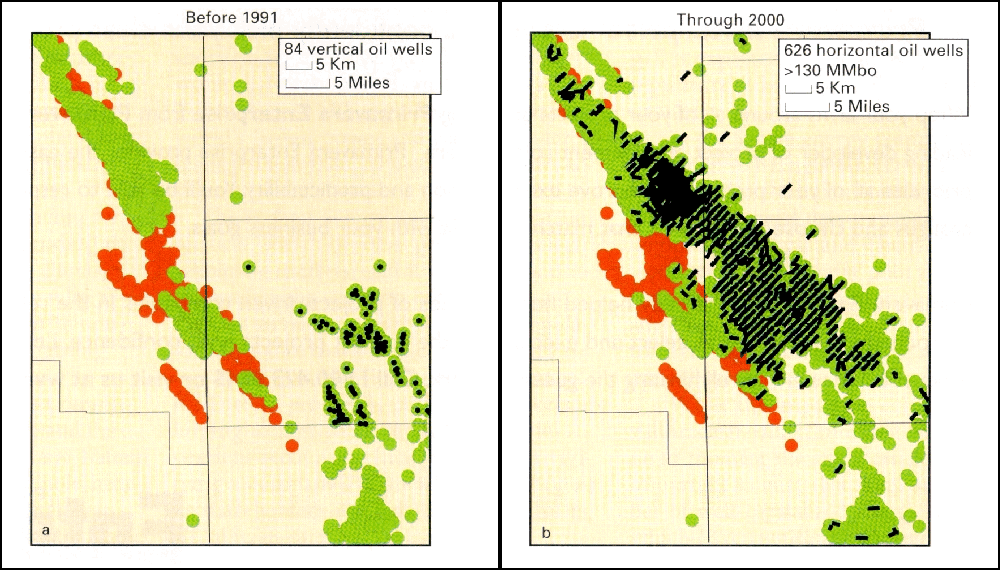
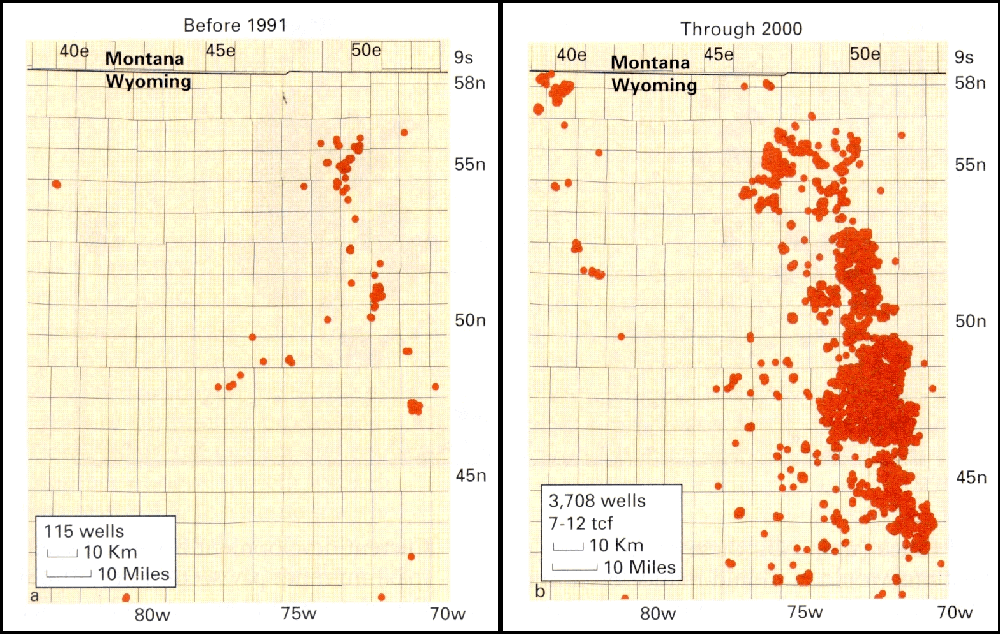
Figure 6. Cedar Hills-East Lookout Butte fields, Williston Basin:
Ordovician Red River. a. Before 1991. b. Through 2000.
Reproduced with permission
of Oil & Gas Journal.
Click to view a and b in sequence. |
|
 |
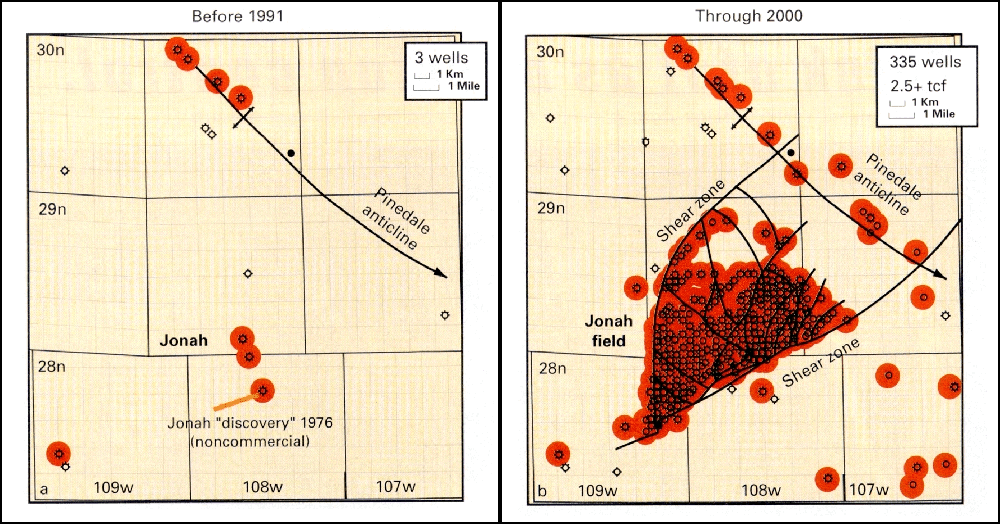
Figure 7. Jonah field, Green River Basin: Basin centered gas. a.
Before 1991. b. Through 2000.
Reproduced with permission
of Oil & Gas Journal.
Click to view a and b in sequence. |
|
 |
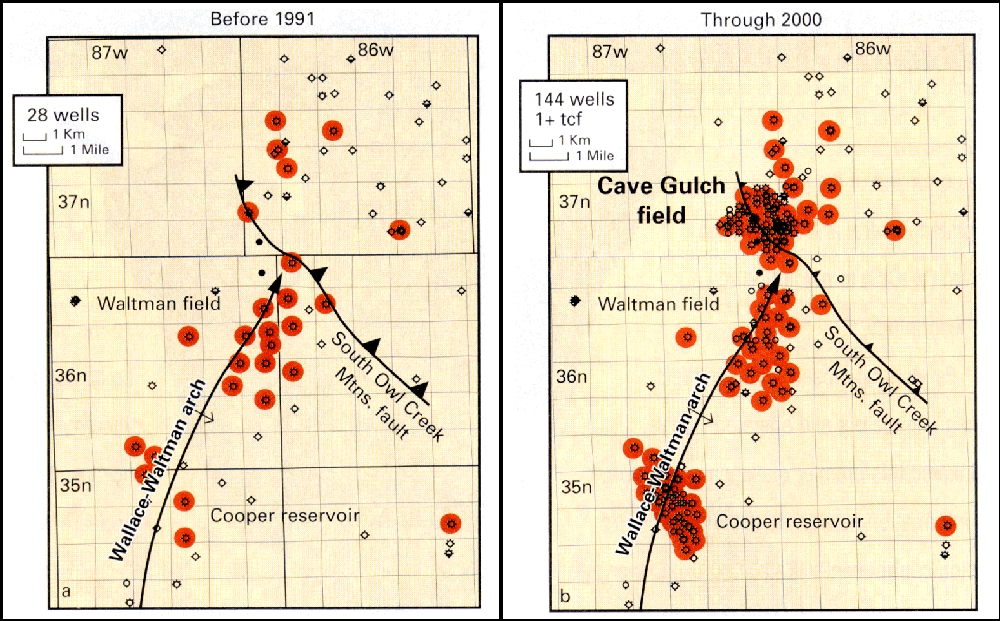
Figure 8. Cave Gulch trend, Wind River Basin: Complex structure. a.
Before 1991. b. Through 2000.
Reproduced with permission
of Oil & Gas Journal.
Click to view a and b in sequence. |
|
 |
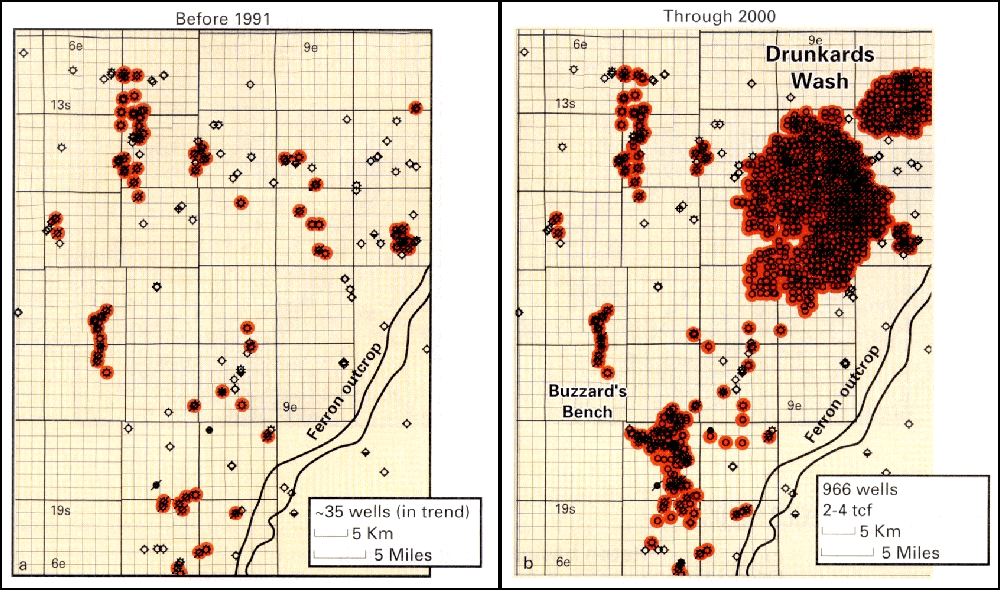
Figure 9. Greater Drunkards Wash field, Wasatch Plateau: Coalbed
methane. a. Before 1991. b. Through 2000.
Reproduced with permission
of Oil & Gas Journal.
Click to view a and b in sequence. |
|
 |
Figure 10. Northeastern Wyoming fields: Coalbed methane, Powder
River Basin. a. Before 1991. b. Through 2000.
Reproduced with permission
of Oil & Gas Journal.
Click to view a and b in sequence. |
|
 |
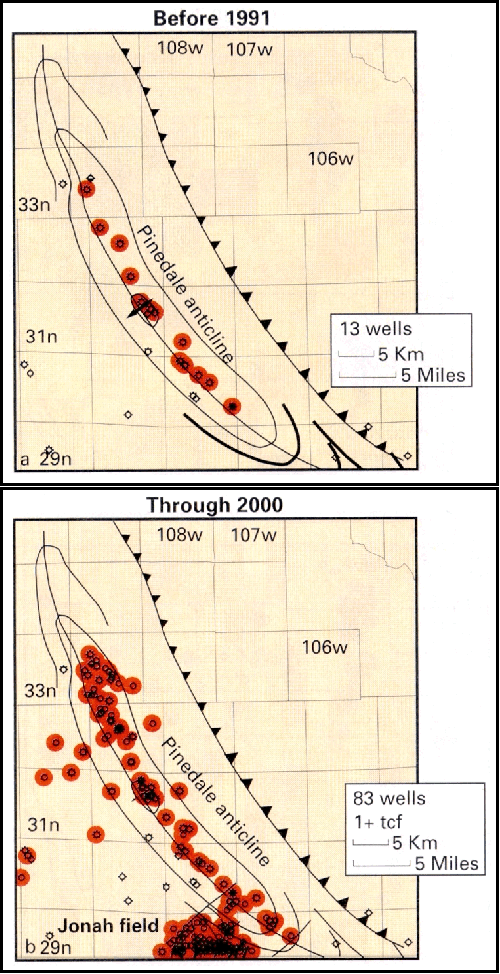
Figure 11. Pinedale anticline, Green River Basin: Basin centered
gas. a. Before 1991. b. Through 2000.
Reproduced with permission
of Oil & Gas Journal.
Click to view a and b in sequence. |
|
 |
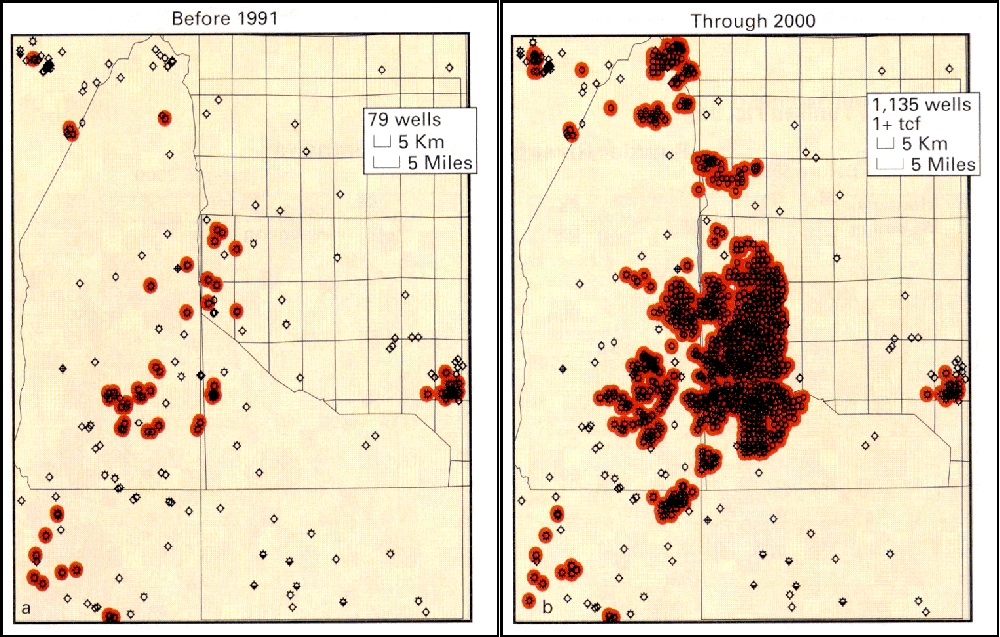
Figure 12. Northeast New Mexico
fields: Coalbed methane, Raton
Basin. a. Before 1991. b. Through 2000. Reproduced with
permission of Oil & Gas Journal.
Click to view a and b in sequence. |
|
 |
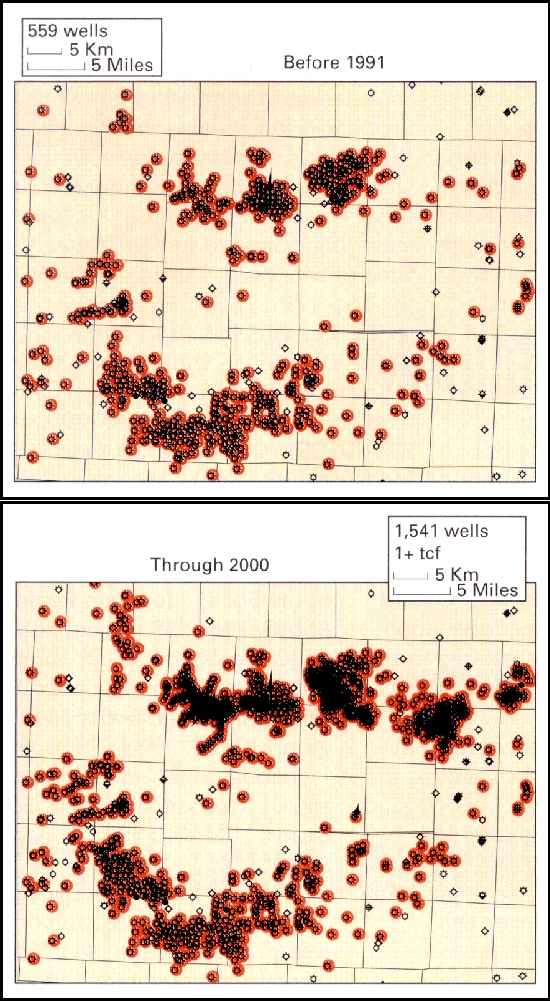
Figure 13. Northwest Colorado fields: Basin centered gas, Piceance
Basin. a. Before 1991. b. Through 2000.
Reproduced with permission
of Oil & Gas Journal.
Click to view a and b in sequence. |
Return to top.
New Technology Applied
Application of new technology has been an important element in
discovering and establishing new oil and gas reserves in the GRMR. Many
developments have occurred in areas where the presence of hydrocarbon
saturation was known, but hydrocarbons could not be economically
produced with then-existing capabilities. Considerable effort is under
way to develop new concepts, techniques, and abilities in almost every
category that bears on exploration, development, and production (Crow,
1996; Coalson et al, 1997). These developments have been so extensive
that only a summary of those considered to be the most significant is
presented here.
Basic Geology
Constant advances have been made in understanding basic petroleum
geology, both as a fundamental science applicable on a global scale and
to specific regional cases. As applied to the GRMR, these include such
items as structure (Barrs and Stevenson, 1981; Powers, 1982; Gans and
Miller, 1983; Stone, 1993; Koeberl and Anderson, 1996), stratigraphy
(Weimer, 1988; Dolson, 1994), source rock presence and maturity (Bond,
1984), and reservoir development and behavior (Weimer, 1988; Dolson,
1994; Goolsby and Longman, 1988; Coalson, 1989; Slatt, 1998a,b; McPeek
et al., 1998; Kuuskraa, 1999). The latter is directly related to the
development of both Cave Gulch and Jonah gas fields, discussed below,
where the understanding of initial drainage of thick, stacked pay
intervals is important.
Seismic Techniques
The use of modern seismic acquisition and processing techniques
has had a profound influence on exploration and development in recent
years. Because most Rocky Mountain reservoirs have low porosity, “bright
spot” phenomena have not been notably successful in directly identifying
hydrocarbon accumulations. However, high frequency 2D, 2D swath, and 3D
methods, coupled with an enhanced understanding of how reflection
amplitude, frequency, anisotropy, interval velocity, and other
attributes represent geologic conditions of structure and stratigraphy,
have resulted in numerous successful discoveries.
Unusual or complex structures such as overthrust areas, shear zones, and
meteor impact features have been interpreted through the use of analog
geologic models. Similarly, reefs, mounds, channels, and other
stratigraphic features have been identified. The advances in seismic
technique and interpretation will have a great impact on future
exploration and development.
Using some old (interval velocity studies) and new (fracture
identification using anisotropy) techniques has allowed exploration for
sweet spots within the basin centered gas settings. These techniques are
being exploited in several Rocky Mountain basins.
Data Management
The thousands of wells drilled in the GRMR have generated an extremely
large amount of basic geologic and engineering data. Modern computer
techniques have been and are still being developed to sort, analyze, and
plot this large volume of information. This continuing development will
undoubtedly aid in identifying exploration prospects and development
projects.
Drilling through Completion
Advances in well drilling, evaluation, and completion technology have
had a significant impact in exploration and development. Horizontal
wells offer great promise for exploiting reservoirs that are thin, have
low permeability, are compartmentalized or fractured, or contain viscous
oil. Although the chief application of horizontal drilling in the Rocky
Mountain region has been in developing fractured reservoirs, opportunity
exists in many other reservoir types and conditions.
The largest oil field found in the last 10 years is Cedar Hills in North
Dakota and its companion, East Lookout Butte in Montana. This field has
been developed with horizontal drilling of an extremely thin (less than
10 ft) reservoir. Many Rocky Mountain reservoirs are substantially
underpressured and have been penetrated with wells utilizing standard
but overbalanced mud systems. Many of these reservoirs have undergone
extensive reservoir damage that can be minimized by drilling with
recently developed underbalanced mud and flow control drilling systems.
Utilization of downhole motors and slim hole drilling has lowered
drilling expenses and increased profits in the Denver basin and made
some uneconomic reservoirs viable development targets.
The development and use of formation imaging logs has aided the
identification of depositional and structural features. These logs have
proven especially useful in the evaluation of fractured reservoirs.
Better understanding of log behavior in low resistivity, low contrast
formations has led to better evaluation of potentially productive
intervals in new or existing wells.
Hydraulic fracturing of low permeability reservoirs in the Rocky
Mountain area has produced economic production rates. Considerable
progress has been made in designing less expensive and more efficient
techniques, and improvements continue. Hydraulic fracture stimulation
has proven successful in coalbed methane development (Ely et al., 1988).
Cavity enlargement (“cavitation”) has also proven to be a viable
technique for enhancing coalbed methane production (Palmer et al.,
1992).
Return to
top.
Masters (1979) first proposed the concept of a resource triangle applied
to an assessment of the economic viability of existing petroleum
deposits. Thomasson (1982) subsequently adapted the concept, and
Kuuskraa and Schmoker (1998) modified it into a resource pyramid (Figure
4).
The pyramid’s apex represents a relatively small amount of oil or gas in
very rich, easily found and exploited fields that have highly favorable
economics. Most of the total available resource lies in the lower
portion of the pyramid in leaner and less easily found and exploitable
accumulations associated with poor or unprofitable economics. At any
given time the ability to move downward from the apex of the pyramid
depends on the price of the product and the finding and producing costs.
Increasing technical capability gives the explorationist and the
exploitationist the ability to discover commercial oil and gas from
leaner accumulations.
In the case of oil, several recent plays demonstrate the trend toward
exploiting resources in the lower portion of the pyramid. Examples of
this are production established from fractured reservoirs in:
1. Limestones in the Niobrara formation at Silo oil and gas field in the
southeast Wyoming part of the Denver basin;
2. Shales and siltstones of the Bakken formation “Fairway Trend” in the
North Dakota part of the Williston basin;
3. Shale in the Cane Creek member of the Paradox formation in the
Paradox basin of eastern Utah; and
4. Siltstones, sandstones, and limestones of the Turner, Muddy, and
Niobrara formations of the Powder River basin.
All of these examples represent basin centered type accumulations
developed in mature source rocks. Fractured reservoirs in the Bakken and
Cane Creek are substantially overpressured; those in the Niobrara at
Silo field are slightly underpressured.
We see very significant additional opportunities for these play types in
the San Juan, Uinta, Powder River, Denver, Paradox, and Williston basins
and many basins of the Basin and Range Province. Part of the reason
major oil companies failed in their most recent (mid-1980s) attempt to
explore and exploit the Rocky Mountain region is that most of the
reserves remaining to be discovered are in unconventional settings and
the technology to take advantage of them had not yet been developed. For
example, horizontal drilling technology has only recently been
sufficiently developed to allow the extraction of hydrocarbon
accumulations in fractured, thin, or compartmentalized reservoirs to be
exploited commercially.
With further technological advances of all kinds, an increasing volume
of rock will become attractive for effective exploration and economic
exploitation. The shape of the resource pyramid that depicts a large
resource province (Figure 5a) clearly describes a much larger potential
resource base than that shown in Figure 5b, which depicts a limited
resource province. The volume to height ratio is greater in
5a and
increases exponentially downward from the apex.
The extremely large coalbed gas resource and the variety of basin
centered or continuous type oil and gas accumulations generally
associated with large but poor quality accumulations are abundant in the
GRMR. This is best characterized by the middle portion of the much
broader pyramid (Figure 5a). A position in the middle of the broader
pyramid is highly favorable for exploiting large reserves, provided the
technology for doing so is available and economic considerations are
favorable.
Most of the oil and gas postulated by the U.S. Geological Survey to be
technically available for future exploration and exploitation is
contained in the survey terms “unconventional” continuous type
accumulations that occur in the middle part of the broader resource
pyramid. Generally characterizing these accumulations are “tight” matrix
porosity and-or fractured reservoirs, anomalous pressures, large areas
of complete hydrocarbon saturation, and coalbed methane.
Return
to top.
U.S.
Rockies “Discoveries’: Analogs for the Future
An assessment of the resource pyramid appropriate for the Greater Rocky
Mountain Region demonstrates a basis for predicting a large amount of
potentially discoverable and exploitable hydrocarbon resources. Further
evidence justifying the prediction may be based on the recent history of
exploration and development in the GRMR. There, as described above,
probably eight “giant” fields that contain more than 100 million bbl of
oil or 1 tcf of gas have been discovered (in most cases rediscovered) in
the middle to late 1990s.
These events occurred largely through the application of new technology.
The fields are:
1. An oil field with a hydrodynamitally-tilted oil-water contact
localized in a thin pay on the flank of a large regional anticline
(Cedar Hills oil and gas field, Williston basin).
2. An overpressured gas field where reserves were derived from an
underlying and downdip regional basin centered accumulation (Jonah
field, Green River basin).
3. A field that contains thick columns of gas and condensate localized
in a complex anticline hidden beneath a thrust plate (Cave Gulch field,
Wind River basin).
4. A coalbed methane field that contains a mix of thermal and biogenic
gas in high-volatile coal (Greater Drunkards Wash field, western Uinta
basin).
5. A coalbed methane field with biogenic gas in lignite (Tongue River
coals, Powder River basin).
6. Basin centered, low permeability, continuous gas sands on structure
(Pinedale anticline, Green River basin).
7. A basin centered, low permeability, continuous gas sand (at Rulison,
Mamm Creek, Cove Hollow, Buzzard, and Divide Creek fields, Piceance
basin).
8. A shallow biogenic coalbed methane play (Raton basin).
Details relating to geologic concepts and applied technology that led to
the discovery or redevelopment of these fields are described in the
following sections.
One giant oil field has been “discovered” in the Ordovician Red River
“B” Zone in the Williston basin. Cedar Hills-East Lookout Butte is a
conventional reservoir but with a somewhat unconventional hydrodynamic
trap.
The oil at Cedar Hills-East Lookout Butte field is being exploited using
the same or similar horizontal drilling technology to that applied to
the unconventional fractured oil reservoirs described earlier. Here the
reservoir is a thin porous interval that had previously been penetrated
by several completed and abandoned oil wells that were associated with
noneconomic rates of production.
A porous interval (the Ordovician Red River “B” zone) is somewhat
variable in thickness and extends over a large area where the oil is
hydrodynamically trapped. As in all the individual cases discussed in
this article, the reservoir had been drilled through and in this case
had been completed noncommercially several times.
The approximate outline of Cedar Hills-East Lookout Butte field at
yearend 2000 (Figure 6b) had expanded dramatically due to the
horizontally exploited Red River “B” zone compared with the pre-1990
boundary (Figure 6a). Some 669 horizontal wells have been drilled,
resulting in 626 productive completions ranging in true vertical depth
from 8,800 to 9,500 ft. Estimated ultimate recovery is now expected to
exceed 130 million bbl of oil.
Return to
top.
Jonah gas field is a somewhat unique structurally controlled sweet spot
within the basin centered area of the Green River basin of Wyoming. By
yearend 2000 Jonah contained over 335 wells with a per well average
producible reserve of between 6 and 7 bcf (Warner, 1998).
Figure 7a
shows the subsurface control at Jonah field in 1990 (three wells). The
field was first “discovered” in 1975 by the Davis Oil Company 1 Wardell
Federal, which had an initial flow rate of 303 Mcfd of gas and 2 b/d of
oil. It was later rediscovered (1985) by the Home Petroleum 1-4 Jonah
Federal, tested for an initial 470 Mcfd.
Jonah was again rediscovered in 1993 when the McMurry Oil Company l-5
Jonah Federal tested 3.7 MMcfd and 40 b/d. The increase in production
rates is attributed to improved technology in the form of better
stimulation techniques.
Completion technology continues to improve so that today in a pay
section similar to that found in the McMurry l-5 Jonah Federal the
initial rate might be 10 to 12 MMcfd. EUR averaged 2 bcf/well before
1994. Improved frac technology has raised the EUR steadily since 1992.
For 1997 it was 6.76 bcf (Esphahanian et al., 1998). As noted above, the
yearend 2000 configuration of the field contains 335 wells (Figure 7b).
Current development has not yet established the field’s eastern limit.
Jonah field has a 3,000 ft gas column. Gas is trapped laterally and
updip by a set of shear zones. These shear zones allow the development
of a geopressured sweet spot that is some 3,000 ft higher than the top
of regional deep-basin type overpressures. There is essentially no
structural displacement of the main reservoir section.
The shear zones that seal the sweet spot both laterally and updip
originate in the basement and have little vertical throw. However, the
field itself is highly broken by faults that control anomalous
overpressure displacements of as much as 600 ft in separated fault
blocks within the field. This extensive internal faulting and fracturing
has allowed gas to migrate vertically upward through tight rocks to a
shallower reservoir, which now experiences less diagenesis and thus has
higher porosity than is present in the underlying sediments associated
with source rock gas generation. Current development indicates at least
2.5 tcf recoverable.
Greater Cave Gulch Field
Another giant is apparent in the locations and status of wells drilled
in the Cave Gulch-Waltman-Cooper Reservoir area of the Wind River basin
in Wyoming before 1991 (Figure 8a). The area may ultimately contain more
than 1 tcf of gas reserves added since 1990, primarily because of a
different geologic concept, understood by Larry McPeek, originator of
the project that led to the rediscovery and major new development.
McPeek et al. (1998) recognized that even though Cave Gulch was a
relatively small structural closure under the Owl Creek thrust plate,
the fluvial depositional regime of the Fort Union (Lower Tertiary) and
Lance (uppermost Cretaceous) formations would allow stacking of a thick
package of sands containing complexly compartmentalized reservoirs and
limited drainage areas, allowing tight spacing and multiple twins.
For instance, in one 160 acre area 16 wells are completed. In addition,
McPeek recognized the deeper sands, which had proven “noncommercial” in
wells drilled before 1994, to be prospective on paleostructural highs.
On these highs early gas accumulation should reduce or eliminate the
diagenetic destruction of reservoir quality in deeper reservoirs. New
fracturing technology has also played a significant role in successfully
stimulating these deeper zones.
Cave Gulch field and the resulting Waltman Trend have had some 109
shallow (3,000 to 10,000 ft) and 12 deep (17,000 to 23,000 ft) wells
drilled since 1994. The yearend 2000 extent of the trend is shown in
Figure 8b. Current development has established a maximum net pay section
of 1,300 ft. One deep well blew out, and its calculated absolute open
flow potential was 1 bcfd.
Drilling was spotty in the Greater Drunkards Wash gas area before 1991
(Figure 9a). At yearend 2000, 996 wells were producing. An aggressive
drilling program is projected for the foreseeable future.
Buzzards Bench coalbed methane field had one well in 1993. It now has
over 110. It appears that the entire area between Drunkards Wash and
Buzzards Bench fields will eventually be productive (Figure 9b).
Lamarre and Burns (1999) found that the average coal thickness in
Drunkards Wash field is 24 ft. One well that has been producing over 5
years from a 28 ft thick coal has cumulative production of more than 3.5
bcf and was producing 1,461 Mcfd and 369 b/d of water in 2000. The first
33 wells producing over a 65 month period averaged just under 1 MMcfd
and 85 b/d of water.
The average per well daily gas production has increased 380% while water
production decreased 80%. None of these wells had begun to decline after
5 1/2 years of continuous production. Considering the current and
projected number of development wells, it seems reasonable to assume
that the Greater Drunkards Wash area, including Buzzards Bench, may
eventually yield over 3 tcf.
Return to
top.
Another coalbed methane giant gas field is being rapidly developed in
the Powder River basin (Figure 10a). With more than 40 rigs running and
plans for as many as 1,000 wells/year, this play is in a state of
explosive development.
We can be assured that this giant field developing in the Tongue River
coal member of the Paleocene Fort Union Formation, which ranges from 300
to 1,200 ft in depth, will give up well over 6 tcf. Estimates with a
range from as much as 7 to 25 tcf have been made Montgomery, 1999; Dea,
2001).
This field has been a sleeping giant for many years. On an obvious giant
structure, the tight gas reservoirs defeated early attempts to exploit
them. Some 13 subcommercial gas and oil wells were completed before
1991.
Recent drilling has demonstrated the existence of numerous sweet spots
on the structure (Figure 11). The pattern is again unfolding with
“discoveries” completed in the same Upper Cretaceous Lance formation
productive at Jonah field. This production is now spreading along the
anticline’s entire 50 mile length.
Pinedale and Jonah will undoubtedly link up eventually. As Jonah has
grown downdip, the two fields--one a proven giant and one a “sleeping
giant”--will merge.
Early drilling in the Raton basin was unsuccessful for conventional gas
reservoirs. However, in the late 1980s a few coalbed methane wells had
been tried with marginal success. As new stimulation and completion
technology became available in the mid-1990s, a rapid explosion took
place in the development of biogenic gas in the Vermejo and Raton
coals.
The basin had some 79 completions at yearend 1990 (Figure 12a), and this
rose to 1,135 completions and locations by yearend 2000. The Vermejo
coal wells will average 1.6 bcf/well, while the Raton coals will average
1 bcf/well. The basin’s newly developing fields are growing into one
giant field (Figure 12b). It is reasonable to speculate that this field
will eventually yield well over 1 tcf.
The Piceance basin has a long history of marginally economic lower
volume gas wells in Lower Cretaceous formations. Drainage was initially
thought to be 80 acres/well. Through time it became apparent because of
the fluvial character of the reservoirs that drainage was more like 20
acres.
During the past 10 years a great deal of step-out drilling and infill
drilling have added significant reserves. The Rulison, Mamm Creek, Cave
Hollow, Buzzard, and Divide Creek field area (Figure 13a) contained 559
wells at the end of 1990. This number had increased to 1,541 wells
(Figure 13b) at yearend 2000.
As these fields merge it is clear another giant is in the making, and
Dea (2001) suggests several trillion cubic feet of gas will be
recovered.
Return to
top.
Barrs, D.L., and Stevenson, G.M., 1981, Tectonic
evolution of the Paradox Basin, Utah and Colorado, in Wiegand,
D.L., ed., Geology of the Paradox Basin: RMAG, p. 23-31.
Bond, WA., 1984, Application of Lopatin’s method to
determine burial history, evolution of the geothermal gradient, and
timing of hydrocarbon generation in Cretaceous source rocks in the San
Juan basin, northwestern New Mexico and southwestern Colorado, in
Woodward, J., Meissner, F.F., and Clayton, J.J., eds., “Hydrocarbon
Source Rocks in the Greater Rocky Mountain Region: RMAG, p. 433-447.
Coalson, E.B., ed., 1989, Petrogeneses and Petrophysics
of Selected Sandstone Reservoirs of the Rocky Mountain Region: RMAG, 353
p.
Coalson, E.B., Osmond, J.C., and Williams, E.T., eds.,
1997, Innovative Applications of Petroleum Technology in the Rocky
Mountain Area: RMAG, 255 p.
Crow, E, 1996, U.S. independents’ technology transfer
initiative mushrooming: OGJ, Aug. 19, 1996, 4 p.
Dea, Peter (and Thomasson, M.R.), 2001, personal
communication.
Dolson, J.C., chief ed., 1994, Unconformity-related
Hydrocarbons in Sedimentary Sequences--A Guidebook for Petroleum
Exploration and Exploitation in Clastic and Carbonate Sediments: RMAG,
298 p.
Ely, S.W, Holditch, S.A., and Carter, R.H., 1988,
Improved hydraulic fracturing strategy for Fruitland Formation coal-bed
methane recovery, San Juan Basin, New Mexico and Colorado, in
Fassett, J.E., ed., Geology and Coal-bed Methane resources of the
Northern San Juan Basin, Colorado and New Mexico: RMAG, 1988, p.
155-158.
Esphahanian, C., Johnson, J., and Stabenau, J., 1998,
Evolution of completion practices--Jonah field, Sublette County,
Wyoming,” in Developing a Better Understanding of Basin Centered
Gas Plays: Consortium meeting for the emerging resources in the Greater
Green River Basin, Denver, April 1998, p. 161-179.
Gans, P.B., and Miller, E.L., 1983, Style of mid-Tertiary
extension in east-central Nevada: Utah Geological and Mineral Survey,
Special Studies 59, p. 107-139.
Goolsby, S.M., and Longman, M.W, eds., 1988, Occurrence
and Petrophysical Properties of Carbonate Reservoirs in the Rocky
Mountain Region: RMAG, 500 p.
Koeberl, C., and Anderson, R.R., 1996, Manson and
company--impact structures in the United States, in Koeberl, C.,
and Anderson, R.R., eds., The Manson impact structure, Iowa: Anatomy of
an Impact Crater,” GSA Special Paper no. 302, p. 29.
Kuuskraa, V.A., 1999, Emerging gas resources and
technology,” in RMAG-PTTC-GRI, Future of Coal Bed Methane in the
Rocky Mountain Region Symposium, 9 p.
Lamarre, R.A., and Burns, T.D., 1999, Drunkard’s Wash
Unit--Production characteristics of an expanding coalbed methane field
in east-central Utah, in RMAG-PTTC-GRI, Future of Coal Bed
Methane in the Rocky Mountain Region Symposium, 4 p.
Kuuskraa, V.A., and Schmoker, J.W, 1998, Diverse gas
plays lurk in gas resource pyramid: OGJ, June 8, 1998, p. 123-130.
Masters, J.A., 1979, Deep basin gas trap, western Canada:
AAPG Bulletin, v.63, p. 152-181.
McPeek, L.A., Newman, G.E., and Thomasson, M.R., 1998,
Cave Gulch, Wind River Basin, Wyoming, the story of a giant gas
discovery: AAPG Abstracts, Annual Convention, Salt Lake City.
Montgomery, S.L., 1999, Powder River Basin, Wyoming--An
expanding coalbed methane (CBM) play: AAPG Bulletin, v. 83, p.
1207-1222.
Palmer, I.D., Mavor, M.J., Seidle, J.P, Spitler, J.L.,
and Voltz, R.F., 1992, Open hole cavity completions in coalbed methane
wells in the San Juan Basin: SPE Paper 24906, 67th Annual Technical
Conference, Washington, DC, p. 4-7.
Powers, R.B., ed., 1982, Geologic Studies of the
Cordilleran Thrust Belt: RMAG, 3 v., 875 p.
Slatt, R.M., ed., 1998a, Compartmentalized Reservoirs in
Rocky Mountain Basins: RMAG, 250 p.
Slatt, R.M., 1998b, Compartmentalized reservoirs--The
exception or the rule?,” in Slatt, R.M., ed., Compartmentalized
Reservoirs in Rocky Mountain Basins: RMAG, p. v-vi.
Stone, D.S., 1993, Basement-involved thrust-generated
folds as seismically imaged in the subsurface of the central Rocky
Mountain Foreland,” in Schmidt, C.J., Chase, R.B., and Erslev,
E.A., eds., Laramide Basement Deformation in the Rocky Mountain Foreland
of the Western United States: GSA Special Paper no. 280.
Thomasson, M.R., 1982, Synergism in exploration, in
Jain, K.C., and de Figueirido, J.P., eds., Concepts and Techniques in
Oil and Gas Exploration: SEG, 1982, p. 3-12.
Warner, Ed (and Snyder Oil Company), 1998, personal
communication.
Weimer, R. J., 1988, Sequence stratigraphy--The Western
Interior Cretaceous Basin: RMAG, videotape.
The Authors
 Ray Thomasson has 44 years of technical and business experience in oil
and gas exploration. He served as head strategic planning, Shell
International (London), and planning, forecasting, and economics, Shell
U.S.; and chief geologist, Shell U.S. He is founder and owner of
Thomasson Partner Associates Inc., a private oil and gas exploration
company involved in global exploration projects. He has B.A. and M.A.
degrees from the University of Missouri and a Ph.D. degree from the
University of Wisconsin. Ray Thomasson has 44 years of technical and business experience in oil
and gas exploration. He served as head strategic planning, Shell
International (London), and planning, forecasting, and economics, Shell
U.S.; and chief geologist, Shell U.S. He is founder and owner of
Thomasson Partner Associates Inc., a private oil and gas exploration
company involved in global exploration projects. He has B.A. and M.A.
degrees from the University of Missouri and a Ph.D. degree from the
University of Wisconsin.
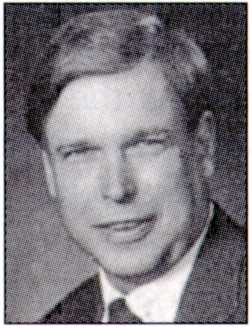 Fred F. Meissner has worked extensively in the Rocky Mountains, Europe,
the South Pacific, South America, Canada, and Mexico with Shell, Sohio/BP,
and several independents. He is an adjunct professor of geology at the
Colorado School of Mines and a member of Thomasson Partner Associates
Inc. He has geological engineering and master of science degrees from
CSM and more than 40 years’ experience in oil and gas Fred F. Meissner has worked extensively in the Rocky Mountains, Europe,
the South Pacific, South America, Canada, and Mexico with Shell, Sohio/BP,
and several independents. He is an adjunct professor of geology at the
Colorado School of Mines and a member of Thomasson Partner Associates
Inc. He has geological engineering and master of science degrees from
CSM and more than 40 years’ experience in oil and gas exploration. exploration.
Return to top.
|

 Print this page
 Click to view article in PDF format.