|
uGeneral
statement
uFigure
captions
uIntroduction
uShallow
gas, southern North Sea
uExpressions
on VHF data
tSurface
expressions
tSubsurface
expressions
uLeakage
on  seismic seismic
tGas
chimneys
tShallow
enhanced reflections
tShallow
disturbed zones
tFault
related amplitude anomalies
tBuried
gas-filled ice-scours
uDiscussion
& conclusions
uReferences
uGeneral
statement
uFigure
captions
uIntroduction
uShallow
gas, southern North Sea
uExpressions
on VHF data
tSurface
expressions
tSubsurface
expressions
uLeakage
on seismic
tGas
chimneys
tShallow
enhanced reflections
tShallow
disturbed zones
tFault
related amplitude anomalies
tBuried
gas-filled ice-scours
uDiscussion
& conclusions
uReferences
uGeneral
statement
uFigure
captions
uIntroduction
uShallow
gas, southern North Sea
uExpressions
on VHF data
tSurface
expressions
tSubsurface
expressions
uLeakage
on seismic
tGas
chimneys
tShallow
enhanced reflections
tShallow
disturbed zones
tFault
related amplitude anomalies
tBuried
gas-filled ice-scours
uDiscussion
& conclusions
uReferences
uGeneral
statement
uFigure
captions
uIntroduction
uShallow
gas, southern North Sea
uExpressions
on VHF data
tSurface
expressions
tSubsurface
expressions
uLeakage
on seismic
tGas
chimneys
tShallow
enhanced reflections
tShallow
disturbed zones
tFault
related amplitude anomalies
tBuried
gas-filled ice-scours
uDiscussion
& conclusions
uReferences
uGeneral
statement
uFigure
captions
uIntroduction
uShallow
gas, southern North Sea
uExpressions
on VHF data
tSurface
expressions
tSubsurface
expressions
uLeakage
on seismic
tGas
chimneys
tShallow
enhanced reflections
tShallow
disturbed zones
tFault
related amplitude anomalies
tBuried
gas-filled ice-scours
uDiscussion
& conclusions
uReferences
uGeneral
statement
uFigure
captions
uIntroduction
uShallow
gas, southern North Sea
uExpressions
on VHF data
tSurface
expressions
tSubsurface
expressions
uLeakage
on seismic
tGas
chimneys
tShallow
enhanced reflections
tShallow
disturbed zones
tFault
related amplitude anomalies
tBuried
gas-filled ice-scours
uDiscussion
& conclusions
uReferences
|
Figure Captions
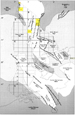 Figure 1. Location map of the Dutch offshore,
highlighting blocks noted in this article (from Remmelts, 1995). Figure 1. Location map of the Dutch offshore,
highlighting blocks noted in this article (from Remmelts, 1995).
 Figure 2. Pockmark
observed in Dutch offshore block A5 on 3.5 kHz data of the 1970’s. Figure 2. Pockmark
observed in Dutch offshore block A5 on 3.5 kHz data of the 1970’s.
 Figure 3. A gas
chimney characterized by relatively high seismic amplitudes and
maintained coherency over a southern North Sea salt dome (blocks F3 and
F6). Figure 3. A gas
chimney characterized by relatively high seismic amplitudes and
maintained coherency over a southern North Sea salt dome (blocks F3 and
F6).
Introduction
Within the scope of the EU sponsored NASCENT project, several
European on-and offshore gas occurrences are being studied from a CO2
storage perspective. The different study sites in
Europe have been selected
because they represent natural analogues for the geological storage of
CO2. Some of the cases under study in the project are “closed
systems”, where CO2
is apparently
efficiently trapped and sealed in a setting very similar to that of
hydrocarbon accumulations. At these sites information can be obtained
about the conditions under which CO2
can be effectively kept underground at a geological time scale. On
the other hand, some other sites in the project represent “open
systems,” where seepage and leakage to the surface and the near-surface
environment can be observed and studied. The shallow gas which is
abundantly present in the
Southern North Sea – albeit
probably mostly of CH4
composition – provides such a natural analogue for trapping, and
migration and seepage mechanisms. Standard E and P 3D seismic surveys
from the Netherlands
part of the Southern North Sea (Figure 1) have been studied for
the occurrence of subsurface expressions of shallow gas in general, and
for leakage in particular. In addition to the 3D surveys, we had very
high frequency acoustic data available from the same area, showing very
shallow (0-25 m) subsurface expressions, such as acoustic blanking, and
surface expressions of venting of gas in the shape of seabed pockmarks.
We use the descriptive term “Seismic Anomalies Indicating Leakage”
for some features observed in the 3D seismic volumes. This term includes
anomalies such as the so-called “gas chimneys” or “seismic chimneys”,
these are more interpretative terms often used for indications of
vertical migration of gas or fluids, observed in seismic profiles.
Return
to top.
Shallow Gas in the
Southern North Sea
Expressions of gas on seismic data have been of interest for
different reasons for quite some time. For the E and P industry shallow
gas has always been important, because first of all, the gas can be a
hazard and a risk when drilling a borehole, or when positioning an
offshore platform. On the other hand the presence of shallow gas can be
an indication for deeper hydrocarbon reserves, and thus be an
exploration tool. In the context of our study we refer to ‘shallow gas’
if the gas occurs between the seabed and a depth of 1000 m below MSL. In
the Dutch North Sea sector, this means that the geological formations
containing the gas are mostly unconsolidated clastic sediments of
Miocene – Holocene age. Shallow gas in marine sediments is mostly
composed of methane, but the gas composition may also include carbon
dioxide, hydrogen sulphide, and ethane. The origin of these gases is
attributed to either biogenic or thermogenic processes. In both cases
the gas is derived from organic material, with the biogenic process
relying on bacterial activity and the thermogenic process being
essentially temperature and pressure dependent (Davis,
1992). Thermogenic methane is produced from organic precursors at high
temperatures and high pressures, and consequently is generated at depths
greater than 1000 m. Such gas may, however, migrate toward the surface
and accumulate in shallow sediment layers. It is not easy to determine
whether methane was biogenically or thermogenically formed (Floodgate
and Judd, 1992).
Expressions of
Shallow Gas on VHF Data
Surface expressions
Morphological surface expressions related to the venting of gas
include pockmarks. These are rimmed circular depressions, which in the
North Sea are normally 10-300 m in diameter and up to 15 m deep (McQuillin
and Fannin, 1979). They are thought to be created by either sudden and
enigmatic or periodical or semi-continuous escape of gas. They can be
detected on (side-scan) sonar or on very high frequency (VHF) acoustic
data. In the Netherlands North Sea sector, examples were first found in
the early nineties during a re-examination of SONIA 3.5 kHz profiler
records from the seventies. Actual gas venting has not yet been observed
with certainty.
Figure 2 shows a pockmark with
a diameter of about 40m seen in block A5 (Figure 1) on 3.5 kHz
data. We have also observed pockmarks in blocks A11 and F10.
Subsurface expressions
Very high frequency (VHF) acoustic measurements, such as 3.5 kHz
sub-bottom profiling, commonly show acoustic blanking in the southern
North Sea. Especially
single-frequency profilers show these expressions clearly. Their
distribution, however, is highly variable. In some concession blocks,
these gas-related phenomena are virtually absent, whereas in other
blocks (e.g., in block F3 [Figures 1,
3]) they may affect
up to 50% of the records. Acoustic blanking, and to a lesser extent
acoustic turbidity, are locally very common in channel-fill settings (in
the northern part of the Dutch offshore in particular), but they also
occur underneath or within clay caps and seabed muds. Acoustic blanking
appears as patches where reflections are faint or absent. These may
result from the disruption of sediment layering by the migration of pore
fluids or gas, or alternatively may be caused by the absorption of
acoustic energy in overlying gas-charged sediments. It may also be
caused by the reflection of a high portion of the acoustic energy by an
overlying hard sediment; the reduction in the amount of energy
penetrating the hard layer being represented by a relatively low
amplitude return signal (Judd and Hovland, 1992).
Seismic Anomalies
Indicating Leakage
It has been demonstrated that standard 3D seismic surveys can
reveal expressions of shallow gas (e.g., by Heggland, 1994; 1997).
However, given the facts that the water depth in the Dutch sector of the
North Sea is less than
50 m and that the reflections from about the first 100 msec are lost in
the “mute” of standard surveys, there is no meaningful seismic imaging
of at least the shallowest 30-40 m of the sediments. Here the term
“seismic anomalies indicating leakage” is being used to describe
subsurface expressions on seismic data that might be related to leakage
or seepage. This is a descriptive term, which would include the more
interpretative term “gas chimney,” that is often used in relation to
hydrocarbon migration. Also included in seismic anomalies indicating
leakage are other phenomena such as shallow enhanced reflectors, shallow
disturbed zones, and indications of leakage along fault trajectories.
Gas chimneys
Gas chimneys are vertical disturbances in seismic data that are
interpreted to be associated with the upward movement of fluids or free
gas. Heggland et al. (2000) and Meldahl et al. (2001) have reported on
examples of seismic chimneys, and have also demonstrated the added value
of automated systems for the detection and analysis of these features in
3D seismic data-cubes. They mention that most of these vertical
disturbances are focused by low seismic amplitudes and low coherency.
Figure 3 shows a “chimney” we have found in a 3D survey covering
parts of blocks F3 and F6 (Figure 1). It is visible both on the
vertical sections and on time-slices, and is related to a fault running
from an associated underlying salt dome up to the seabed. Associated are
bright spots at Upper Pliocene levels, immediately underneath the
chimney. This chimney is focused by increased seismic amplitudes within
the chimney and by the preservation of reflector continuity, and,
therefore, of sedimentary bedding within the chimney. In this respect it
contrasts with the examples of seismic chimneys published by Heggland et
al. (2000) and Meldahl et al. (2001), for example. This difference could
imply a difference in migration mechanisms.
Our hypothesis is that the local increase in amplitudes, and the
preservation of seismic coherency are the result of gas-saturation of
the shallow unconsolidated sandy intervals, through a mechanism of
seepage which has been slow enough not to disturb the original
sedimentary bedding. This would be in contrast to examples of other
chimneys, which are focused by low amplitudes and low coherency. In the
latter case the migration of gas or fluids through the sediments may
have caused a thorough mixing of material, and, thus, destruction of
sedimentary bedding.
Our example more nearly resembles the gas chimney over the Machar
salt dome in the Central North Sea (UK quadrant 23) presented by
Thrasher et al. (1996). They interpreted the Machar dome chimney to
represent smaller and focused seepage. With respect to the migration
mechanism in case of the Machar dome, Thrasher et al. (1996) comment
that overpressure in the Machar reservoir is insufficient for fluid
induced fracturing, and that therefore the primary leakage mechanism
must have been capillary failure of the top seal.
Return
to top.
Shallow enhanced
reflections
Many 2D seismic lines in the area contain focused occurrences of
enhanced reflections in the shallowest part of the sections (i.e.,
between 100-400 msec TWT, corresponding to 70-350 m below MSL). Within
these occurrences, the seismic amplitudes can be extremely high compared
to the immediately surrounding sediments. This is a strong indication
for the presence of gas. Although the reflections within the shadow zone
are very weak, the reflection pattern is not chaotic, indicating that
the cause of the dimming is probably not within the zone itself. The
observation that, adjacent to many of these features, faults can be
interpreted cutting all the way to the seabed, indicates that gas may
have migrated along these faults from depth, and, thus, that the gas
would be primarily thermogenic in origin.
Shallow disturbed zones
Shallow disturbed zones of seismic noise are present in focused
patches at shallow levels of other profiles. Like the shallow enhanced
reflectors, these features also seem to indicate the presence of shallow
gas between the seabed and a depth of about 500m. They differ from the
‘shallow enhanced reflectors’ because of the total lack of seismic
coherency. In a way they are somewhat similar to low-coherency seismic
chimneys, but a difference is that we see these shallow disturbed zones
mainly in the uppermost couple of hundred meters.
Fault related
amplitude anomalies
Seepage of gases or fluids can be interpreted right over salt
domes. Some extensional faults related to the salt structure are
providing the migration path up to the seabed. Relatively small patches
of high seismic amplitudes can be followed upward along the faults (most
clearly visible at the westernmost fault). The interpretation is that
wherever the fault intersects favorable stratigraphic levels (i.e. sandy
layers with good reservoir properties overlain by some sealing shaly
beds) migrating gas is temporarily stored, giving rise to the small
bright spots. These ‘seismic anomalies indicating leakage’ are clearly
related to the presence of a fault system.
Buried gas-filled
ice-scours
Time-slices from 3D seismic surveys can reveal buried iceberg scour
marks. Gallagher et al. (1991) showed examples from the mid-Norwegian
shelf. The ice-scours within Upper Pliocene sediments are visible
because they are filled with sand, which hosts shallow gas. The
resulting display in the horizontal plan is a very typical pattern of
straight and narrow lineaments in different directions. In the 3D survey
from Dutch block F3, we have found similar examples on several
time-slices; e.g., at 528 msec. In this case, the age of the marks would
be approximately around the Pliocene-Pleistocene boundary of 1.8 Ma. At
this time icebergs could have drifted into the
North Sea area from the
north. These features are known drilling hazards. The last major blowout
off Mid Norway was reported to have occurred in a dense grid of such
gas-filled sands related to ice-scours.
Discussion and Conclusions
Indications for shallow gas in the Netherlands North Sea show that
numerous gas-related phenomena occur. Apart from bright spots, which
indicate gas accumulations that are efficiently trapped and sealed in
shallow reservoirs, there is a range of other features pointing at
leakage and migration of gas to the seabed. There is indirect evidence
for actual gas venting; e.g., by the observation of pockmarks. There
also appear to be more cases of gas-induced carbonate-cemented sediments
than previously thought. From our observations we conclude that many of
the seismic anomalies indicating leakage found in the area correlate
with the positions of salt structures and that the normal faults which
are very often present over the crests of these structures provide
migration pathways to the shallow realm for the thermogenic gas. In
terms of seepage styles, the gas chimney found in blocks F3/F6 best fits
the ‘weak and focused seepage style’, often related to focused seepage
over salt structures, defined by Thrasher et al. (1996). In the same
area, indications on seismic profiles of gas migration along fault
systems subscribe to this point of view.
The observed high amplitudes within the gas chimney can be
explained by gas saturation of the more porous layers in the shallow
sequence, but an alternative explanation would be carbonate cementation
caused by the methane passing through. In either gas, we still observe
preservation of sedimentary bedding within the chimney, phenomena which
would be in contrast with other possible style of chimneys where the
migration mechanism would have been more destructive.
References
Davis, A.M., 1992, Shallow gas:
an overview, in Davis, A.M. (ed.), Methane in marine sediments,
Cont. Shelf Res., v. 12, p. 1077-1079.
Fannin, N.G.T., 1980, The use
of regional geological surveys in the North Sea and adjacent areas in
the recognition of offshore hazards, in Ardus, D.A. (ed.),
Offshore Site Investigation. Graham and Trotman, London, p. 5-22.
Floodgate, G.D. and Judd, A.G.,
1992, The origins of shallow gas, in Davis, A.M. (ed.), Methane
in marine sediments, Cont. Shelf Res. v. 12, p. 1145-1156.
Gallagher, J.W., Hovland, M.,
Amaliksen, K.G., Braaten, A.M., Jacobsen, T., and Granli, J.R., 1991,
Shallow gas on Haltenbanken: Statoil report no. 91023027.
Heggland, R., 1994, Detection
of near surface gas seepage by the use of conventional 3D seismic data,
in Extended Abstracts of the EAGE 56th Meeting and
Technical Exhibition, Vienna, 6-10 June 1994.
Heggland, R., 1997, Detection
of gas migration from a deep source by the use of exploration 3D seismic data: Marine Geology, v. 137, p. 41-47.
Heggland, R., Meldahl, P., de
Groot, P., and Aminzadeh, F., 2000, Chimney cube unravels subsurface:
The American Oil and Gas Reporter, February 2000.
Hovland, M. and Judd, A.G.,
1988, Seabed Pockmarks and Seepages, Impact on Geology, Biology and the
Marine Environment: Graham and Trotman, London, 293 p.
Jeffery, D.H., Frantsen, P.,
Laban, C., and Schüttenhelm, R.T.E., 1989, Quaternary Geology, Silver
Well Sheet 54ºN- 02ºE: 1:250 000 map series, British Geological Survey
and Rijks Geologische Dienst, Ordnance Survey, Southampton.
Judd, A.G., and Hovland, M.,
1992, The evidence of shallow gas in marine sediments, in Davis, A.M.
(ed.), Methane in marine sediments, Cont. Shelf Res., v. 12, p.
1081-1097.
McQuillin, R., and Fannin,
N.G.T., 1979, Explaining the North Sea floor. New Scientist, no. 1163,
p. 90-92.
Meldahl, P., Heggland, R., Bril,
B., and de Groot, P., 2001, Identifying faults and gas chimneys using
multiattributes and neural networks. The Leading Edge v. 20, no. 5, p.
474-482.
Remmelts, G., 1995, Fault-related salt tectonics in the
southern North Sea, The Netherlands, in Jackson, M.P.A., Roberts,
D.G., and Snelson, S., eds., Salt tectonics: a global perspective: AAPG
Memoir 65, p. 261-272.
Trasher, J., Fleet, A.J., Hay,
S.J., Hovland, M., and Düppenbecker, S., 1996. Understanding geology as
the key to using seepage in exploration: spectrum of seepage styles,
in Schumacher, D. and Abrams, M.A. (eds.), Hydrocarbon migration and
its near-surface expression: AAPG Memoir 66, p. 223-241.
Return
to top.
|

 Print this page
 Click to view article in PDF format.