
 Print this page
 Click to view article in PDF format.
Surface and Subsurface Expressions of Shallow Gas Accumulations
in the Southern  North
North Sea*
Sea*
By
Barthold M. Schroot1
Search and Discovery Article #40090 (2003)
*“Extended” abstract of presentation at AAPG Hedberg Conference, “Near-Surface Hydrocarbon Migration: Mechanisms and Seepage Rates,” April 7-10, 2002, Vancouver, British Columbia, Canada.
1Netherlands Institute of Applied Geoscience TNO, PO Box 80015, 3508 TA Utrecht, the Netherlands ([email protected])
Expressions of shallow gas, either in accumulations or apparently leaking to the
near-surface, can be found on 3D seismic surveys as well as on very high
frequency acoustic data. A number of different types of seismic anomalies
related to leakage have been distinguished in the Netherlands part of the
southern North Sea basin. A hypothesis in terms of migration mechanisms is given
to explain the different appearances of different gas-chimneys.
|
uShallow
gas, southern tFault related amplitude anomalies
uShallow
gas, southern tFault related amplitude anomalies
uShallow
gas, southern tFault related amplitude anomalies
uShallow
gas, southern tFault related amplitude anomalies
uShallow
gas, southern tFault related amplitude anomalies
uShallow
gas, southern tFault related amplitude anomalies
|
Within the scope of the EU sponsored NASCENT project, several
European on-and offshore gas occurrences are being studied from a CO2
storage perspective. The different study sites in
Europe have been selected
because they represent natural analogues for the geological storage of
CO2. Some of the cases under study in the project are “closed
systems”, where CO2
is apparently
efficiently trapped and sealed in a setting very similar to that of
hydrocarbon accumulations. At these sites information can be obtained
about the conditions under which CO2
can be effectively kept underground at a geological time scale. On
the other hand, some other sites in the project represent “open
systems,” where seepage and leakage to the surface and the near-surface
environment can be observed and studied. The shallow gas which is
abundantly present in the
Southern
Shallow Gas in the
Southern Expressions of gas on seismic
Expressions of
Shallow Gas on VHF Morphological surface expressions related to the venting of gas
include pockmarks. These are rimmed circular depressions, which in the
Very high frequency (VHF) acoustic measurements, such as 3.5 kHz
sub-bottom profiling, commonly show acoustic blanking in the southern
Seismic Anomalies Indicating Leakage It has been demonstrated that standard 3D seismic surveys can
reveal expressions of shallow gas (e.g., by Heggland, 1994; 1997).
However, given the facts that the water depth in the Dutch sector of the
Gas chimneys are vertical disturbances in seismic Figure 3 shows a “chimney” we have found in a 3D survey covering parts of blocks F3 and F6 (Figure 1). It is visible both on the vertical sections and on time-slices, and is related to a fault running from an associated underlying salt dome up to the seabed. Associated are bright spots at Upper Pliocene levels, immediately underneath the chimney. This chimney is focused by increased seismic amplitudes within the chimney and by the preservation of reflector continuity, and, therefore, of sedimentary bedding within the chimney. In this respect it contrasts with the examples of seismic chimneys published by Heggland et al. (2000) and Meldahl et al. (2001), for example. This difference could imply a difference in migration mechanisms. Our hypothesis is that the local increase in amplitudes, and the preservation of seismic coherency are the result of gas-saturation of the shallow unconsolidated sandy intervals, through a mechanism of seepage which has been slow enough not to disturb the original sedimentary bedding. This would be in contrast to examples of other chimneys, which are focused by low amplitudes and low coherency. In the latter case the migration of gas or fluids through the sediments may have caused a thorough mixing of material, and, thus, destruction of sedimentary bedding. Our example more nearly resembles the gas chimney over the Machar
salt dome in the Central
Many 2D seismic lines in the area contain focused occurrences of enhanced reflections in the shallowest part of the sections (i.e., between 100-400 msec TWT, corresponding to 70-350 m below MSL). Within these occurrences, the seismic amplitudes can be extremely high compared to the immediately surrounding sediments. This is a strong indication for the presence of gas. Although the reflections within the shadow zone are very weak, the reflection pattern is not chaotic, indicating that the cause of the dimming is probably not within the zone itself. The observation that, adjacent to many of these features, faults can be interpreted cutting all the way to the seabed, indicates that gas may have migrated along these faults from depth, and, thus, that the gas would be primarily thermogenic in origin.
Shallow disturbed zones of seismic noise are present in focused patches at shallow levels of other profiles. Like the shallow enhanced reflectors, these features also seem to indicate the presence of shallow gas between the seabed and a depth of about 500m. They differ from the ‘shallow enhanced reflectors’ because of the total lack of seismic coherency. In a way they are somewhat similar to low-coherency seismic chimneys, but a difference is that we see these shallow disturbed zones mainly in the uppermost couple of hundred meters.
Fault related amplitude anomalies Seepage of gases or fluids can be interpreted right over salt domes. Some extensional faults related to the salt structure are providing the migration path up to the seabed. Relatively small patches of high seismic amplitudes can be followed upward along the faults (most clearly visible at the westernmost fault). The interpretation is that wherever the fault intersects favorable stratigraphic levels (i.e. sandy layers with good reservoir properties overlain by some sealing shaly beds) migrating gas is temporarily stored, giving rise to the small bright spots. These ‘seismic anomalies indicating leakage’ are clearly related to the presence of a fault system.
Time-slices from 3D seismic surveys can reveal buried iceberg scour
marks. Gallagher et al. (1991) showed examples from the mid-Norwegian
shelf. The ice-scours within Upper Pliocene sediments are visible
because they are filled with sand, which hosts shallow gas. The
resulting display in the horizontal plan is a very typical pattern of
straight and narrow lineaments in different directions. In the 3D survey
from Dutch block F3, we have found similar examples on several
time-slices; e.g., at 528 msec. In this case, the age of the marks would
be approximately around the Pliocene-Pleistocene boundary of 1.8 Ma. At
this time icebergs could have drifted into the
Indications for shallow gas in the Netherlands The observed high amplitudes within the gas chimney can be explained by gas saturation of the more porous layers in the shallow sequence, but an alternative explanation would be carbonate cementation caused by the methane passing through. In either gas, we still observe preservation of sedimentary bedding within the chimney, phenomena which would be in contrast with other possible style of chimneys where the migration mechanism would have been more destructive.
Davis, A.M., 1992, Shallow gas: an overview, in Davis, A.M. (ed.), Methane in marine sediments, Cont. Shelf Res., v. 12, p. 1077-1079.
Fannin, N.G.T., 1980, The use
of regional geological surveys in the Floodgate, G.D. and Judd, A.G., 1992, The origins of shallow gas, in Davis, A.M. (ed.), Methane in marine sediments, Cont. Shelf Res. v. 12, p. 1145-1156. Gallagher, J.W., Hovland, M., Amaliksen, K.G., Braaten, A.M., Jacobsen, T., and Granli, J.R., 1991, Shallow gas on Haltenbanken: Statoil report no. 91023027.
Heggland, R., 1994, Detection
of near surface gas seepage by the use of conventional 3D seismic
Heggland, R., 1997, Detection
of gas migration from a deep source by the use of exploration 3D seismic
Heggland, R., Meldahl, P., de Groot, P., and Aminzadeh, F., 2000, Chimney cube unravels subsurface: The American Oil and Gas Reporter, February 2000. Hovland, M. and Judd, A.G., 1988, Seabed Pockmarks and Seepages, Impact on Geology, Biology and the Marine Environment: Graham and Trotman, London, 293 p. Jeffery, D.H., Frantsen, P., Laban, C., and Schüttenhelm, R.T.E., 1989, Quaternary Geology, Silver Well Sheet 54ºN- 02ºE: 1:250 000 map series, British Geological Survey and Rijks Geologische Dienst, Ordnance Survey, Southampton. Judd, A.G., and Hovland, M., 1992, The evidence of shallow gas in marine sediments, in Davis, A.M. (ed.), Methane in marine sediments, Cont. Shelf Res., v. 12, p. 1081-1097.
McQuillin, R., and Fannin,
N.G.T., 1979, Explaining the Meldahl, P., Heggland, R., Bril, B., and de Groot, P., 2001, Identifying faults and gas chimneys using multiattributes and neural networks. The Leading Edge v. 20, no. 5, p. 474-482.
Remmelts, G., 1995, Fault-related salt tectonics in the
southern Trasher, J., Fleet, A.J., Hay, S.J., Hovland, M., and Düppenbecker, S., 1996. Understanding geology as the key to using seepage in exploration: spectrum of seepage styles, in Schumacher, D. and Abrams, M.A. (eds.), Hydrocarbon migration and its near-surface expression: AAPG Memoir 66, p. 223-241. |
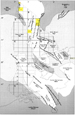 Figure 1. Location map of the Dutch offshore,
highlighting blocks noted in this article (from Remmelts, 1995).
Figure 1. Location map of the Dutch offshore,
highlighting blocks noted in this article (from Remmelts, 1995). Figure 2. Pockmark
observed in Dutch offshore block A5 on 3.5 kHz
Figure 2. Pockmark
observed in Dutch offshore block A5 on 3.5 kHz  Figure 3. A gas
chimney characterized by relatively high seismic amplitudes and
maintained coherency over a southern
Figure 3. A gas
chimney characterized by relatively high seismic amplitudes and
maintained coherency over a southern 